T3 Lines: What the 44.736-Megabit Rate Means
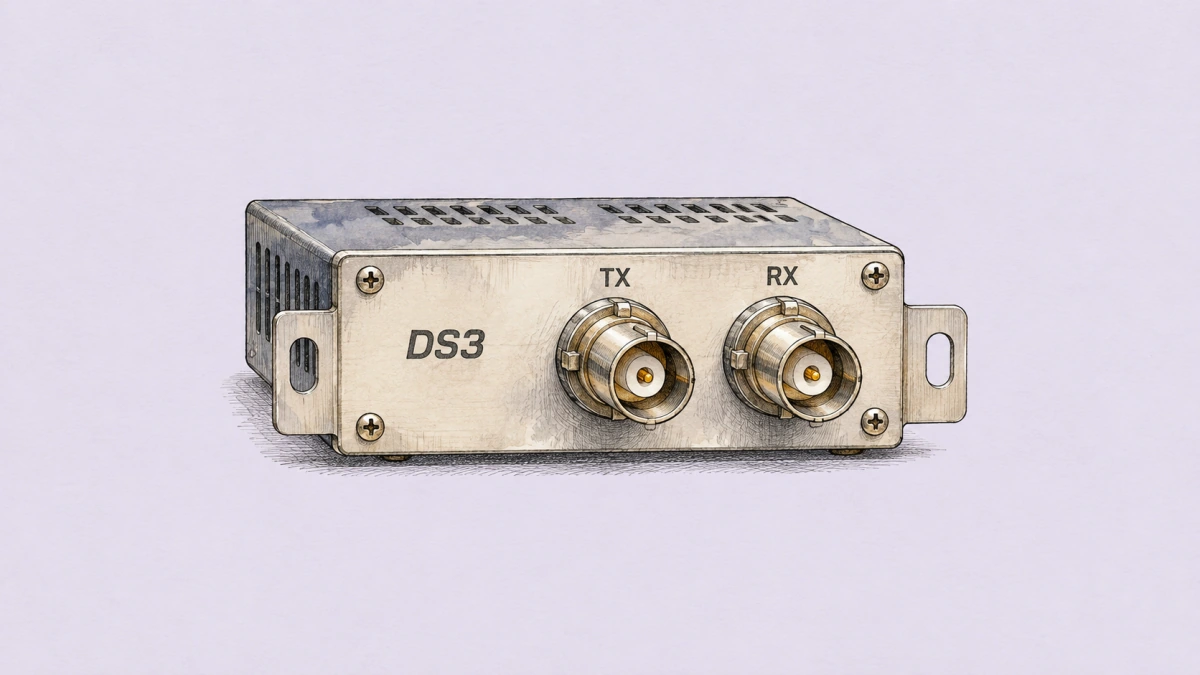
T3 commonly names a digital connection supplied by a telecommunications carrier and carrying a DS3 signal. DS3 stands for Digital Signal Level 3, with a stated line rate of 44.736 megabits per second. That is 44,736,000 bits each second, often rounded to 45 Mbps.
A bit is one binary digit, a one or zero. Mbps means millions of bits per second. The number describes how much digital information the line carries over time, not how many people can use an application without slowing it down.
T3 belongs to a legacy family of carrier connections.

- Give every phone, laptop and TV a steadier connection with Wi-Fi 6.
- Stop the buffering at busy hours, with room for many devices at once.
- Replace an aging router and get stronger coverage across more of your home.
One larger stream or smaller channels
A T3 connection can carry one full-rate data stream, called clear-channel use, or be divided into smaller channels, depending on the equipment and service arrangement.
The DS3 channel structure can contain 28 DS1 channels. DS1, or Digital Signal Level 1, is associated with the smaller T1 connection. Combining those channels for carriage on one larger connection is called multiplexing.
The 28 channels share the larger structure. They aren't 28 separate connections each offering the full T3 rate.
The historical DS3 interface standard records both the 44.736-Mbps line rate and the 28-DS1 channel arrangement. Cisco's documentation for a channelized T3 adapter illustrates clear-channel, channelized and lower-rate service configurations.
The line rate isn't the download rate
File sizes are commonly expressed in bytes, with eight bits to a byte. Confusing megabits with megabytes would make the connection appear eight times faster on paper.
Even the correct conversion wouldn't produce a guaranteed file-transfer rate. Some transmitted bits handle communication itself rather than carrying file contents. Other traffic may use the connection, and the application depends on the rest of its path and the systems at either end.
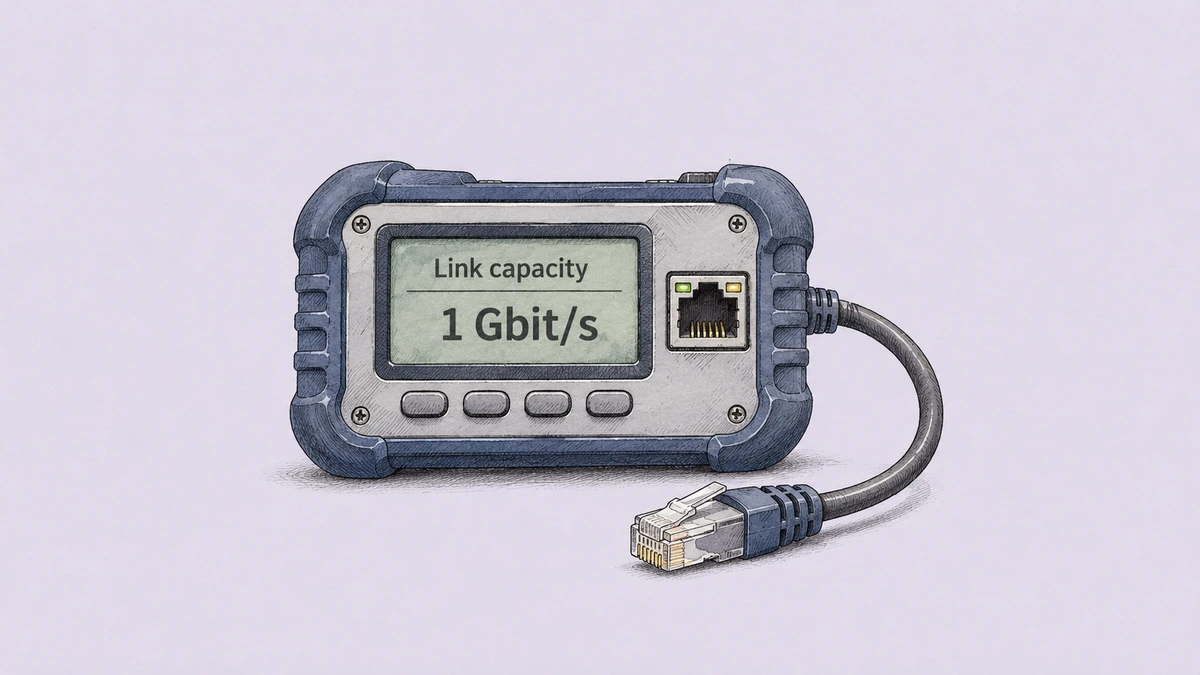
Bandwidth describes capacity. What a particular transfer achieves is a different observation.
Suppose several people use the same service at once. Their activity has to fit within the available capacity. The connection can run out of capacity, and the server running the service can hit a separate limit.
What Does Internet Speed Really Measure?
The service agreement supplies the rest
A carrier connection can link designated locations. The name alone doesn't establish that it includes internet access, encryption or an alternate path after a failure.
Verizon's private-line service guide, for example, describes both a linear DS3 service and a separate restorable arrangement using a physical ring with a backup route. That distinction shows why resilience belongs to the particular service design.
A network diagram marked “T3” gives you the line rate. To find out what happens if that link fails, you need the details of its service arrangement.
What Is a T1 Line? The 1.544-Mbps Limit Explained

Bandwidth Explained: Why a Fast Plan Can Still Feel Slow
Redundancy: What a Second System Can Keep Running

QUOTE:
"Amateurs hack systems, professionals hack people."