WinDump: What the Old Windows Capture Tool Can Tell You
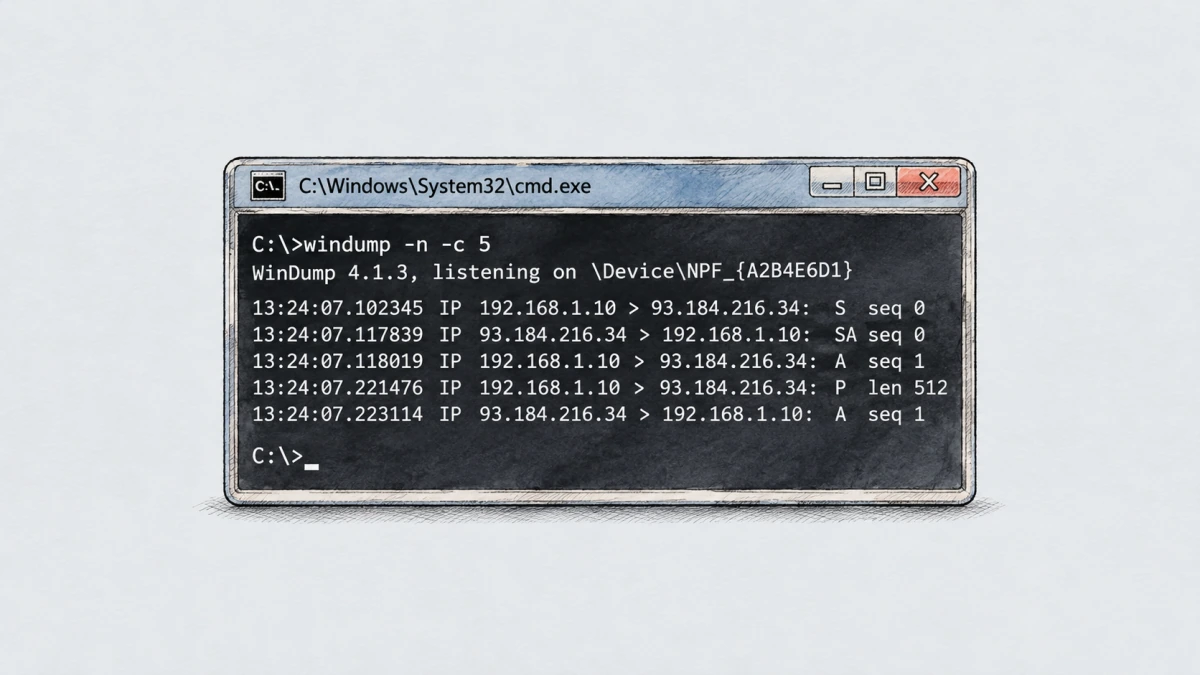
WinDump is a Windows version of tcpdump, a tool for inspecting and recording network packets. A packet is a unit of data traveling across a network, carrying communication details along with the information being sent.
WinDump is a legacy tool. Its project explicitly states that WinDump and WinPcap are no longer maintained. WinPcap is the capture software WinDump relies on, and the project's maintenance notice also describes limitations with current Windows versions.
Don't rely on an old installation guide to establish compatibility with a current Windows computer.
See What Your Computer Is Really Sending
What goes into the record
Like tcpdump, WinDump uses a command-line interface, where a person enters text commands. Its project description presents it as a way to observe, diagnose and save network traffic using filtering rules.
The user chooses a network interface, the connection point where the capture takes place. A filter selects which available packets the tool processes. Those choices define the view: a capture isn't a recording of every communication everywhere on the network.
WinDump can display packet information, write captured data to a file and read an existing capture. A short line on the screen is a summary, not necessarily all the information stored in the capture file.
The WinDump manual documents these capture and reading options. The tool supplies observations for someone to interpret; displaying an unfamiliar destination doesn't automatically identify an intruder.
A request with no visible reply
Suppose an application is waiting for a response. A capture shows a request leaving, but no reply appears in the recorded traffic.

- See every packet on a link without slowing it down.
- Feed a monitoring tool real traffic instead of a sample.
- Power it from a USB port, with no extra adapter to carry.
The record lets an investigator check what was requested and whether a response was observed at that capture point. But “no reply in this file” isn't the same as “the other computer never replied.”
A filter may have excluded relevant traffic, or the chosen interface may not provide the needed view. The record alone doesn't establish the cause of the application's delay. A packet sniffer can help explain a network problem without solving the interpretation for its user.
Nor does saving suspicious traffic block it. Observation, deciding whether something is harmful and taking action to stop it are separate jobs.
Saved captures also deserve care. They may contain communication contents, not just technical-looking addresses. Before sharing one to get help, establish what it contains and who should have access. The file created to investigate a problem can itself hold information worth protecting.
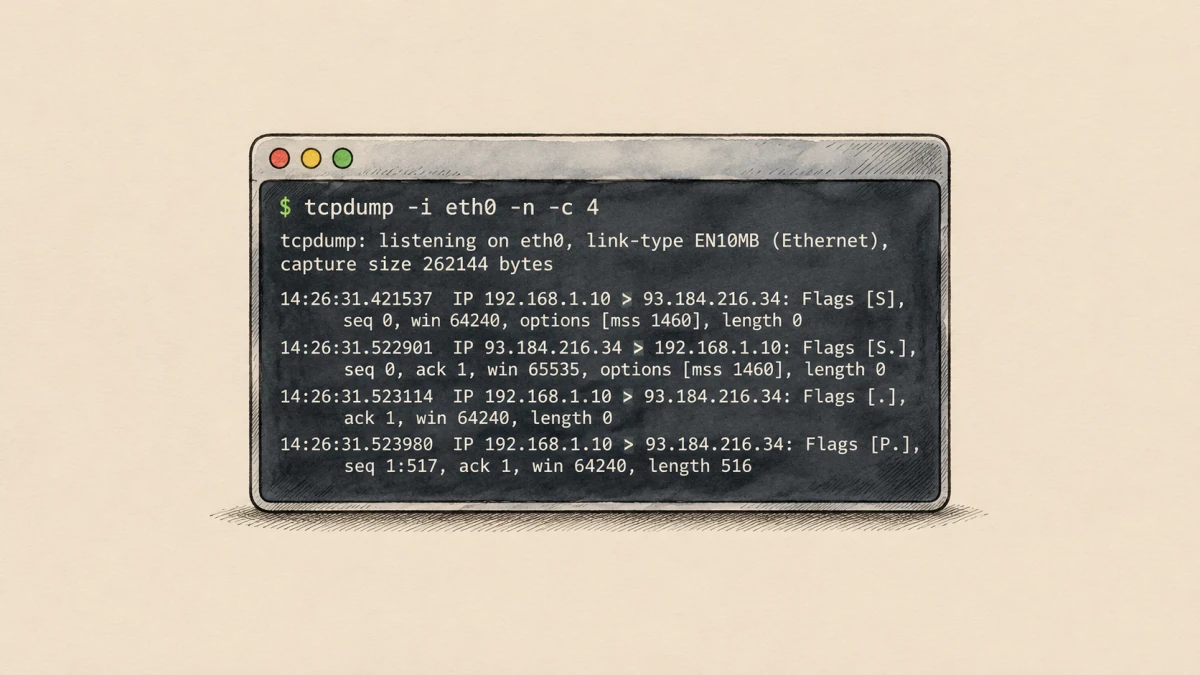
tcpdump Shows the Traffic That Reaches Its Observation Point
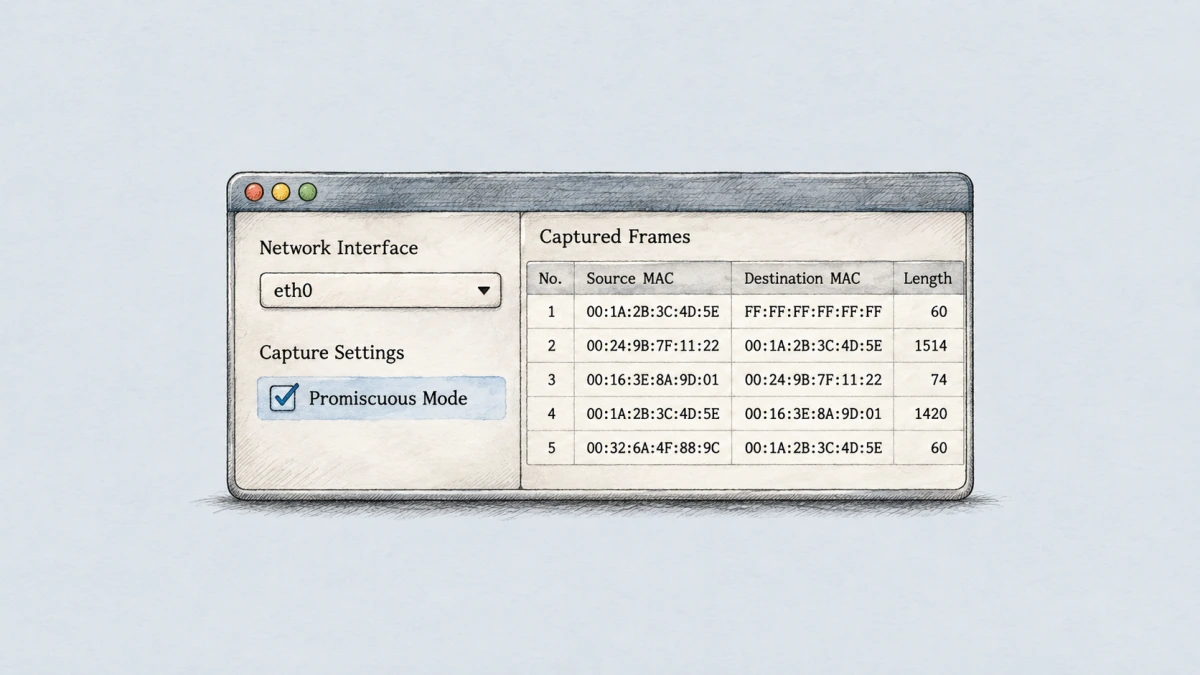
Promiscuous Mode and the Packets Your Computer Never Sees
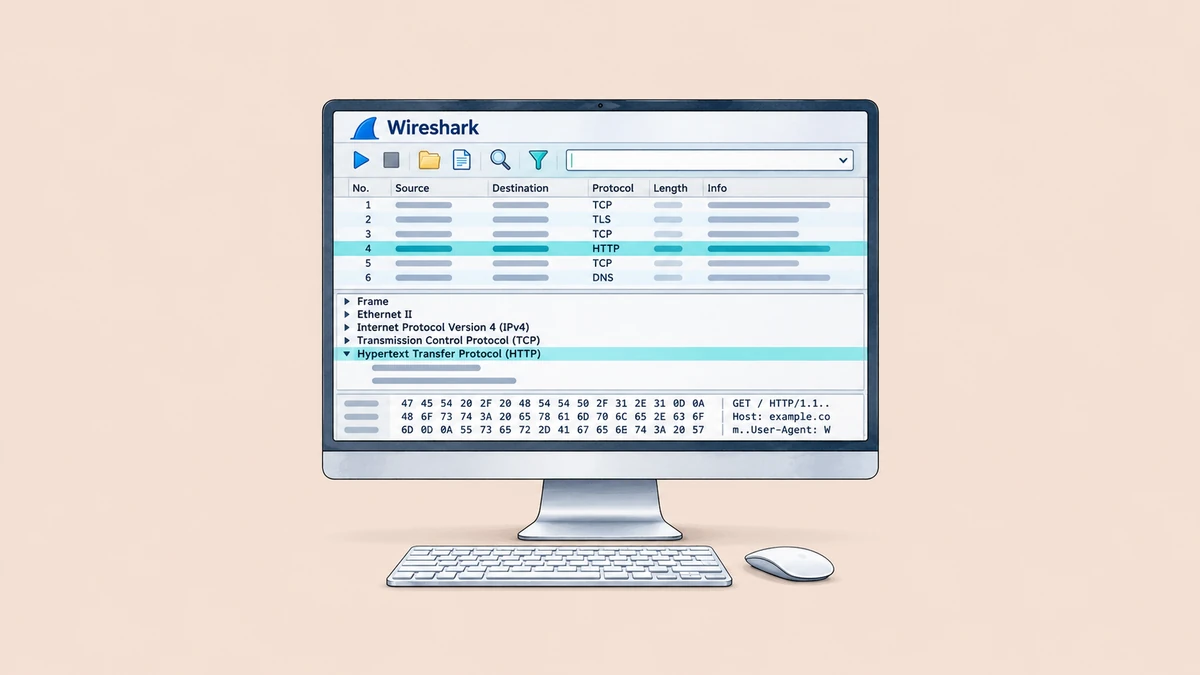
What Is Wireshark?
QUOTE:
"Amateurs hack systems, professionals hack people."