Echo Reply: How to Read a Ping Response
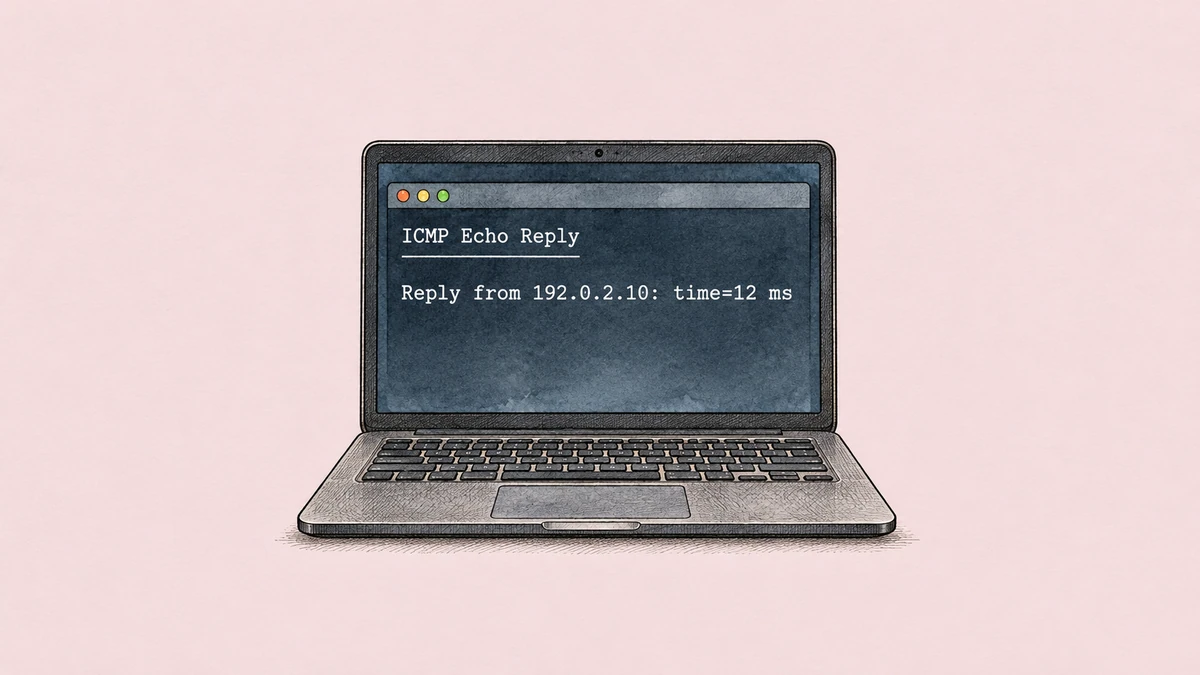
The server answers ping, but its website still won't load. Both results can be correct. A ping reply shows that one kind of network exchange worked; it doesn't test everything the server is supposed to do.
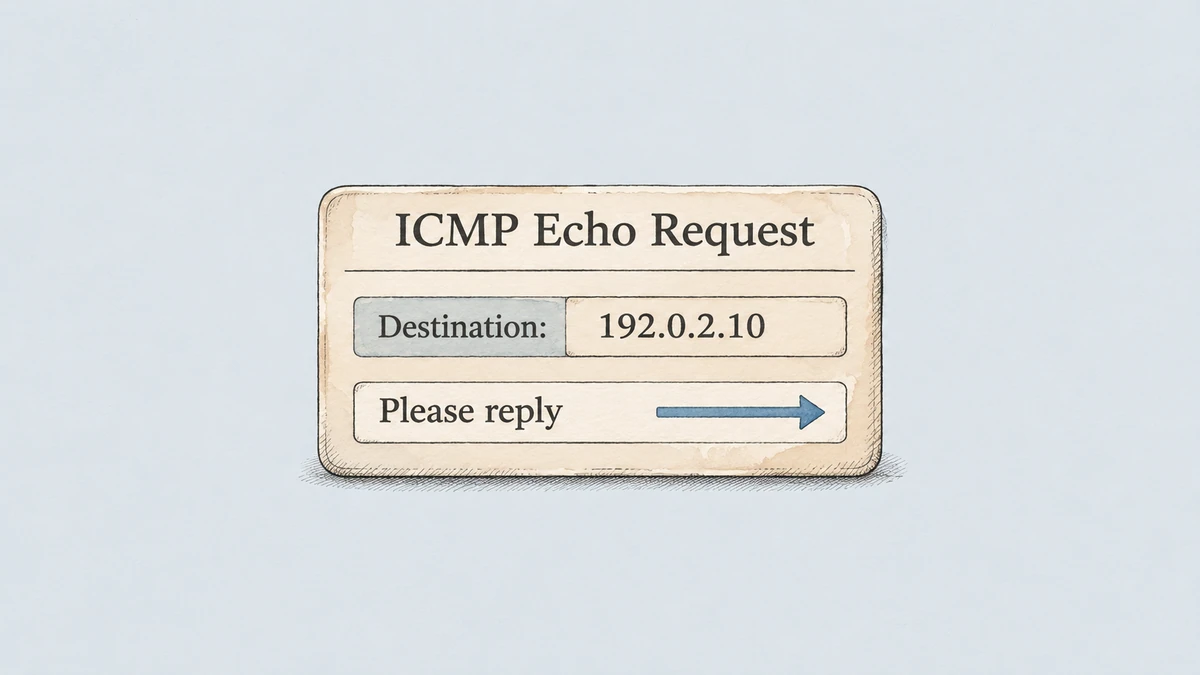
An Echo Reply is the response to an Echo Request, the diagnostic message sent by the ping tool. Both belong to the Internet Control Message Protocol, or ICMP, which carries network control and error messages.
Ping sends its request toward an IP address, an Internet Protocol address that directs network traffic to a destination. Receiving a matching reply provides evidence that the request reached a responder and a response made it back at that time.
The Whole Internet, Explained in Nine Minutes
What Comes Back in the Reply
An Echo Reply returns the data included in the request. It also preserves an identifier and sequence number. Those fields let the sending tool connect a reply with the request that prompted it, rather than treating every incoming message as the same result.
For Internet Protocol version 4, or IPv4, Echo Request has message type 8 and Echo Reply has type 0. The ICMP specification defines the exchange.
Internet Protocol version 6, or IPv6, uses a related protocol called ICMPv6. Its type numbers are 128 for Echo Request and 129 for Echo Reply. It likewise returns the request's identifier, sequence number and data, as described in the ICMPv6 standard.
Those numbers are useful when a network record identifies messages by type instead of spelling out their names.
- Start tonight: the board, case, power supply and memory card are all in the box.
- Run a home lab, an ad blocker or a practice server on one small computer.
- Learn Linux hands-on without risking your main machine.
Matching those fields connects a request with a reply. It isn't a secure check of who owns the responding system.
Reading Time, Loss and Silence
Ping can display round-trip time: how long the request-and-reply exchange took. It is measured in milliseconds, or thousandths of a second. Microsoft's ping documentation describes this measurement and the Windows command's controls.
Suppose a reply takes 30 milliseconds. That covers the trip out and back, including the time spent responding. It doesn't establish that each direction took 15 milliseconds or measure how much data the connection can carry per second.
The terms bandwidth and throughput describe available carrying capacity and the transfer rate actually achieved. A short ping time doesn't answer either one on its own.
Ping and Traceroute: Two Commands Worth Knowing
A timeout means no matching reply arrived before the tool stopped waiting. Several explanations remain possible:
- The destination is unavailable.
- A request or reply was lost along the way.
- A routing problem left the traffic without a working path.
- A firewall or another traffic rule blocked the message.
A firewall controls which traffic may pass. It can allow an application connection while blocking ping, so silence isn't proof that the host is offline. Cisco's TCP/IP troubleshooting guide makes this distinction.
Repeated requests may reveal intermittent replies or varying delays. They describe the probes in that sample; an application's traffic may receive different treatment. A game session, for example, still needs to be checked on its own.

- Get five gigabit ports and a fast ARM processor for the price of a basic home router.
- Practice real routing at your desk on gear that network pros also deploy.
- Tuck it beside your modem: it takes up almost no room.
Following the Clue to the Actual Problem
Imagine an office server that answers ping but rejects a user's sign-in. The reply supports IP reachability. The sign-in problem may involve the service, its access rules or the credentials.
This separation comes from the way network protocols divide responsibilities. Reaching an address and completing an application request happen at different levels. Test the affected application as well as the underlying path.
A different clue appears when ping works with a numeric address but fails with a hostname, the destination’s network name. Name resolution converts a name into an address, often using DNS, the Domain Name System. That result gives you a reason to investigate name resolution.
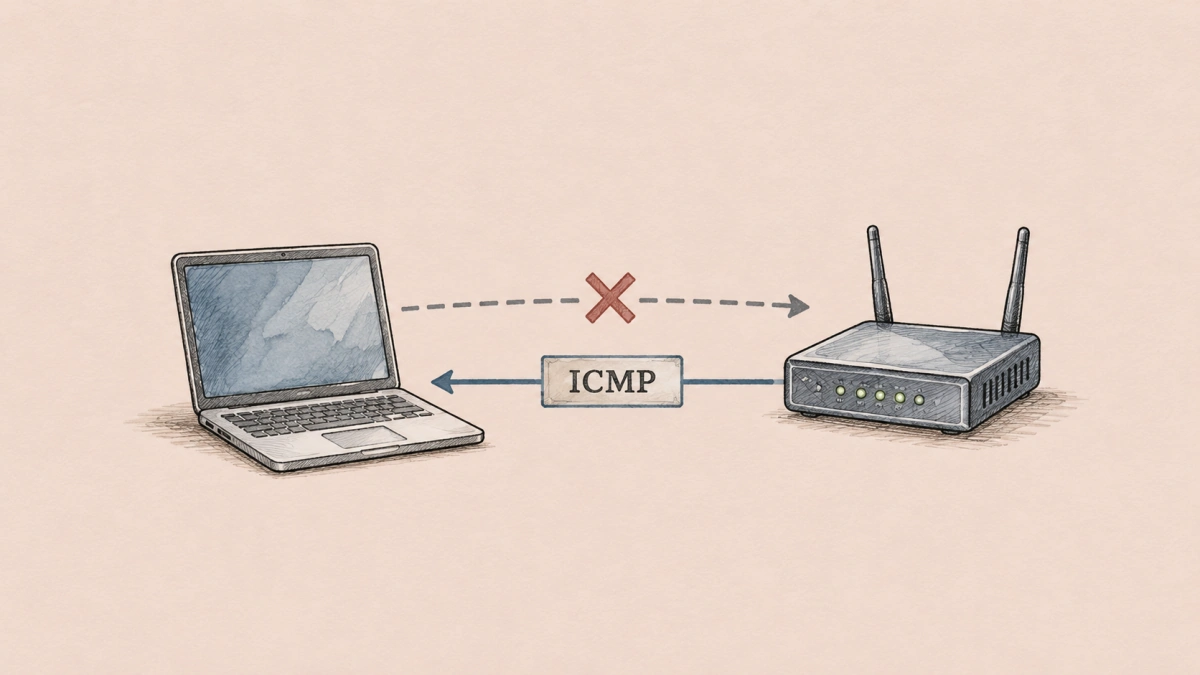
ICMP also carries messages that report network errors. Blocking the entire protocol affects more than ping. Cisco's ICMP filtering documentation distinguishes those message types and notes that filtering can hinder diagnosis.
For a support report, keep the observation precise: which destination was tested, whether replies arrived, and what timing the tool showed. Pair that with the actual symptom, such as a page failing to open. “Ping replied” and “the website failed” give someone more to investigate than “the server works.”
Echo Requests: What You’re Really Asking When You Ping
ICMP: How the Network Reports a Problem
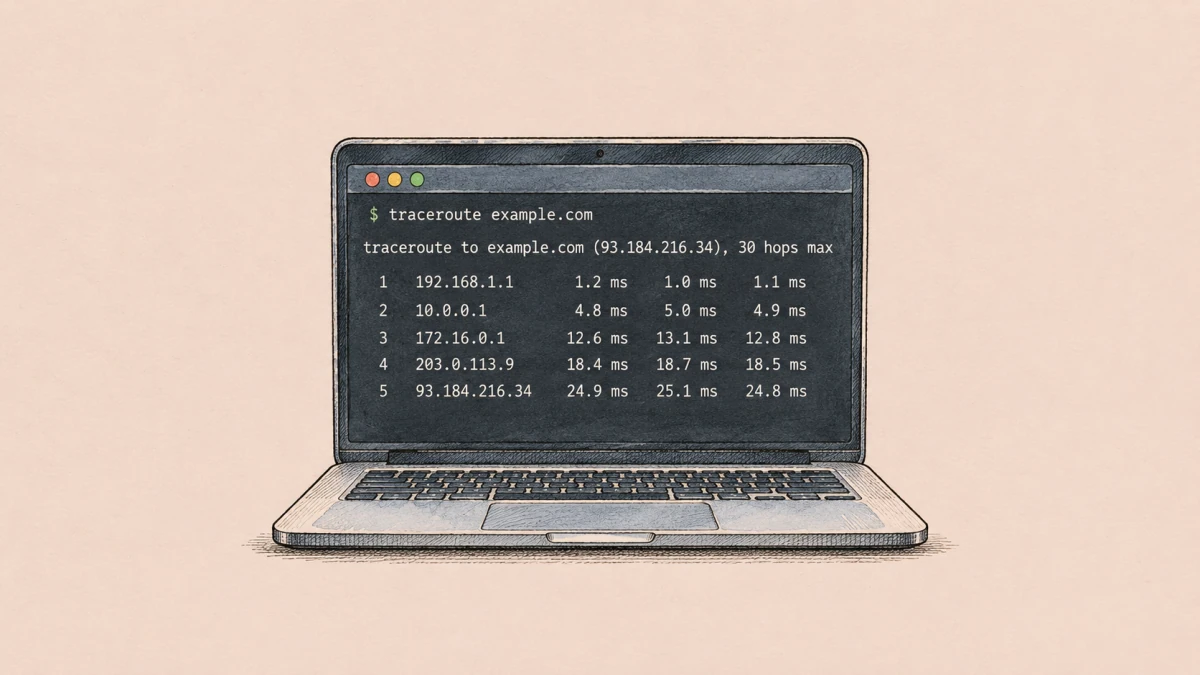
Traceroute: Learning the Route by Stopping Short
QUOTE:
"Amateurs hack systems, professionals hack people."