Traceroute: Learning the Route by Stopping Short
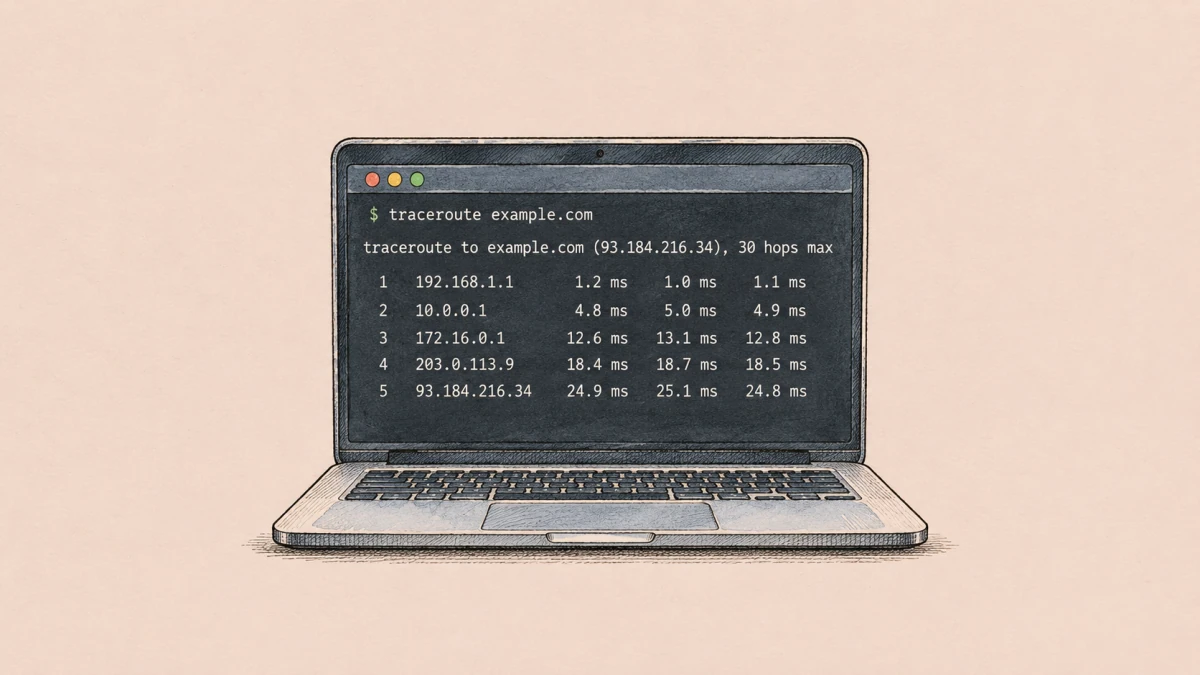
Traceroute is a diagnostic tool that sends test packets to learn about responding points along a network route. A packet is a small unit of network data. By giving successive packets permission to travel farther, the tool encourages different routers to send replies.
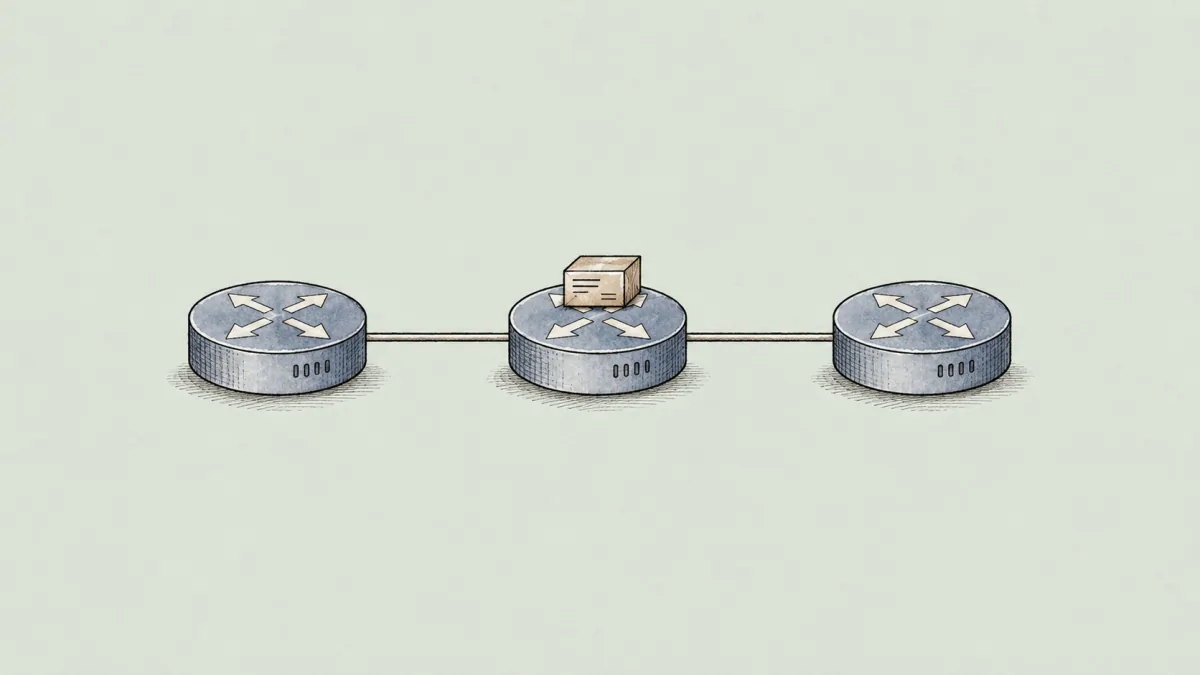
A router forwards packets between networks. Each forwarding step is called a hop. Traceroute uses the packet's limit on those steps to ask, in effect, how far this particular probe got.
The first probe is designed not to get far
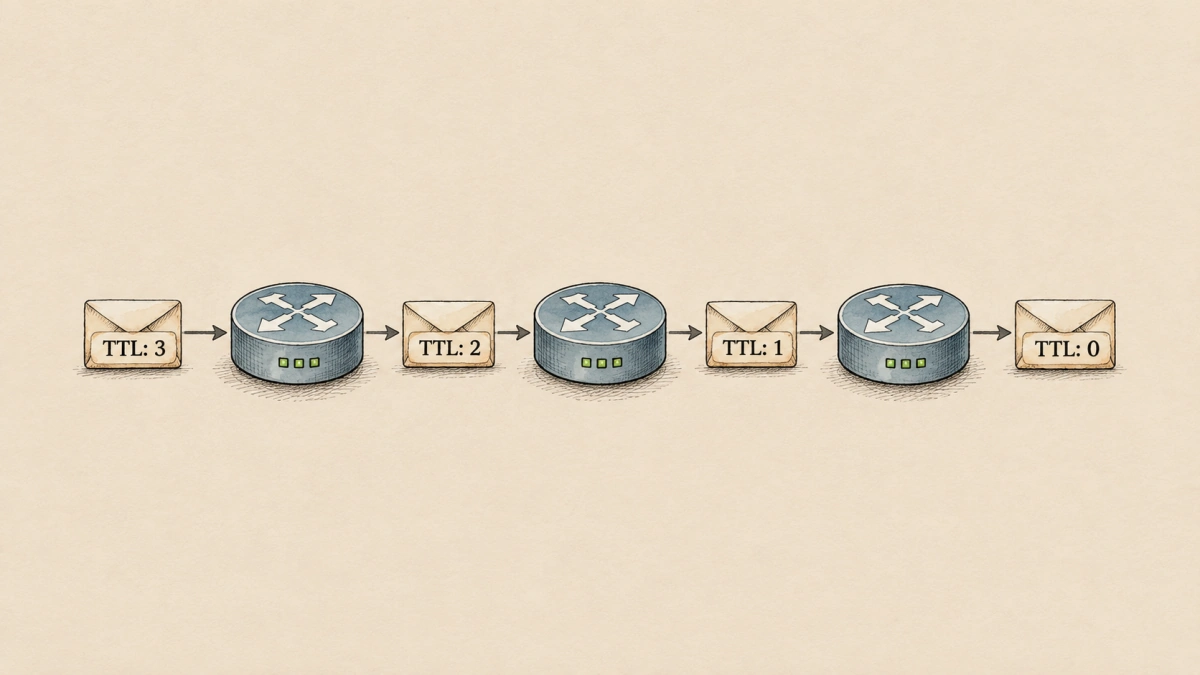
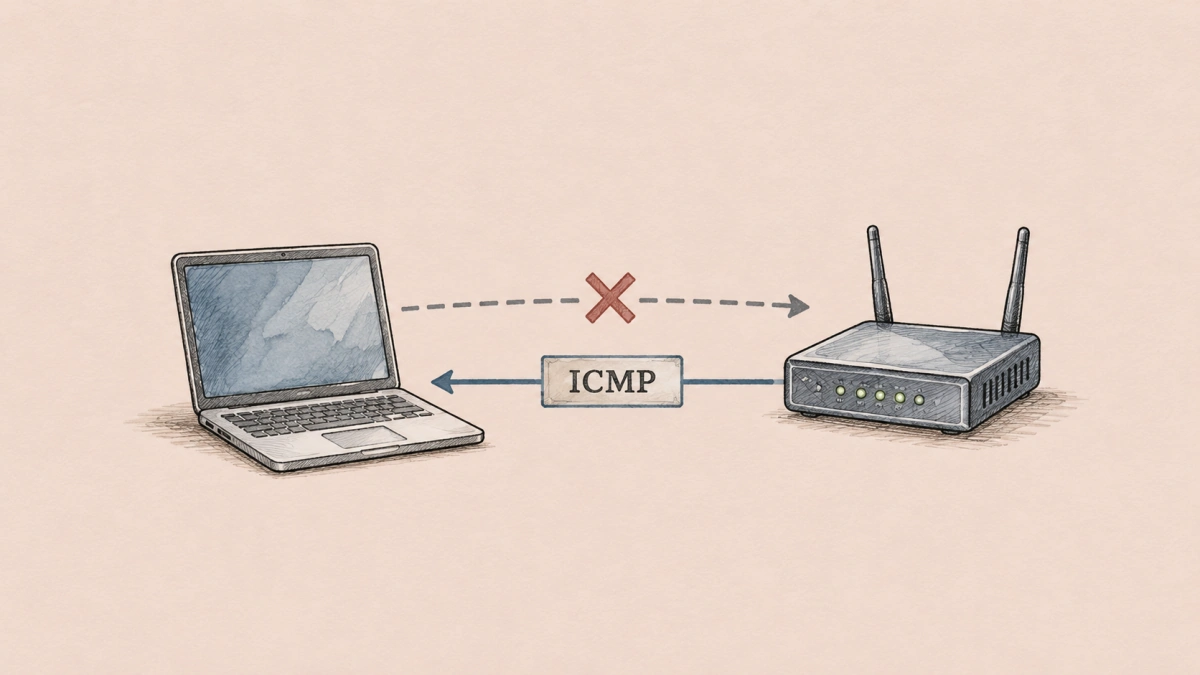
In Internet Protocol version 4, or IPv4, a field called time to live, abbreviated TTL, limits forwarding. A router reduces the value as it forwards the packet. When the limit is exhausted, the packet is discarded, and the router may send a Time Exceeded error back.
Traceroute starts with a small limit and then increases it. A probe allowed one hop can reveal an early router. A later probe with a larger limit can reach farther before expiring. The replies supply addresses and timing observations for the displayed trace.
Ping and Traceroute: Two Commands Worth Knowing
IPv6, the newer version of Internet Protocol, calls the corresponding field Hop Limit. Traceroute can use this limit in the same way.
The probes aren't your missing webpage traveling under observation. They're separate test traffic. Microsoft documents this behavior for the Windows tool tracert.
An asterisk is a missing answer
Suppose a trace shows replies at the first two hops, an asterisk at the next and replies again farther down. The asterisk means the tool didn't receive the expected answer before its waiting period ended.
It doesn't establish that the router at that position stopped forwarding traffic. Later replies show that probes got beyond the gap. Some routers don't send the error response needed to appear in the trace; a reply can also fail to make it back.
The route may therefore contain equipment that the display doesn't identify. A blank at one position is a gap in the tool's observations, not automatically the location of a broken connection.

- Get five gigabit ports and a fast ARM processor for the price of a basic home router.
- Practice real routing at your desk on gear that network pros also deploy.
- Tuck it beside your modem: it takes up almost no room.
The clock measures the trip out and back
A reported time measures the interval between sending a probe and receiving its response. It includes travel toward the responding point and the reply's journey back. It isn't a direct measurement of the cable between that row and the previous one.
The return path can differ from the outward path. Routes can also change while the sequence of probes is running. The Internet Engineering Task Force's discussion of traditional traceroute identifies both limitations.
Implementations differ, too. Windows tracert uses echo requests from the Internet Control Message Protocol, or ICMP, which carries network diagnostic messages. Cisco's documented traceroute example instead sends probes using the User Datagram Protocol, or UDP, and interprets the resulting error replies.
A network can handle one kind of probe differently from another, so changing the probe type can change which replies appear. The displayed route describes those test attempts, not a recording of the stalled application's traffic.
Network Hops: Why Counting Routers Won't Tell You the Speed
Time to Live: Why Packet TTL and DNS TTL Count Different Things
ICMP: How the Network Reports a Problem
QUOTE:
"Amateurs hack systems, professionals hack people."