What Is a Crossover Cable—and Do You Still Need One?
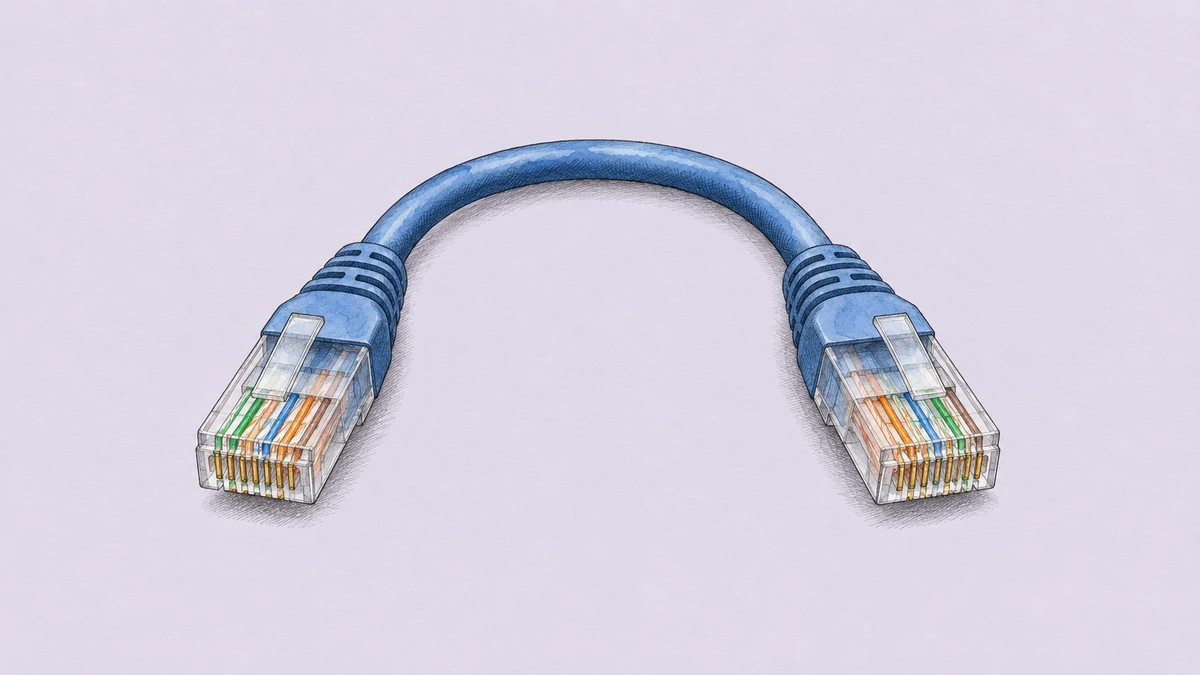
An Ethernet crossover cable changes which wire pairs meet at its two ends. That small wiring change lets certain older network devices talk directly to each other instead of sending their signals into the wrong contacts.
Ethernet is a family of wired networking technologies. The crossover cable discussed here is the familiar copper network cable with rectangular plugs, often called RJ45 connectors.
Why the wires cross
Traditional 10- and 100-megabit Ethernet connections use one pair of wires to send information and another pair to receive it. A megabit is a million bits, the tiny units used to represent digital information.
With two older computers wired the same way, a straight-through cable can connect each computer's sending pair to the other's sending pair. The receiving pairs don't get the signals they're waiting for.
A crossover cable swaps the relevant connections so sending at one end reaches receiving at the other. A straight-through cable keeps each numbered contact connected to the same numbered contact at the far end.
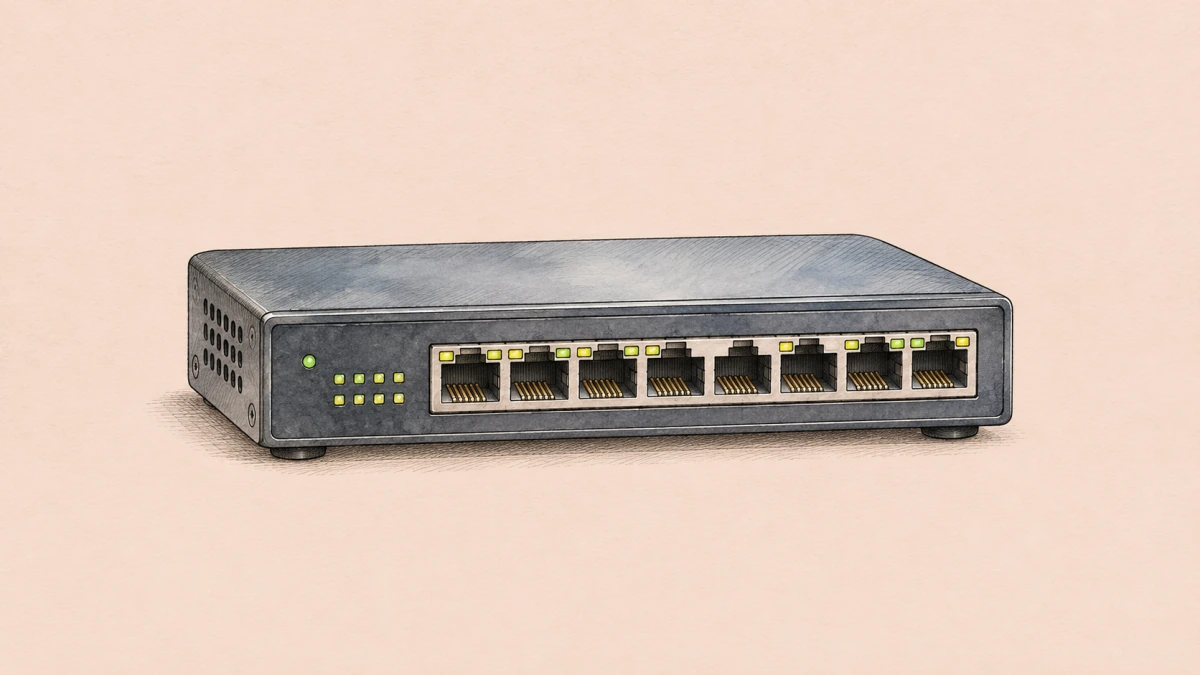
Older network switches commonly had their port wiring arranged to accept ordinary computer connections through straight-through cables. A switch connects devices within a local network, so joining two such switches could call for a crossover cable instead.
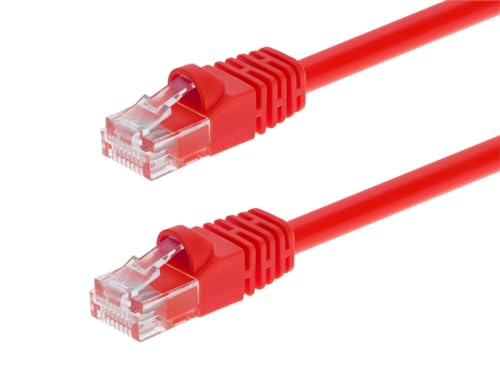
- Connect two computers directly and move files with no switch or router between them.
- Spot it instantly in a drawer of cables thanks to the bright red jacket.
- Keep one handy for older gear that can't sort out the wiring on its own.
Cisco's Ethernet cabling guidance describes these traditional combinations. Special ports and newer hardware can change the answer, which is why the device's own documentation matters more than a universal “computer to computer” rule.
Why you rarely need to think about it now
Many newer Ethernet ports support Auto-MDIX, an automatic adjustment that figures out which wire pairs should send and receive. When the feature is supported and enabled, the connection can work with either straight-through or crossover wiring.
For example, Cisco's IE 3010 hardware guide describes this behavior for its copper Ethernet ports. Don't assume every older device or adapter has the feature, or that its settings always enable it.
Gigabit Ethernet, which carries a billion bits per second, uses all four wire pairs in the cable.
For an everyday example, Apple's instructions for connecting two Macs call for a standard Ethernet cable and explicitly say a crossover cable isn't needed. Direct connection doesn't automatically mean crossed wiring is required.
Which Ethernet Cable Do You Actually Need?
Identifying the cable in your drawer
The outer jacket's color doesn't identify the wiring: a red cable could be straight-through or crossover.
Look for a clear product label or documented wiring arrangement. A cable tester with a wire map can show which contact at one end connects to which contact at the other; Fluke Networks demonstrates crossover testing using that approach.
Labels such as Cat5e and Cat6 describe a cable's performance category. “Crossover” describes its connections, so a category label alone doesn't identify whether the pairs cross.
A working link still needs a working network
Once two computers have a physical connection, they still need compatible network settings and permission to use whatever they're sharing. Their IP addresses, the addresses used to send information between devices, are part of those settings.
A lit connection indicator doesn't prove that file sharing is enabled or that the other person's account can open a folder. Use the operating system's sharing controls to grant the intended access, rather than disabling security settings to make the connection work.
Crossed wiring doesn't encrypt files, make a functioning link inherently faster, or provide internet access by itself. Its useful job is much narrower: matching the sending and receiving connections when the equipment can't do that automatically.
Straight-Through Cable: What the Matching Contacts Tell You
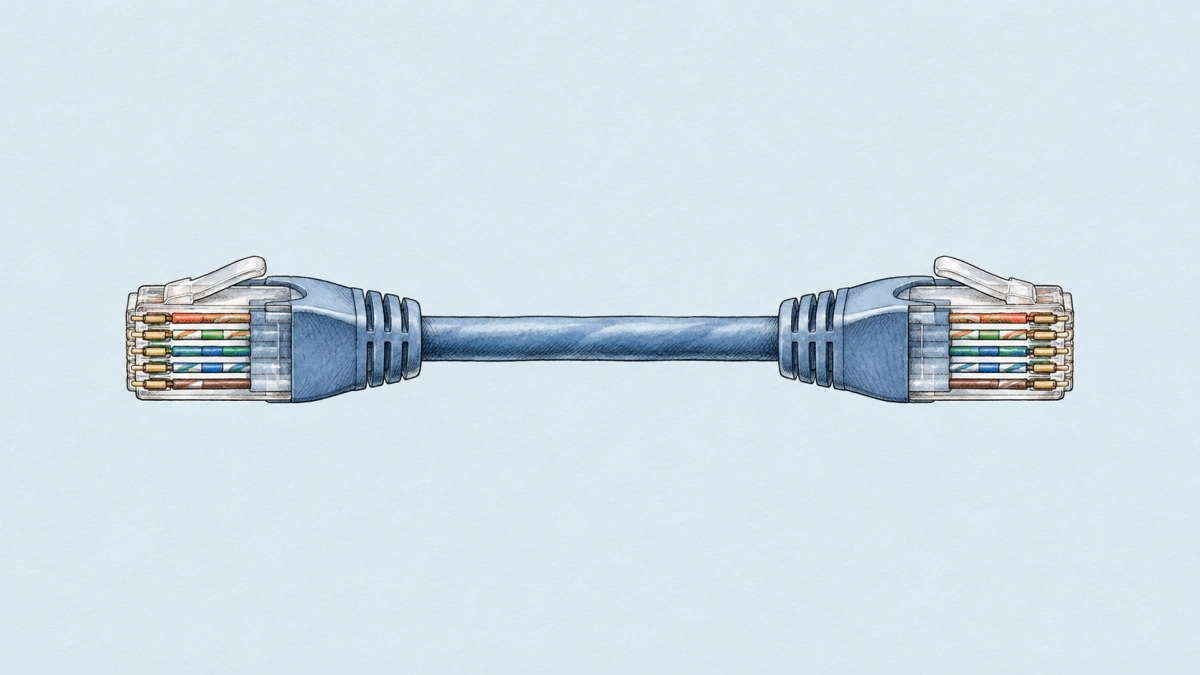
Ethernet Explained: What the Cable Does—and Doesn’t Do
A Network Switch Learns Where to Send the Next Frame
QUOTE:
"Amateurs hack systems, professionals hack people."