Access Control Services: Where Permission Gets Decided
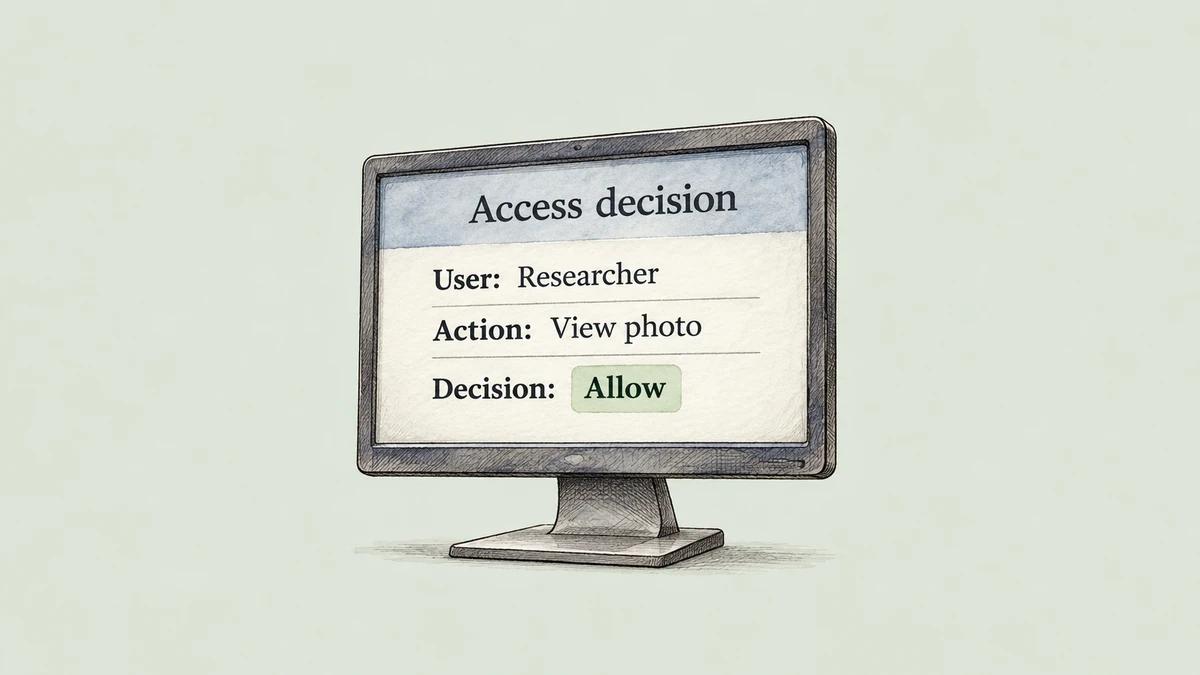
An app doesn't have to make every permission decision on its own. It can ask a shared access control service whether a particular user may open, change or delete a particular item.
More broadly, an access control service protects resources from uses that an organization's rules don't allow. A resource is something being protected, such as a document, an application feature or a piece of equipment.
The term describes a security function; it doesn't require a separate computer or a particular commercial product. A shared service that several applications consult is one way to provide that function.
The Internet Security Glossary includes an important detail: the service must also stop an approved user from using a resource in an unapproved way. Permission to view a photograph needn't include permission to delete it.
Who Are You, What May You Do, What Did You Do?
A request needs more than a username
Suppose a university stores research photographs in a shared application. A visiting researcher asks to download one image from a restricted collection.
The permission service needs enough information to evaluate the request. That could include:
- Who: the researcher's account.
- What: the particular photograph or collection.
- Which action: downloading the image, rather than changing its description.
- Relevant conditions: whether the account belongs to the approved project team.
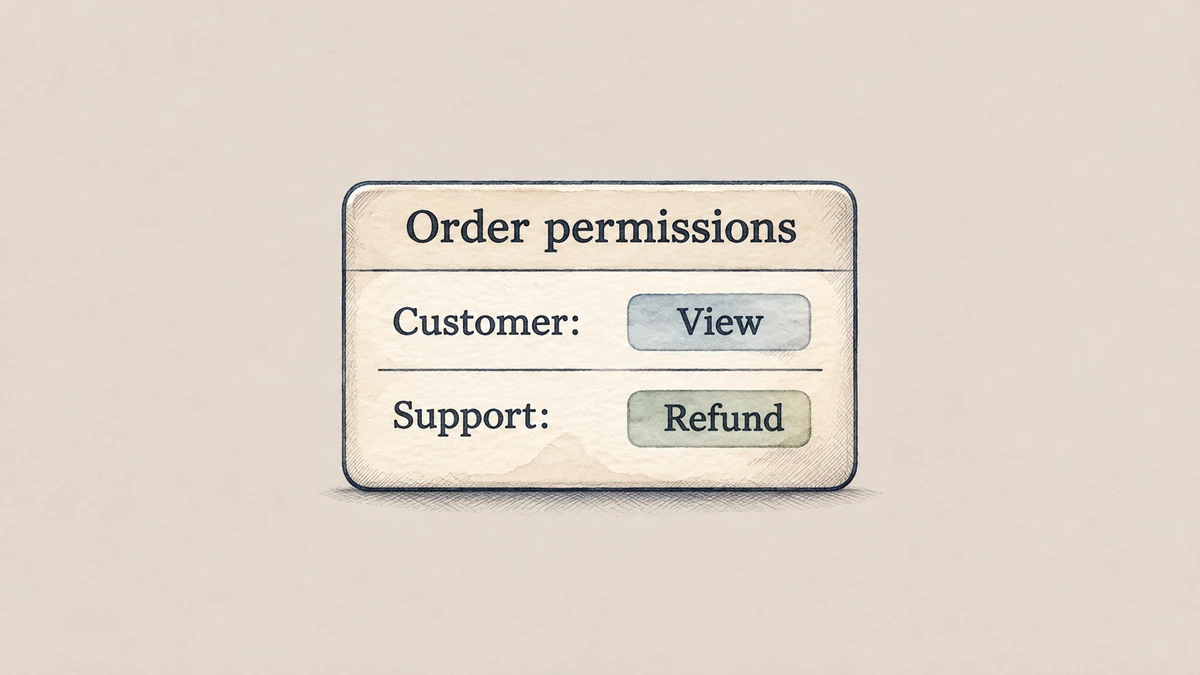
An access policy is the rule applied to those details. It might permit project members to download images while reserving deletion for the collection manager.
That decision is authorization. It differs from authentication, the earlier check that someone is entitled to use the account they're presenting.
For a concrete example, Amazon Verified Permissions evaluates requests against policies while assuming identity has been checked through another system. This illustrates why a permission service needn't also run the login screen.
The application still has work to do
In that shared-service arrangement, the service returns a decision and the application carries it out. If the answer is “deny,” the photo app must withhold the download.
Returning a refusal while another download route remains unprotected defeats the arrangement. The app needs a working check wherever the protected action can be requested.
Security designs call the component making a decision a policy decision point and the component carrying it out a policy enforcement point. NIST's access-control guide explains how those jobs can be separated or kept together.
The service also needs trustworthy information. If the photo app blindly accepts a visitor's claim that they're the collection manager, a correct evaluation of that false claim still produces the wrong result.

- Lock down your main accounts with a key that stops phishing.
- Sign in with a quick tap on your laptop or phone.
- Get strong protection at a lower price than the full YubiKey.
Shared rules help only where they're used
A central service can make it easier to maintain common policies across applications. The same research project might use separate tools for photographs, documents and scheduling.
But connecting an app's login doesn't automatically connect its permission checks. Each protected action needs to use the intended rules, and changes to those rules need to reach the systems that depend on them.
Teams should also decide what happens if the service can't answer. That failure path deserves testing, because silently treating an unavailable decision as permission would undermine the protection.
An access control service can coordinate decisions across many tools. Its protection reaches only as far as the applications that actually enforce those decisions.
Authorization: Who Can Do What With Which Data?
Access Control Mechanisms: What Actually Enforces the Rule?
Zero Trust: Why Being on the Office Network Isn't Enough
QUOTE:
"Amateurs hack systems, professionals hack people."