Gemini in November 2026: What’s Better, and Why
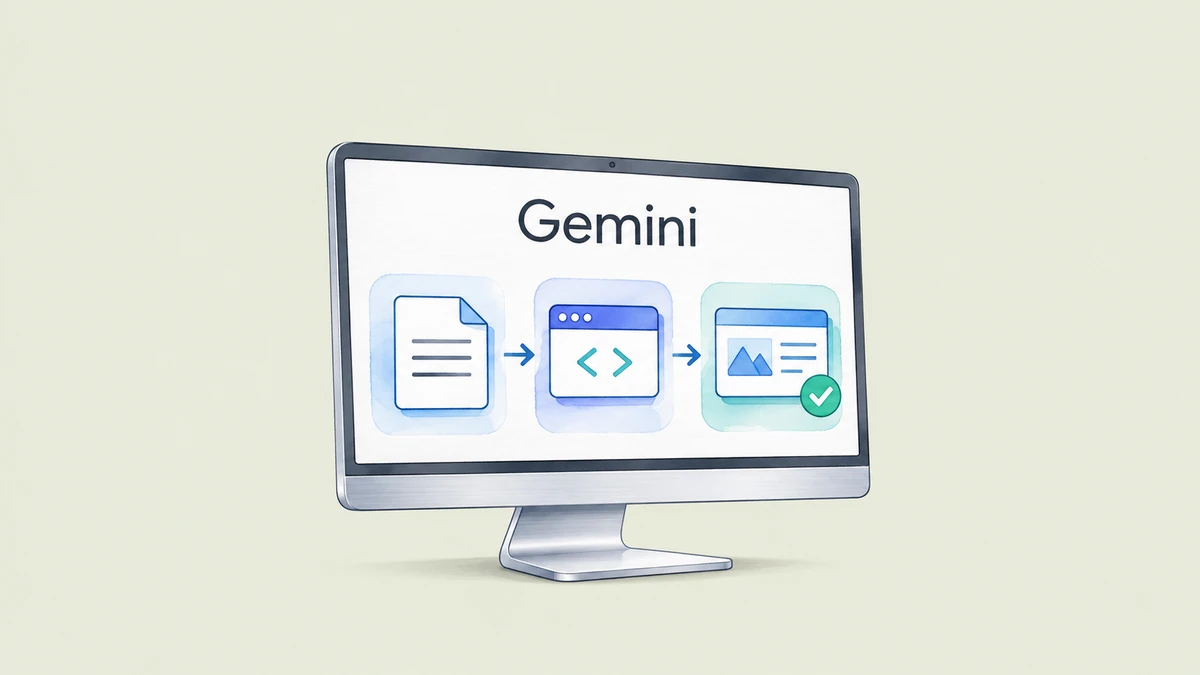
- Three November Arrivals, Three Different Jobs
- Why Gemini Can Do More With a Complicated Request
- The Test Results Show Progress, With Boundaries
- Google Demonstrates a Ski Simulator Built With Gemini 4 Neon
- What Gemini Can Do With Your Files
- The App Is Learning to Carry Out the Errands
- Gemini 4 Hydrogen Turns a Video Into Slides
- More Useful Doesn’t Mean It Knows Everything
Gemini is Google’s family of AI models and the name of its assistant app. By November 2026, its newest models are built to handle longer jobs: reading files, using software tools and producing work you can inspect.
The interesting change is what happens between your request and the finished result. Google is improving how Gemini follows a task through several steps, checks its work and recovers when something goes wrong.
As of November 23, three releases define the month: Gemini 4 Carbon, Hydrogen and Neon. They serve different purposes, so the newest name alone won’t tell you which one fits your work.
Three November Arrivals, Three Different Jobs
An AI model is the trained software that processes your request and generates a response. The Gemini app adds the interface, connections to other services and controls around that model.
Google’s launch announcements describe the November lineup this way:
| Model | November release | Main purpose | Access in the Gemini app |
|---|---|---|---|
| Gemini 4 Carbon | Broader availability on November 10, after restricted access in October | Difficult coding, research and other demanding tasks that need extended checking | Google AI Ultra subscribers |
| Gemini 4 Hydrogen | November 12 | Faster everyday work, including coding and tasks involving several tools | Available to free users through automatic model selection, with more controls on paid plans |
| Gemini 4 Neon | November 18 | A balance of speed and deeper reasoning for coding, analysis and document work | Rolling out to Google AI Pro and Ultra subscribers |
Access also depends on the product, location, account and remaining usage. Developers can reach these models through Google’s services for building software, which have different controls and charges from the consumer app.
Free access needs one clarification: it doesn’t mean every answer comes from Hydrogen. Google’s model-selection help page says the app can route requests between Hydrogen and a lighter model according to the task.
Why Gemini Can Do More With a Complicated Request
The new models share a research lineage. Google’s model cards describe Carbon as based on Gemini 4 Argon, while Neon and Hydrogen are adapted from Carbon.
One improvement is allowing more computation for difficult problems. Carbon can spend longer exploring possible answers and checking them, while adjustable thinking levels let users balance the time taken against the depth of the work.
“Thinking” here describes a software process, not human consciousness. The practical aim is to give the model room to work through a problem before presenting its answer.
Training also continues after a model learns broad patterns from data. Google describes additional training with examples and feedback, including reinforcement learning, which rewards behavior that meets the training goals.
That matters when the task involves actions as well as words. An assistant fixing a program needs to read the relevant files, make a change, run a check and respond to the result rather than merely describe a plausible repair.
Google says Neon is trained to carry out this kind of work while avoiding shortcuts and fabricated results. Its launch report also highlights improvements in following corrections made partway through a task.
For example, changing a request from “make a presentation” to “use only the figures in this spreadsheet” should affect the remaining work. That’s a more practical improvement than receiving a longer answer that continues in the wrong direction.
The Test Results Show Progress, With Boundaries
A benchmark is a set of tasks used to compare systems. It can reveal a useful improvement, provided the models face comparable tasks and the testing conditions are clear.
Google’s Hydrogen announcement reports a Terminal-Bench 4.1 score of 57%, compared with 18.2% for Gemini 3.8 Flash. That test concerns completing computer tasks through a terminal, the text interface used to run commands.
The same announcement reports faster task completion and fewer fabricated claims than 3.8 Flash. Those are Google’s reported results, rather than measurements from a ThreatPicture test.
There’s another revealing result in Google’s Neon release: on the SWE-sweep software test, the same model scored 12.8% with one setup and 39% inside Google Antigravity. Antigravity is Google’s development environment for AI-assisted software work.
The surrounding software helps determine which tools a model can use and how it receives feedback. Google’s evaluation methodology documents those setups, which helps explain why a model name alone doesn’t predict the result.
Google’s short demonstration below shows Neon producing a ski simulator. It’s a useful example of the kind of output the company is pursuing, while a selected demonstration can’t tell us how often an ordinary user will get the same quality.
Google Demonstrates a Ski Simulator Built With Gemini 4 Neon
What Gemini Can Do With Your Files
The November models accept combinations of text, images, audio and video. This is called multimodal input: a model can work with a chart or recording directly, alongside written instructions.
The Hydrogen model card specifies a combined input-and-output context window of up to one million tokens, a capacity Neon also supports. Tokens are chunks of information the model processes; for text, they can be words or parts of words.
The context window is the amount of material the model can work with at once. A larger window makes it possible to bring more documents into the same task, but it doesn’t guarantee perfect attention to everything inside them.
For a concrete example, suppose you’re comparing three annual reports with a spreadsheet of your own figures. The useful result would identify where the numbers disagree, point to the relevant pages and explain what needs checking.
Being able to load all that material is the first step. Reading the correct table, keeping the years straight and using the right units are separate jobs, which is why a polished report still needs inspection.
Google’s November developer updates also added support for working directly with Word, PowerPoint, Excel and OpenDocument files. That is a change to the tools around the models, and it can remove some of the preparation needed before analysis begins.
The App Is Learning to Carry Out the Errands
An AI agent is a system that uses tools to work through steps toward a goal. A chatbot might suggest a plan; an agent can also act on parts of it, within the permissions its software provides.
On November 17, Google began rolling out free Tasks in Gemini in the United States, India, Canada, Australia, Japan and Korea. The feature uses Hydrogen for work that can continue in the background.
You can also ask it to call U.S. businesses after you approve a call plan. A separate checkout feature prepares purchases for review and requires your approval before payment.
Checkout began rolling out in English for U.S. adults with personal Google accounts. Those limits matter even in countries where free Tasks is available.
On November 19, Mac computer use began rolling out in English for U.S. adults with personal Google accounts and a Google AI Plus, Pro or Ultra subscription.
You choose which apps it can use, watch its separate working window and stop the task. Gemini pauses for logins and payments.
These features help explain why Gemini may feel more capable even when the request sounds ordinary. “Make slides from this material” involves finding the useful points, organizing them and creating a file, with several places where the process can go wrong.
The official Hydrogen demonstration below follows that kind of request, turning a YouTube video into slides. The task draws on both the model’s ability to understand the video and the tools that turn its analysis into a presentation.
Gemini 4 Hydrogen Turns a Video Into Slides
More Useful Doesn’t Mean It Knows Everything
The November release date can be misleading if you assume it means the models learned every event up to that day. Google’s model cards list a March 2026 knowledge cutoff for Carbon, Hydrogen and Neon, with some subjects less current.
Recent answers therefore may depend on web searches, connected services or files you provide. A fluent answer about yesterday’s news still needs a source from yesterday.
Tools also introduce a security problem called prompt injection. A web page or document can contain instructions intended to divert the assistant from your request, such as telling it to reveal information or take an unwanted action.
Google reports improved resistance to these attacks in its Neon safety evaluations, including testing by Gray Swan. Success on a particular test is useful evidence, but it doesn’t establish that every future attack will fail.
One separate November change affects what happens to your conversations. Google announced separate history and AI-training controls, so users can keep their chat history while opting out of its use for generative AI training.
The announced policy also says that switching History off still allows future chats to be kept for around two months for purposes including responses, feedback and safety. Turning off training and preventing all storage are different choices, and the new controls are rolling out over several weeks.
For the longer story behind Gemini, Sebastian Mallaby’s The Infinity Machine follows Demis Hassabis and DeepMind’s development. It offers background on the research organization behind these releases, rather than instructions for the latest app controls.
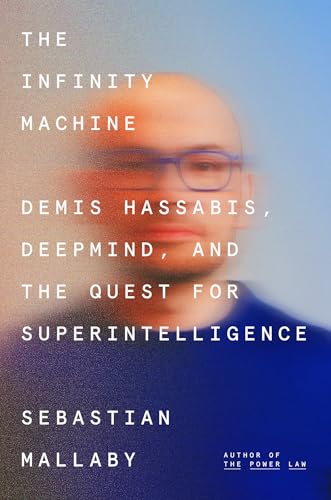
- Follow Demis Hassabis and DeepMind in the quest for superintelligence.
- Understand what one of the leading AI labs is really trying to build.
- Get the story behind the headlines in one readable account.
By late November, the evidence for improvement is clearest in work that takes several steps: using tools, handling files and revising an approach after feedback. The useful question is whether Gemini can produce a result you can check, with fewer corrections and less time spent getting there.
For that pile of reports or unfinished presentation, that’s a concrete way to judge the upgrade. A finished file with traceable figures is worth more than a confident description of what the assistant intends to do.
Demis Hassabis: A Game Designer's Route to a Nobel Prize

Andrew Ng Opened the AI Classroom to the World

Ed Zitron Wants Tech’s Promises to Add Up

QUOTE:
"Amateurs hack systems, professionals hack people."