Ed Zitron Wants Tech’s Promises to Add Up

Ed Zitron is a technology writer and podcaster who examines the business behind the tools we use. Through his newsletter, Where’s Your Ed At, and podcast, Better Offline, he challenges the promises made by powerful tech companies.
His central complaint is easy to recognize: a product can become more profitable while getting harder to use. He wants to know who benefits from that trade and why customers are expected to put up with it.
He’s Been on Both Sides of the Pitch
Zitron’s career began in games journalism, writing for publications including PC Zone, CVG and Eurogamer. As his own biography explains, he later built a career in public relations and became chief executive of EZPR.
Public relations, usually shortened to PR, includes helping companies tell their stories to reporters. A publicist might explain a new product, arrange an interview or suggest why a business deserves coverage.
It’s a useful background for someone who now questions corporate storytelling. He has worked with the people receiving the pitch and the people trying to make it land.
His 2013 book, This Is How You Pitch, offered advice to people starting out in PR. The introduction to his Spin Sucks author event described a blunt goal: help newcomers pitch stories without burying reporters in jargon.
The connection to his later work is straightforward: an exciting description still has to explain something real. Knowing how a story is packaged gives a critic plenty of reasons to inspect what’s inside.

- Ed Zitron’s guide to pitching stories and starting a career in public relations.
- An earlier look at how he thinks about clear communication and the media.
EZPR also moved into research and business analysis in 2025, according to the company’s description of its services. Its work includes examining proposed deals and studying competitors for clients in technology and finance.
That business background belongs in any account of Zitron’s work. He approaches technology through products, money and salesmanship, with experience both promoting businesses and examining their claims.
Why a Successful App Can Become Less Useful
Zitron gave his wider argument a name in a February 2023 essay: “The Rot Economy.” It describes a business pattern in which the demand for endless growth crowds out the goal of making something useful.
Consider an imaginary app that helps you find a recipe. Adding more advertisements could increase the money it earns, even as you spend longer hunting for the ingredients beneath the ads.
The business might call that a successful change. The person standing in the kitchen, with flour on their hands, could reasonably disagree.
That’s the gap Zitron keeps returning to: measures of business success don’t always measure whether a product works better. His argument connects small daily annoyances to decisions about how companies earn money and satisfy investors.
Ed Zitron on Why Tech Products Get Worse
The Google Emails Behind a Provocative Headline
In April 2024, Zitron published “The Man Who Killed Google Search.” The headline delivered a verdict; the article’s most useful evidence was a set of internal emails released during a government lawsuit over Google’s market power.
Those emails took readers inside a 2019 argument about search revenue and growth. They showed why counting searches can be a surprisingly tricky way to judge a search engine.
One February email from Google’s advertising leadership declared a “code yellow” over weak search revenue. This was an urgent effort to improve the financial results.
In a later draft message to a colleague, search leader Ben Gomes warned about ways to increase searches that would hurt users. Turning off spelling corrections or improvements to search rankings could make people search more, he wrote.
Gomes was describing options he found troubling, not announcing that Google had carried them out. His concern was that choosing the wrong target could reward the wrong behavior.
The problem is simple enough to picture: if you have to try three searches to find one answer, the search count rises. That doesn’t mean you had a better experience.
Zitron used the emails to argue that pressure for growth was damaging Google Search. The documents support the existence of that internal tension, but they don’t establish every conclusion he drew about why particular search changes happened.
It’s a revealing example of his work: close attention to records, followed by a forceful judgment about what they mean. Readers get more from the argument when they keep those two parts distinct.
Better Offline Gives the Argument a Voice
Zitron brought his criticism to audio in 2024 with Better Offline, made with Cool Zone Media and iHeartRadio. Its February 2024 trailer introduced a show about the tech industry’s power and the people affected by it.
The show combines solo storytelling, interviews and panel discussions, as its official description explains. Subjects include the businesses behind artificial intelligence, the people funding them and the consequences of their decisions.
The delivery can be angry and profane, which fits a host who named an essay “The Rot Economy.” He makes his position obvious, then asks listeners to follow the business story behind the complaint.
The podcast earned a 2025 Webby Award for a business podcast episode. That recognition also makes an unusual career path easier to see: a former games writer and publicist found an audience for detailed arguments about how technology businesses operate.
The AI Question: Who Pays the Bill?
Much of Zitron’s attention now goes to generative artificial intelligence, or generative AI. These systems produce text, images and other content using patterns learned from data, as the Government Accountability Office explains.
His criticism goes beyond whether a chatbot can produce a convincing answer. He asks whether the benefits justify the spending and whether the companies selling these tools can build businesses that cover their costs.
In his August 2026 essay about AI, Zitron allowed that language models could be useful for small, manageable tasks. A language model is a system trained to generate language; it’s the technology behind many chatbots.
He described trying AI tools on Minecraft problems and getting mixed results. His objection was to the leap from limited help with a task to sweeping claims about replacing work, especially when the costs of building and running the technology are included.
That’s a more useful argument to examine than a simple vote for or against AI. A tool can help you finish a job while leaving open the question of whether selling that help makes financial sense.
Ed Zitron Questions the Business Behind the AI Boom
Three kinds of money often get blurred in these discussions. Revenue is what customers pay a business, profit is what remains after its costs, and investment is money supplied by backers in hopes of a future return.
A company can attract investment and sell a popular product while still losing money. That doesn’t settle its future, but it explains why a large funding announcement can’t answer every question about its health.
Zitron’s skeptical forecasts remain forecasts. Whether a company eventually earns enough depends on what customers will pay, what it costs to serve them and how those conditions change.
For the history behind those arguments, journalist Karen Hao’s Empire of AI examines OpenAI, the company behind ChatGPT. Her reported account of the company’s rise offers another view of the people and decisions shaping the industry.
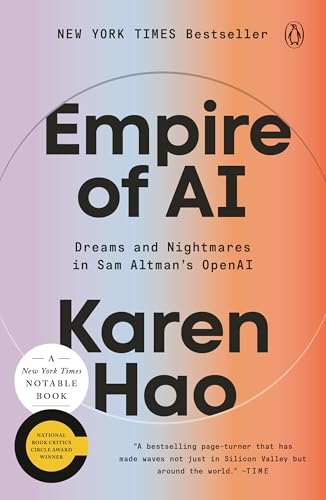
- See how OpenAI grew into one of the most powerful companies in tech.
- Understand the people and the fights behind ChatGPT.
- Form your own view of where AI is heading.
Zitron once wrote a book about getting a pitch heard. His criticism now presses the next question: after the pitch has worked, what does the customer actually get?
Sam Altman: Fired by OpenAI, Then Back in Charge
Timnit Gebru Asks Who AI Is Really Built For

Brian Krebs: The Reporter Who Learned Russian to Hunt Hackers

QUOTE:
"Amateurs hack systems, professionals hack people."