China’s AI Companies: Who’s Building What?
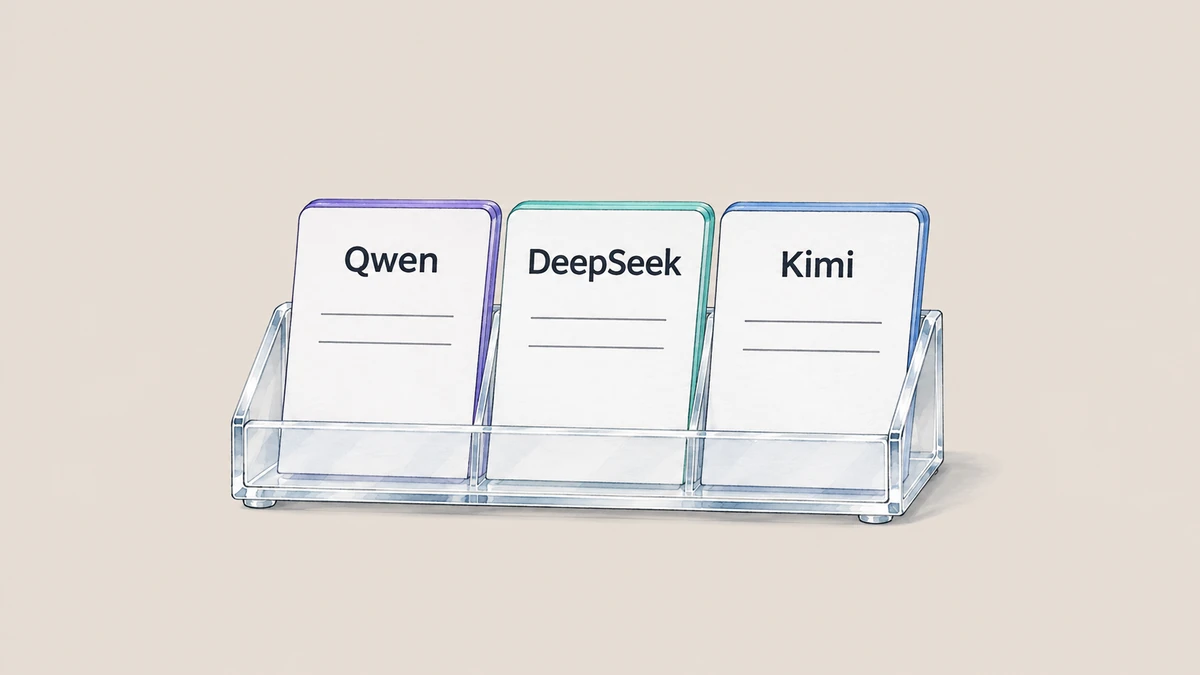
- Who Founded What?
- Alibaba and Baidu: Two Different Routes to the Customer
- Tencent and ByteDance Already Have Places to Put AI
- Why Xiaomi and Meituan Belong on the List
- DeepSeek Competes Through the Model Itself
- Kai-Fu Lee on China’s Place in the AI Business
- Moonshot and MiniMax Offer Different Reasons to Try Them
- Zhipu and StepFun Come From Research Teams
- “Open” Is a Question About a Particular Release
China’s artificial intelligence companies include shopping giants, phone makers and young research labs. They’re competing to build software that can write, code and work with images, but they bring very different skills and businesses to that race.
That helps explain why a list containing Xiaomi, Meituan and DeepSeek can look so odd. One sells phones and cars, another helps people order dinner, and the third was built around AI research.
An AI model is software trained on data to recognize patterns and produce responses. The company develops it; a chatbot, coding assistant or image generator is one way people use it.
Who Founded What?
The table covers the 11 companies below as of November 23, 2026. Founding figures are listed without trying to name every early employee or partner, and the AI names are families and products rather than a ranking of individual releases.
| Company | Founded and founding figures | AI names to recognize | Business background |
|---|---|---|---|
| Xiaomi | 2010; Lei Jun, Lin Bin and other co-founders | MiMo | Phones, connected devices and electric cars |
| Alibaba | 1999; an 18-person team led by Jack Ma | Qwen | Online commerce and cloud computing |
| Baidu | 2000; Robin Li and Eric Xu | ERNIE, also called Wenxin | Search and online information |
| ByteDance | 2012; Zhang Yiming and Liang Rubo | Doubao, Seed, Seedance and Seedream | Content platforms, including Douyin and TikTok |
| DeepSeek | 2023; Liang Wenfeng | DeepSeek models and chatbot | AI research, with roots in the High-Flyer investment business |
| Meituan | 2010; Wang Xing, Mu Rongjun and Wang Huiwen are credited as co-founders | LongCat | Local shopping, services and delivery |
| MiniMax | Early 2022; Yan Junjie | MiniMax models, Hailuo AI and MiniMax Audio | AI models and consumer applications |
| Moonshot AI | 2023; Yang Zhilin, Zhou Xinyu and Wu Yuxin | Kimi | AI research and assistants |
| StepFun | 2023; Jiang Daxin, with Zhu Yibo and Jiao Binxing in the core founding team | Step models and StepAudio | AI research, including speech and visual understanding |
| Tencent | 1998; Ma Huateng, Zhang Zhidong, Xu Chenye, Chen Yidan and Zeng Liqing | Hunyuan and Yuanbao | Messaging, games and digital services |
| Z.ai, also known as Zhipu AI | 2019; Tang Jie, Liu Debing, Zhang Peng and fellow researchers | GLM and AutoGLM | Research originating at Tsinghua University |
The age gap matters: Tencent and Alibaba were established more than two decades before DeepSeek. The older businesses already had customers and ways to reach them when the latest generation of AI arrived.
Alibaba and Baidu: Two Different Routes to the Customer
Alibaba’s Qwen comes from Alibaba Cloud, the part of the business that rents computing services to other organizations. That gives it a route into software built by outside developers, alongside Alibaba’s own products.
Baidu approaches AI with a long history in search. Its ERNIE family sits alongside a business built around helping people find information, which makes answering questions a natural fit.
Both also offer models that developers can download and run themselves. Alibaba’s Qwen3 releases and Baidu’s ERNIE 4.5 releases are specific examples with Apache 2.0 licenses, which permit commercial use under their terms.
These examples show why “big company” doesn’t automatically mean “closed model.” They also don’t mean every newer model from either company comes with the same permissions.
For a business comparing them, the practical question extends beyond which chatbot writes the nicer paragraph. Existing cloud services, deployment options and the work the software needs to do can matter just as much.
Tencent and ByteDance Already Have Places to Put AI
Tencent operates Weixin and WeChat, as well as games and workplace tools. Its Hunyuan models can support features inside products people already use, while Yuanbao is an AI assistant in its own right.
There’s a useful wrinkle in Tencent’s description of Yuanbao: the assistant offers a choice of models, including DeepSeek. An app’s owner and the company that built the model answering you can be different.
ByteDance brings experience in recommending and creating content through products such as TikTok and Douyin. Its AI names can take some untangling: Doubao is an assistant, Seed is its AI research organization, and Seedance and Seedream are video and image model families.
The Seed team’s releases show how much of this competition goes beyond typing into a chat box. Making a video, editing an image and understanding speech each demand capabilities that a text-only test won’t capture.
Tencent’s workplace and messaging services and ByteDance’s content platforms give both companies ready-made places to introduce AI. That reach is an advantage in finding users; it doesn’t establish that either company wins every model test.
Why Xiaomi and Meituan Belong on the List
Xiaomi’s presence makes more sense once you think about the devices it sells. An assistant might be useful on a phone or in a car even when the owner has no interest in comparing chatbot brands.
Its MiMo family includes models released for outside developers to use, such as the original MiMo language models. Xiaomi therefore has both a model-development effort and a hardware business where AI could become part of everyday use.
Meituan starts with a different set of daily tasks: shopping, choosing services and getting things delivered. Its LongCat work includes general-purpose language models, rather than only software for predicting a delivery time.
The company’s LongCat-Flash-Chat release is one example of that broader ambition. Meituan published the model under an MIT license, allowing others to use and adapt it under the license’s terms.
The distinction between these two companies is their starting point. Xiaomi can connect AI to devices; Meituan can connect it to local services, where finding an answer may be only the first step toward completing an order.
DeepSeek Competes Through the Model Itself
DeepSeek was founded by Liang Wenfeng, who also built the High-Flyer investment business. It entered this race without a shopping marketplace or a social network that had spent years gathering customers.
Its research and downloadable models gave it another route into other people’s products. The 2025 DeepSeek-R1 release, for example, made its main model’s weights available under the MIT license.
Weights are the learned numerical settings that shape a model’s responses. Publishing them lets other developers run the model, rather than sending every request to the original company’s service.
That creates a different kind of reach from owning a popular app. A developer might use a DeepSeek model inside a tool with another name, so the person using it may never visit DeepSeek’s website.
R1 is an important part of that history, not a description of the newest release. By November 2026, DeepSeek’s developer service listed V4 Pro and a Flash service running V4.1-Flash-1017.
Company comparisons age quickly when they rely on a single headline-making model. The more durable distinction is how a business gets its technology into use: through its own customers, through other developers, or both.
Kai-Fu Lee on China’s Place in the AI Business
Moonshot and MiniMax Offer Different Reasons to Try Them
Moonshot AI is the company behind Kimi. Its founding team includes Yang Zhilin, Zhou Xinyu and Wu Yuxin, as described in an early interview with Yang.
Kimi’s work on handling large amounts of material remains part of its appeal. The company’s K3.1 Pro release combines an open-weight model with support for lengthy inputs and tasks such as coding and document work.
An ability to accept a long document gives a model more material to work with. It doesn’t guarantee that the model will notice every important detail or produce an accurate summary.
MiniMax has a particularly visible range of media products: Hailuo for video and MiniMax Audio for speech, alongside its language models and AI assistant tools. Its company profile describes a business spanning text, images, video, voice and music.
If your task is producing a narrated video, that range may matter more than a model’s score on a math test. If you’re working through a stack of documents, you’ll care more about how well the system reads and connects the material.
The overlap is substantial: both companies build general AI capabilities. Their product ranges offer different starting points for trying them, rather than neat boundaries around what each can do.
Zhipu and StepFun Come From Research Teams
Z.ai, also known as Zhipu AI, grew out of work at Tsinghua University. Its company history traces a path from research models to the GLM family and tools that can carry out tasks on a computer.
StepFun’s founding team brought experience from Microsoft, including founder Jiang Daxin. Its work spans language, vision and speech, with models designed to handle more than one kind of input.
That ability is called multimodal: a system can work with combinations such as text and images. A model might answer a question about a chart, for example, rather than needing someone to type out all its contents.
StepFun’s Step3 research release illustrates that approach with a model for visual and language reasoning. As with GLM and Qwen, a family name covers successive releases with different strengths and requirements.
These two companies also show why a founder’s résumé is useful background but a poor substitute for testing a product. University research and experience at a large software company can both produce capable teams; neither tells you which tool will handle your task better.
“Open” Is a Question About a Particular Release
Several companies on this list publish model weights, but they make different choices across their product ranges. A downloadable language model and a video service available only through the company’s website can exist under the same brand.
Open weights also don’t necessarily include the full training data or everything needed to recreate the model. Before choosing one, check the exact release, its license and the computing hardware needed to run it.
There are three different arrangements to keep separate: using the company’s own app, paying another provider to run its model, and running a downloaded model on equipment you control. Each puts responsibility for storing prompts and securing the service in a different place.
For a wider view of how China’s technology businesses developed, Kai-Fu Lee’s AI Superpowers examines competition between China and Silicon Valley. Published in 2018, it offers historical context rather than a guide to today’s model releases.
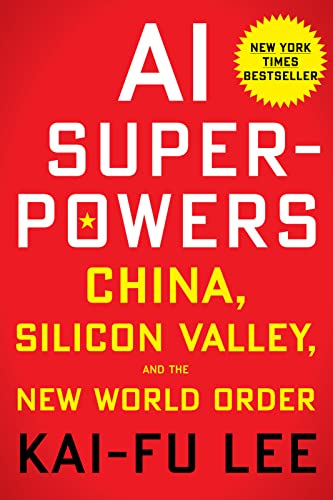
- Kai-Fu Lee examines the businesses and ideas behind AI competition in China and the United States.
- Published in 2018: historical background for today’s AI industry, rather than a guide to current models.
The useful comparison begins with your job: reading documents, writing software, creating media or adding AI to a service. Give the candidates the same realistic task, check the result and compare the effort and cost required to get it right.
A company’s founding story explains how it reached the starting line. The work you need done will tell you which of its products deserves your attention.
Andrew Ng Opened the AI Classroom to the World
Fei-Fei Li: Why Millions of Labeled Pictures Changed AI
Ed Zitron Wants Tech’s Promises to Add Up

QUOTE:
"Amateurs hack systems, professionals hack people."