Fei-Fei Li: Why Millions of Labeled Pictures Changed AI
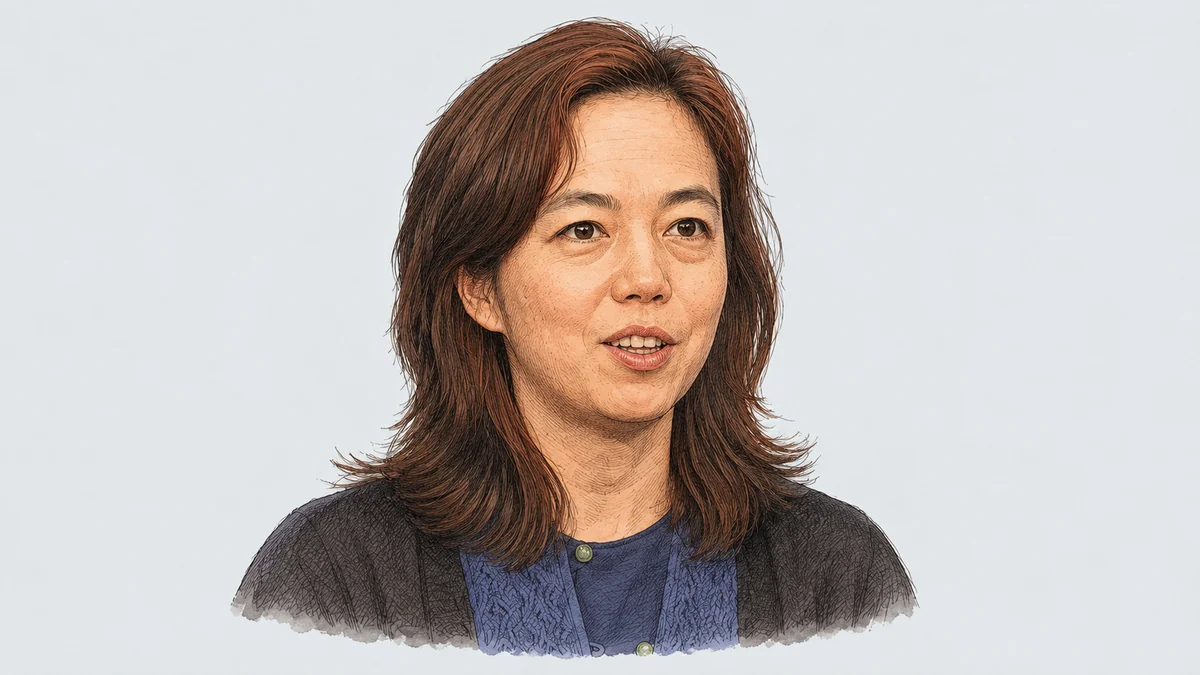
Fei-Fei Li is a computer scientist who led the creation of ImageNet, a collection of millions of labeled pictures. It gave computers examples to learn from and researchers a shared way to test how well their systems recognized images.
Long before that project, Li was studying physics at Princeton and helping run her family's dry-cleaning shop in Parsippany, New Jersey. She had moved from China to the United States during high school, and spent university weekends helping keep the business going.
She later described those years in The Worlds I See. The memoir's title fits a career spent asking how sight becomes understanding, a question that eventually took her from physics into computer vision.
A Computer Needs More Than a Picture
Li earned her physics degree in 1999 and an electrical-engineering doctorate from Caltech in 2005. Her interests took her through neuroscience and into computer vision, the effort to make computers extract useful information from images. She joined Princeton's computer-science faculty in 2007, then Stanford in 2009.
For a person, recognizing a familiar object can feel effortless. For a computer, a photograph starts as numbers representing colors and brightness. Those numbers can change enormously when the same object appears in shadow, turns sideways or sits behind something else.
Consider pictures of chairs. A wooden kitchen chair and a padded office chair may share few obvious visual details. Yet a useful recognition system should connect them, while distinguishing both from a table. Writing a rule for every possible view would be an enormous task.
Machine learning offers another approach. Give a model examples and a way to measure its mistakes, then adjust it until it becomes better at the task. A neural network does this through connected layers of calculations, whose numerical settings change during training.
But a clever learning method still needs something useful to learn from. Li set out to supply it.
Building the Picture Collection
Li launched ImageNet with Princeton computer scientist Kai Li in 2007. They wanted a large, organized collection of pictures, with labels identifying what they contained.
Its structure drew on WordNet, which arranges word meanings into related categories. ImageNet connected that organization to photographs. People did the painstaking work of checking whether pictures belonged under their proposed labels.
The 2009 ImageNet paper described 3.2 million images across 5,247 categories. Alongside the two Lis, its authors were Jia Deng, Wei Dong, Richard Socher and Li-Jia Li.
Beginning in 2010, the ImageNet Large Scale Visual Recognition Challenge used a portion of the collection for shared tests. Researchers trained their systems on one set of pictures and measured the results on others held back for testing.
One task was classification: deciding which category an image belongs to. Another was detection, which also asks where an object appears within it. With common tasks and images, researchers could compare their methods on the same terms.
Olga Russakovsky later led the paper documenting the challenge, working with Li and a large group of collaborators. Their work turned a picture collection into a recurring test of progress.
When AlexNet Arrived
In 2012, a University of Toronto team produced an ImageNet result that helped change the direction of computer vision.
Alex Krizhevsky, Ilya Sutskever and Geoffrey Hinton trained a deep neural network using graphics processing units, or GPUs. These chips could carry out large numbers of the repeated calculations the training required.
Their system, AlexNet, brought together the Toronto team's learning methods, ImageNet's labeled pictures and suitable computing power. The competition gave them a place to demonstrate how well that combination worked.
Li's collection had become the foundation for another team's breakthrough. Recognizing a category in a photograph was still a narrower task than understanding how an object behaves, but researchers now had a much stronger way to tackle it.
The People Inside the Dataset
ImageNet's success also brought its labels under closer scrutiny.
In a study released in 2019, Li and a team led by Kaiyu Yang examined the part of ImageNet devoted to people. They found problematic inherited categories, uneven representation and labels describing things that couldn't reliably be judged from someone's appearance.
A label may look like a small piece of housekeeping. In a training set, it can become the answer a model is rewarded for giving. If the category makes an unjustified judgment about a person, improving the model's score won't repair that judgment.
There was also a privacy problem in pictures collected to illustrate objects: people could appear in the background. Li and collaborators later studied obscuring faces while preserving the collection's usefulness for recognition research. This reduced one source of identifying information, though other clues could remain in a picture.
Li was also working to broaden who could take part in AI research. In 2015, she, Russakovsky and Rick Sommer founded a Stanford summer program for high-school girls. It became the starting point for AI4ALL, formally established in 2017, with Tess Posner as founding CEO.
Her interest in the people affected by AI reaches into healthcare, too. In a 2024 Princeton conversation, she connected that research with caring for her mother and the importance of human care in medicine.
Beyond the Flat Image
Li directed the Stanford AI Lab from 2013 to 2018 and served as Google Cloud's chief scientist of AI and machine learning during 2017–2018. Her later work has pushed toward spatial intelligence: representing objects and places in three dimensions, beyond assigning labels to flat pictures.
In 2024, she founded World Labs with Justin Johnson, Ben Mildenhall and Christoph Lassner. The company described its 2025 Marble system as generating editable 3D environments from inputs including pictures and text. That gave her work on visual information a new form: a scene someone could move through and change.
Her roles changed in 2026. In May, Stanford named her special advisor on AI to its president and co-chair of the Human-Centered AI institute's advisory council. She remains a Stanford professor and the institute's founding director.
On November 16, AMD announced that it had completed its acquisition of World Labs and that Li had joined as executive vice president and chief scientist.
Whether the examples are photographs or three-dimensional scenes, someone still has to decide what a computer should learn from them. ImageNet made that work possible at a huge scale. Its later scrutiny brought the choices back into view: which labels are justified, whose faces appear in the pictures and who gets to make those decisions.
Andrej Karpathy Takes AI Apart So You Can Understand It
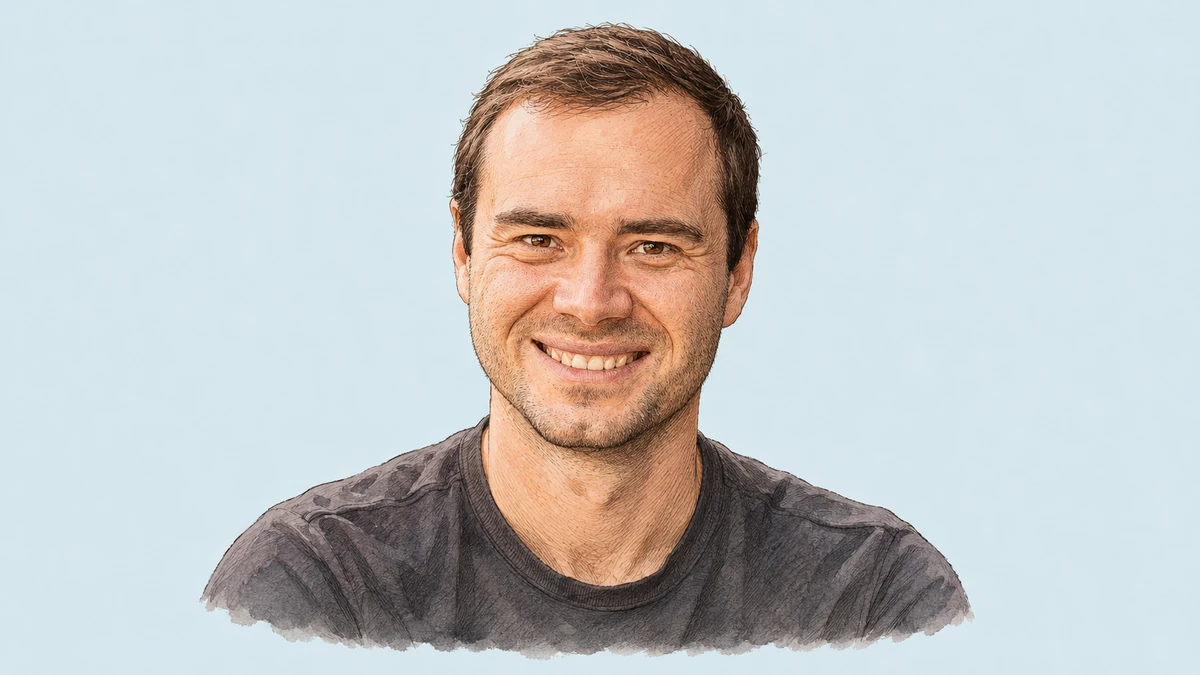
Ilya Sutskever: From AlexNet to Safe Superintelligence
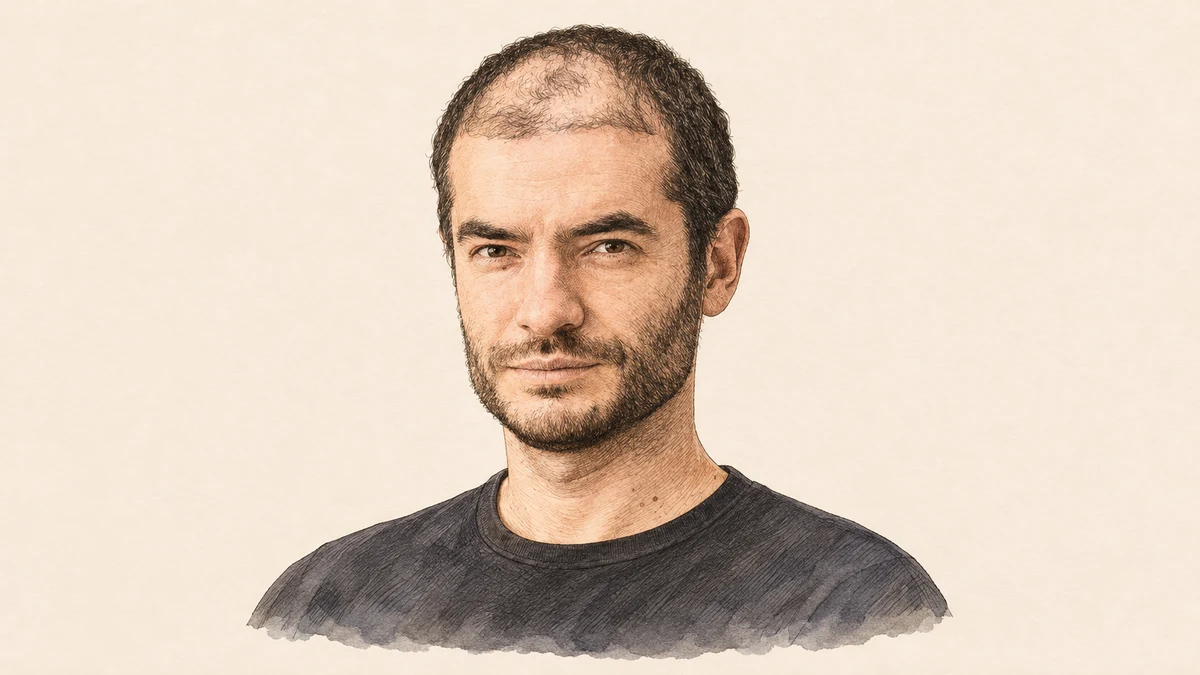
Demis Hassabis: A Game Designer's Route to a Nobel Prize
QUOTE:
"Amateurs hack systems, professionals hack people."