Why AI Companions Feel So Personal
An AI companion is a chatbot designed or used for ongoing social conversation, sometimes as a friend, character or romantic partner. It can feel personal because it responds directly to you, adopts a consistent personality and may remember details from earlier chats.
Finding comfort in those exchanges doesn't make someone foolish. The important questions are what the service is doing, what it knows about you and whether the relationship is helping you live the life you want outside the app.
Why It Can Feel Like Someone Is There
Conversation is a familiar sign of attention. A quick reply, a remembered preference or a question about your day can feel meaningful even when you know the response came from software.
A companion can also be available when other people are busy. You don't have to arrange a meeting, explain why you're repeating a worry or judge whether the listener has time.
Those qualities can support entertainment, reflection or rehearsal. A person might practice introducing themselves, work through how to raise a minor disagreement or enjoy a fictional character's company.
But the response isn't evidence of reciprocal human feelings. The system generates language within a product designed and operated by people you may never meet.
Remembering You Is a Product Feature
Some companions save information about your preferences or earlier conversations and use it in later replies. That can make the exchange feel continuous, but the details are data stored and processed under the service's rules.
Find out what the service saves, whether you can inspect or delete it and who else may have access. A friendly interface doesn't answer those questions.
Avoid putting someone else's private messages into the conversation without their permission. The chatbot may feel like a private listener while the service still receives information about a person who never agreed to use it.
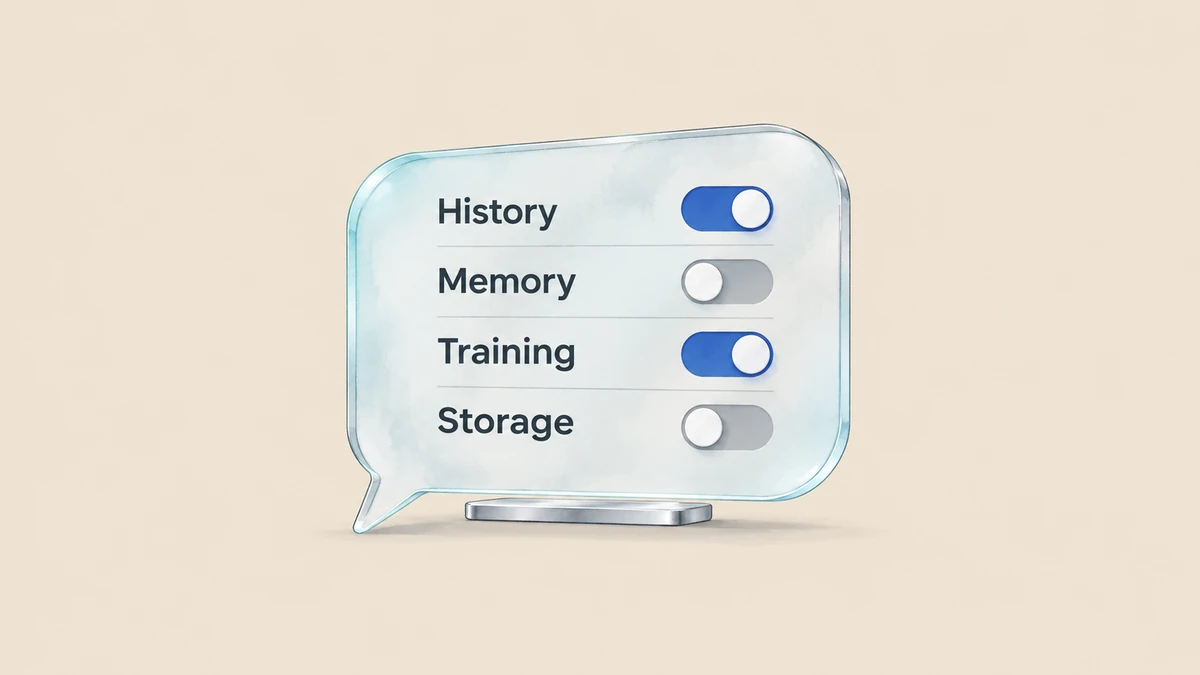
Our guide to chatbot privacy explains the difference between conversation history, memory and training. A control for one doesn't necessarily switch off the others.
Agreement Isn't Always Good Advice
An assistant that validates your feelings can be pleasant to talk to. Trouble begins when a reassuring tone turns an incomplete account into a confident judgment about another person or a major life decision.
For a fictional example, you might describe a friend's unanswered message while upset. The chatbot doesn't know whether the friend is ignoring you, working late or dealing with an emergency, even if it generates a convincing explanation.
Ask it to identify what information is missing and offer several plausible interpretations. For something that matters, speak with someone who can challenge your account and help you check the facts.
This is part of a larger problem in AI design: producing behavior that looks helpful isn't always the same as helping the person. Brian Christian's book examines how researchers try to make machine behavior match human goals and values.

- Understand why teaching AI what we actually want is so hard.
- Meet the researchers working to make AI systems safe.
- Follow the argument through clear stories, with no technical background needed.
What the Research Can—and Can't—Tell Us
A four-week MIT Media Lab study followed 981 participants using a chatbot. Researchers examined outcomes including loneliness, social interaction and emotional dependence.
They didn't find significant effects from the assigned experimental conditions, but people who voluntarily used the chatbot more showed worse outcomes. That association doesn't prove that additional use caused the difficulties; people already struggling may also have used it more.
A short study can't settle how every companion product affects every person over years. It does give researchers and users reasons to examine patterns of use, rather than judging a relationship solely by how reassuring one conversation feels.
Research involving teenagers needs its own context. Common Sense Media's 2025 teen survey describes reported experiences with companions, which are different evidence from a controlled experiment.
What Teens Say About Talking to AI Companions
Notice What Happens After You Close the App
Consider whether the conversation helps you return to something you wanted to do. Practicing a difficult introduction has a different effect from spending the evening rehearsing it while avoiding every chance to meet someone.
Look at changes in sleep, spending, concentration and contact with other people. Those observations can be more useful than trying to decide whether your attachment is “real enough” to count.
Set boundaries that fit the problem you notice: a stopping time, notification limits or a decision to discuss important choices with a person first. If stepping away feels difficult or the conversations are distressing, seek support from someone you trust or a qualified professional.
For a child or teenager, involve a parent or another trusted adult and review the service's current age rules. A character that seems friendly isn't necessarily designed to respond appropriately to a young person's needs.
An AI companion may provide an enjoyable conversation, but it shouldn't become the only place your concerns can go. A useful boundary leaves room for people who can know you, disagree with you and show up beyond the chat window.
Is Your AI Chat Private? The Settings That Matter
Why AI Makes Things Up—and Sounds So Sure About It

How to Ask AI Better Questions Without the Magic Words

QUOTE:
"Amateurs hack systems, professionals hack people."