Unix: A Family History, a Standard and a Set of Permissions
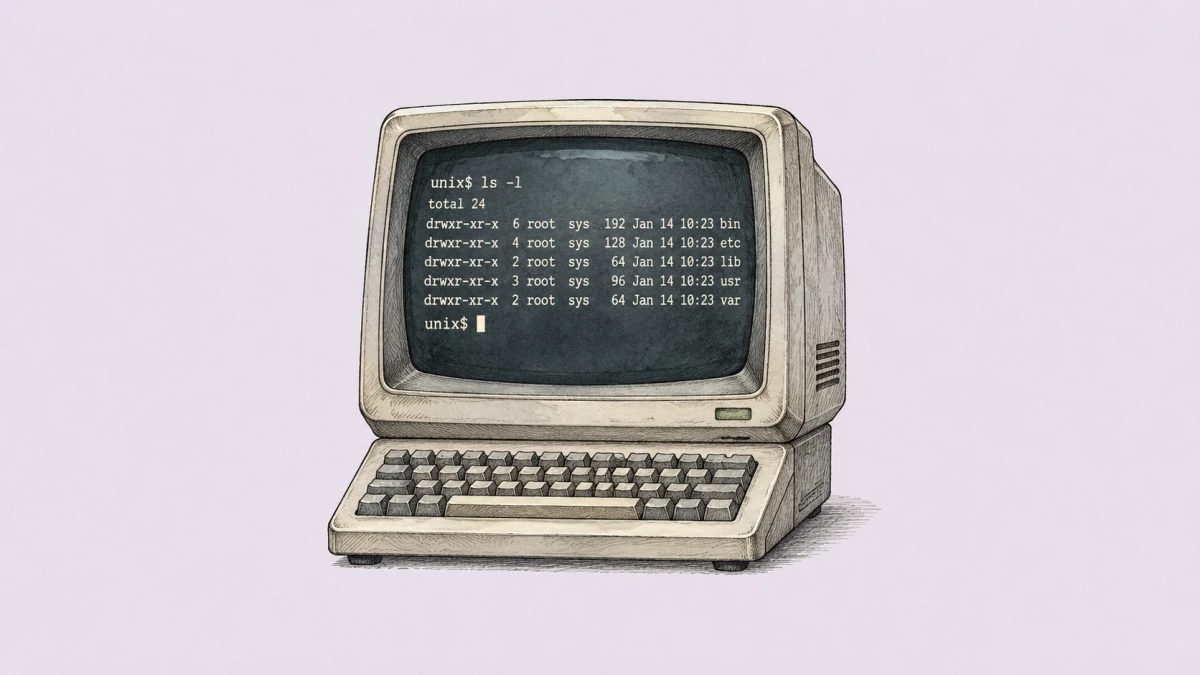
Unix is an operating-system tradition that began at Bell Labs and influenced many later systems. An operating system manages a computer’s resources and provides services for programs. The name UNIX also has a more specific use: it’s a certification mark for systems that meet a defined standard.
Two people can both say “Unix” while one means a family of designs and the other means a certified product.

- Stop fearing the terminal: start from your first command and build from there.
- Automate boring tasks with shell scripts you write yourself.
- Understand what each command does instead of copying it blindly.
From a shared design to a formal standard
The Open Group, which manages the UNIX standard and certification, traces the original work to Bell Labs in 1969. As different systems developed, standard interfaces gave software a common set of operations it could expect to use.
An interface here means a way for programs to request work from the system. It isn't a window, icon or desktop theme.
The Single UNIX Specification and certification program define those expectations and test whether a product meets them. Certification applies to a particular registered product, rather than automatically covering everything sold under a familiar brand name.
“Unix-like” is a broader description of systems that follow related ideas and behavior. It doesn't, by itself, establish certification.
Where Linux fits
Linux is a kernel: the core that manages hardware and system resources and supplies fundamental services to other software. The Linux project’s description distinguishes that core from the larger system built around it.
A Linux distribution packages a kernel with other software to make a usable system. Calling Linux “a version of Unix” skips this distinction and blurs design resemblance with certification.
Nor are Linux and UNIX certification necessarily incompatible. The Open Group records that a Linux distribution has been certified. Certification has to be checked for the particular product, not inferred from its use of Linux.
Linux in 100 Seconds
Sharing the machine, dividing the permissions
A concrete part of the Unix tradition is support for several users with different rights. They can work on the same machine without having equal access to every file.
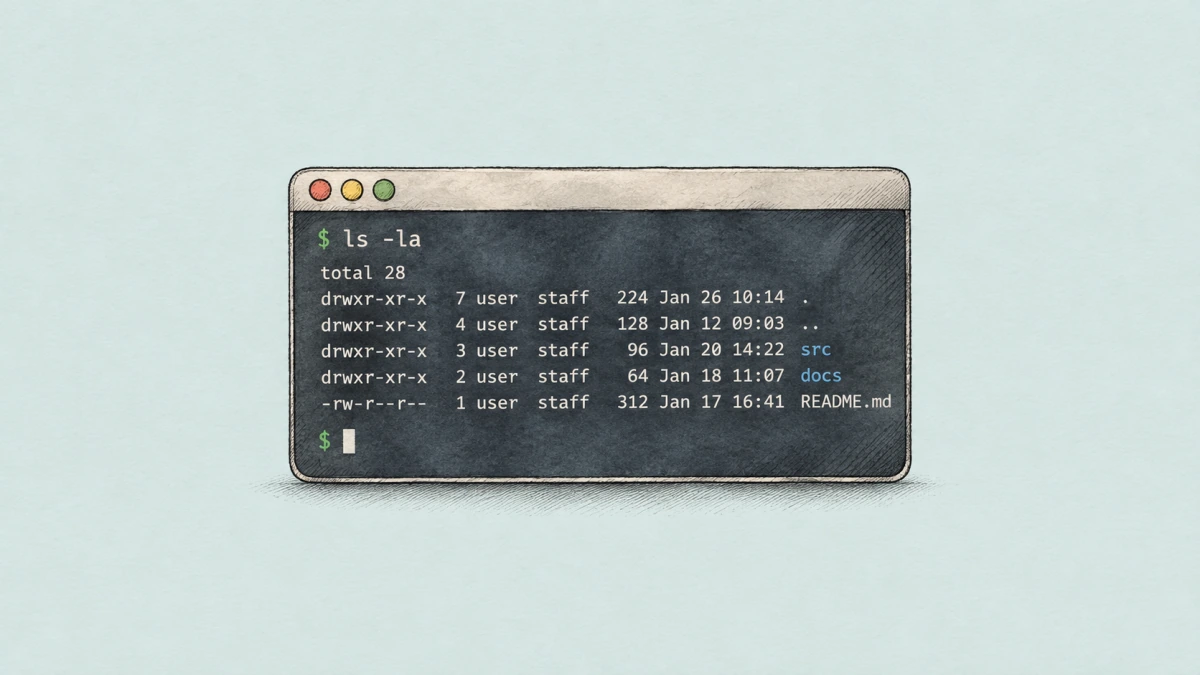
The Portable Operating System Interface standard, known as POSIX, describes file access permissions for three classes: the owner, a group and others. Permissions distinguish reading, writing and execution; execution concerns running a program file.
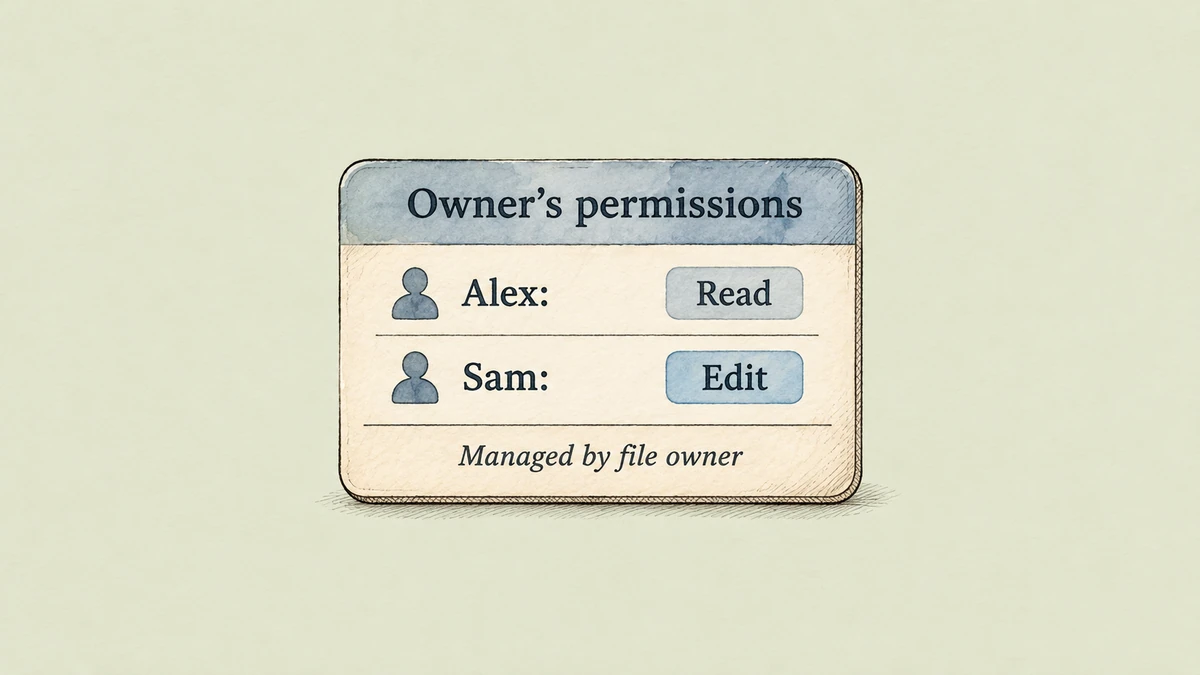
Suppose a project document lets its owner read and edit it, lets a team group read it and gives others no access. The file can be shared for review without giving every reader editing power. Additional controls and special privileges can affect the final decision, so these familiar permission categories aren't the whole security system.
Access control depends on those decisions being set and enforced correctly. A system's Unix heritage doesn't correct an overly broad file permission. The installation's configuration, updates and handling of powerful accounts determine what people and programs can actually do.
The Shell Between Your Command and the Computer
Discretionary Access Control: Who Gets to Share the File?
Symbolic Links: A Filename That Leads Somewhere Else
QUOTE:
"Amateurs hack systems, professionals hack people."