SCADA: From a Distant Sensor to the Control Room
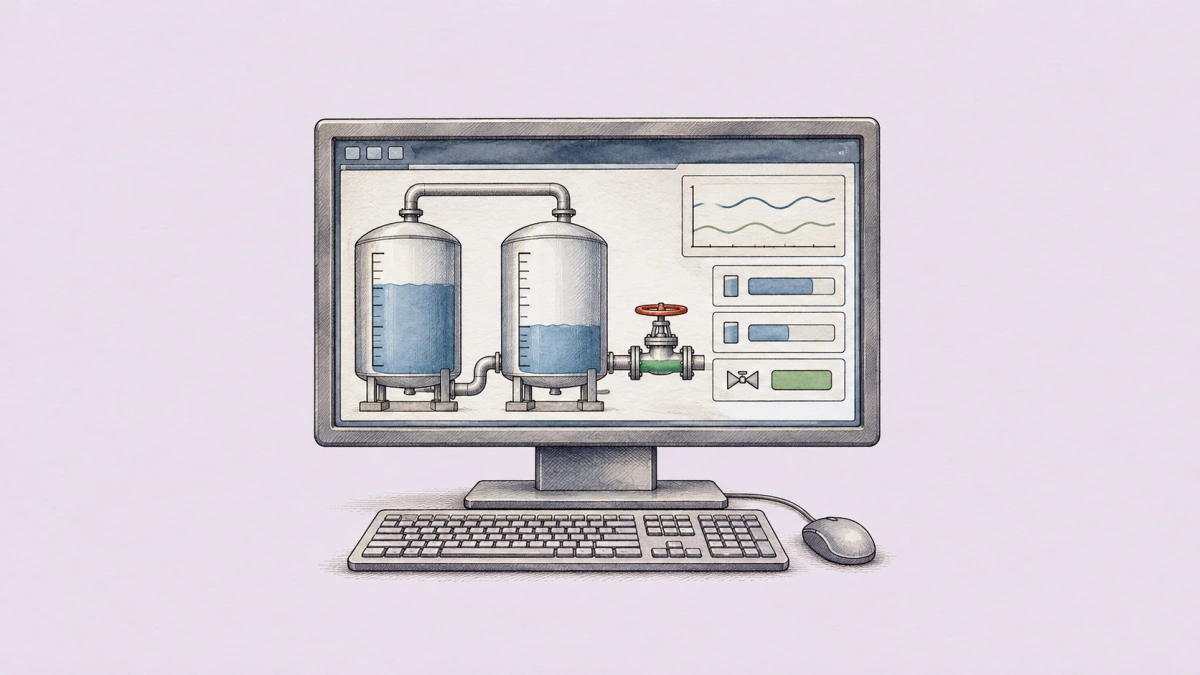
SCADA stands for supervisory control and data acquisition: a system that gathers readings from equipment and lets operators oversee and direct it, including across widely separated sites. The reading might be a water level. The command might change how a pump is meant to operate.
The two halves of the name describe the work. Data acquisition means collecting measurements and other information. Supervisory control means using that wider view to oversee the process and send instructions.
SCADA is one kind of industrial control system. Water networks, pipelines and electric systems appear among the examples in the National Institute of Standards and Technology (NIST) guide to operational technology security. Operational technology, or OT, is the broader category of systems that monitor or affect physical equipment and processes.
What Is SCADA?
First, something has to measure the water
Consider a hypothetical water network with tanks at several sites. An operator needs to know how much water is available without visiting each tank to look inside.
A sensor measures a physical condition, such as the level in a tank. Equipment at the site collects that reading and communicates with a central system. The measurement can then appear on the operator's screen alongside information from other sites.
That screen is part of a human-machine interface, often shortened to HMI. It presents information in a form a person can use and provides controls for sending instructions. A tank symbol on a display is useful because it represents a measurement coming from somewhere real.
The communications path connects these places. Its purpose is to move readings toward the control center and instructions back toward equipment. SCADA's use of a network doesn't, by itself, mean that the equipment is exposed directly to the public internet.
The pump doesn't wait for every click
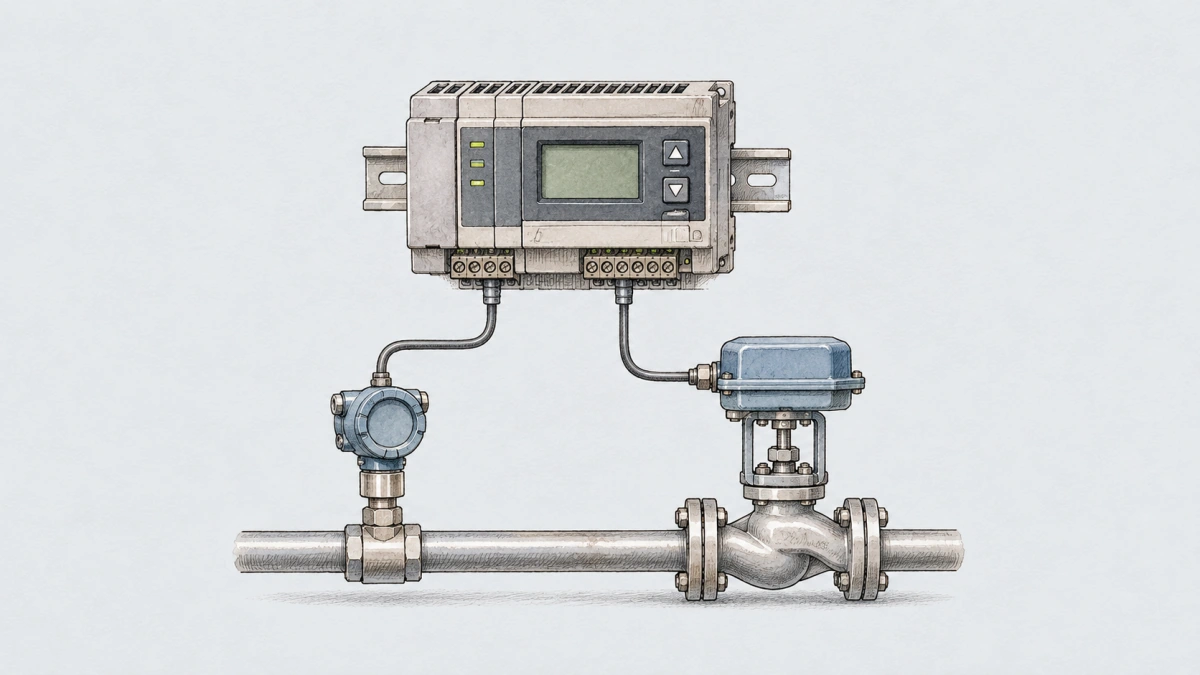
The central display isn't doing every control task. A controller at the equipment can read inputs and carry out programmed actions locally.
In the water example, a local controller could use a level reading to decide when a pump should run under its programmed rules. It can perform that work without an operator issuing a fresh command for every adjustment.
An actuator is the part that produces a physical change, such as moving a valve. Sensors report conditions; controllers decide what to do under their instructions; actuators carry out physical actions. A particular installation can arrange these components in different ways, but their roles explain how a computer instruction reaches the machinery.
SCADA supplies the wider supervision. The control center can receive readings, display conditions and send commands that affect operation. Those commands may be initiated by an operator or by configured automatic functions.
The division of work is useful: local equipment handles programmed control while the central system helps operators see and manage a larger operation. Seeing a pump symbol change on screen is only the visible end of that chain.

- Make LEDs blink and sensors report in an afternoon with more than 22 guided lessons.
- Start with no soldering: everything plugs into the breadboard.
- See how code controls real hardware, the first step toward understanding any device.
When an incorrect reading becomes a physical problem
A wrong value on an ordinary office document can mislead a person. A wrong reading or unauthorized command in an industrial system can also affect the physical process that person is supervising.
This changes how security work must be planned. A software update or a communication restriction may affect equipment that's expected to keep operating. NIST's guide calls for testing and operational planning around changes, including patches that repair software weaknesses.
Separating networks into controlled sections can limit which systems communicate. That approach is called segmentation. Its purpose is to allow the communications the process needs while restricting unnecessary paths; it isn't a reason to cut connections without understanding their role.
SCADA itself isn't a guarantee of safe operation. Systems that detect dangerous conditions and take protective action serve a distinct safety function.
Industrial Control Systems: Where Software Moves the Real World
Operational Technology: What Happens After the Computer Decides
Ralph Langner: Decoding Stuxnet's Industrial Target
QUOTE:
"Amateurs hack systems, professionals hack people."