Precursor: A Warning Before a Cyber Incident
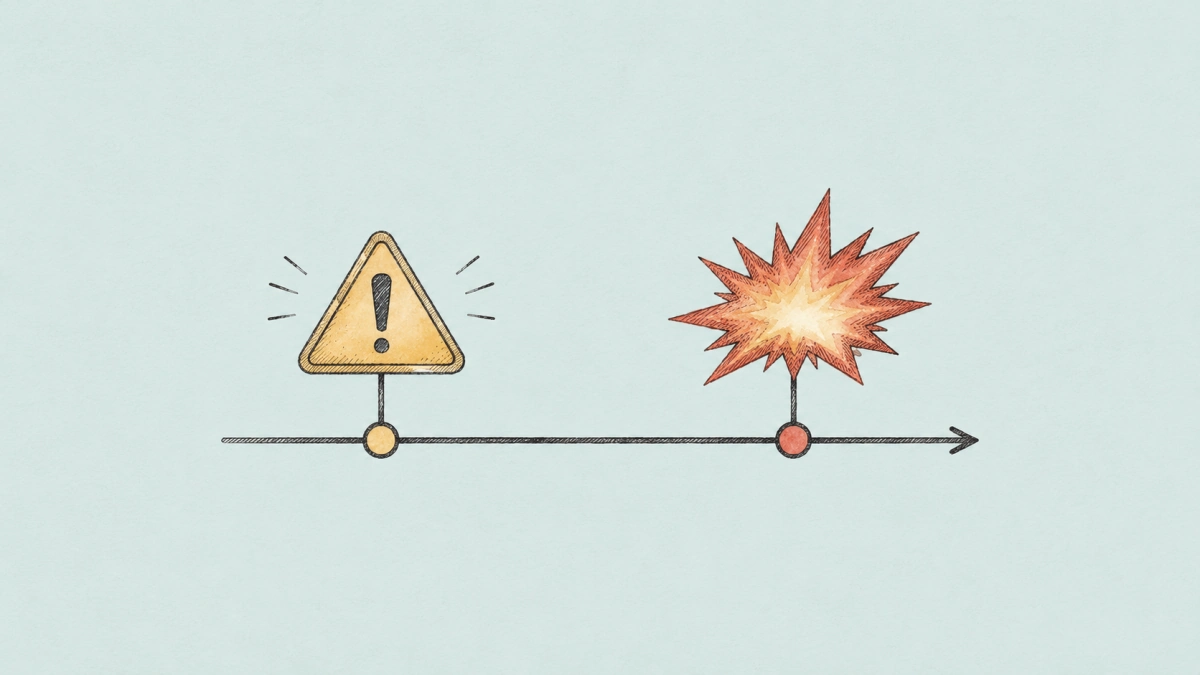
A newly published method for exploiting a software flaw could matter before anyone uses it against your organization. Suppose the affected software runs on one of your servers. The announcement gives defenders a reason to check whether their server is vulnerable, but it doesn't show that an intruder has arrived.
In incident response, a precursor is a sign that a particular security incident may happen later. It offers warning, not certainty. An announced attack threat or a relevant exploit—a method for taking advantage of a weakness—can serve this role.
How Defenders Learn What Threats Exist
Before an incident, during it or after it
A classic distinction pairs precursor with indicator. In that usage, a precursor suggests a possible future incident. An indicator suggests an incident may be underway or may already have occurred.
The National Institute of Standards and Technology, or NIST, used this distinction in its 2012 incident-handling guide. That guide was superseded in 2025; it is the historical source of the terminology here, not the current edition of NIST's guidance.
For the server in the opening example, publication of a relevant exploit is a warning. If defenders later find evidence suggesting that the exploit was used to enter their server, the investigation has moved to a different point on the timeline.
Does the warning apply here?
The software name in an announcement is a starting point. Defenders need to establish whether their actual system has the affected version and conditions. They can then compare the warning with other available evidence, such as relevant activity records and security alerts.
That step keeps two mistakes apart: ignoring a relevant warning because there is no confirmed incident yet, and declaring an incident merely because a warning exists.
NIST's current incident-response guidance calls for analyzing potentially harmful events, combining information from multiple sources and adding context about the affected systems and threats. It also calls for criteria that help an organization decide when to declare an incident.
A warning about software the organization doesn't use leads to a different assessment from one that matches a reachable, affected server.

- Check on your home from your phone without paying for a subscription.
- See clearly at night with color night vision and a built-in spotlight.
- Follow movement around the room automatically with pan, tilt and AI tracking.
The timeline belongs to the incident being discussed
An event can be serious in its own right and also warn of something later. For example, a confirmed break-in to an account could be an incident already underway and a warning of a possible later attempt to reach other resources.
The two labels concern different events. A report needs to name which incident it means.
Send a relevant warning to the defenders responsible for the affected system. Their incident-response process can connect it with checks for the weakness and any evidence of an attack.
Security Indicators: How a Clue Becomes Useful Evidence
Cyber Reconnaissance: How Ordinary Facts Become an Attack Plan
Incident Response Plan: Who Can Act, and When?

QUOTE:
"Amateurs hack systems, professionals hack people."