MAC Addresses: Getting Data to the Next Device
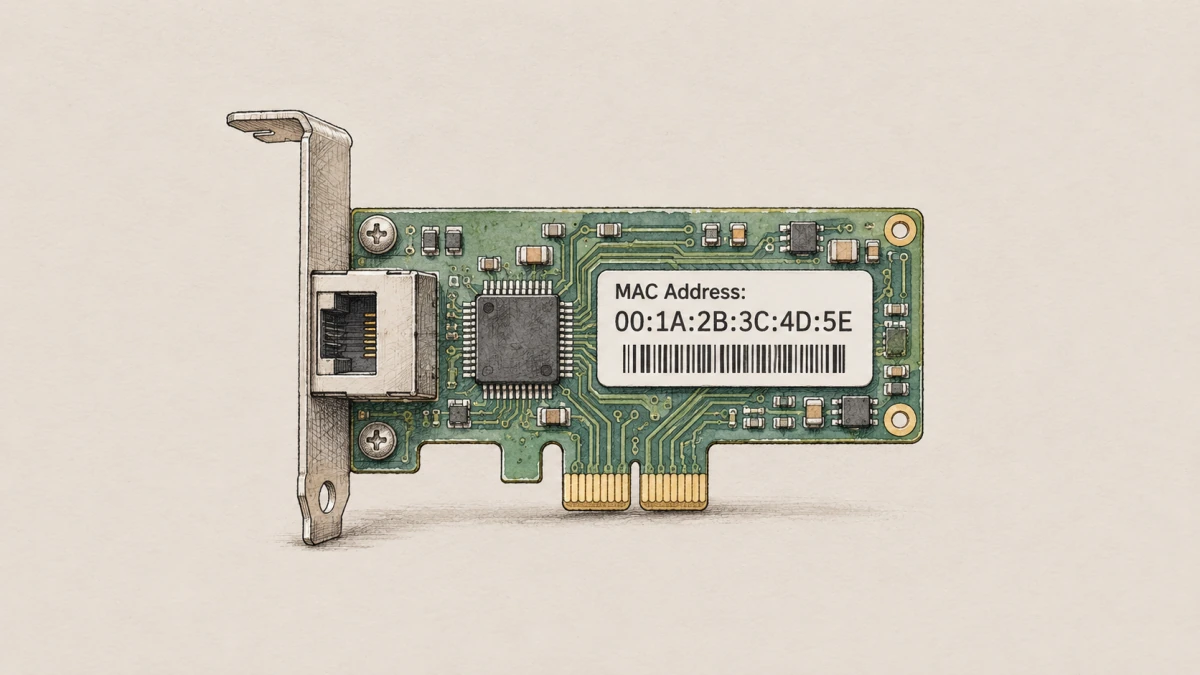
A website can be far away while the next stop for a laptop's data is a router in the same room. On an Ethernet network, a MAC address helps the laptop make that local delivery. It identifies the network interface that should receive the transmission.
MAC means Media Access Control. On Ethernet and Wi-Fi networks, the address identifies an interface, such as a wireless adapter. One computer can have several interfaces, each with its own address.
The common form contains 48 bits, the binary digits 0 and 1, grouped into six bytes. The invented address 02:71:4B:9E:20:AC represents each byte as a pair of hexadecimal digits. That notation uses 0–9 and A–F.
Why Does Your Device Need a MAC Address Too?
The Router Receives the Local Frame
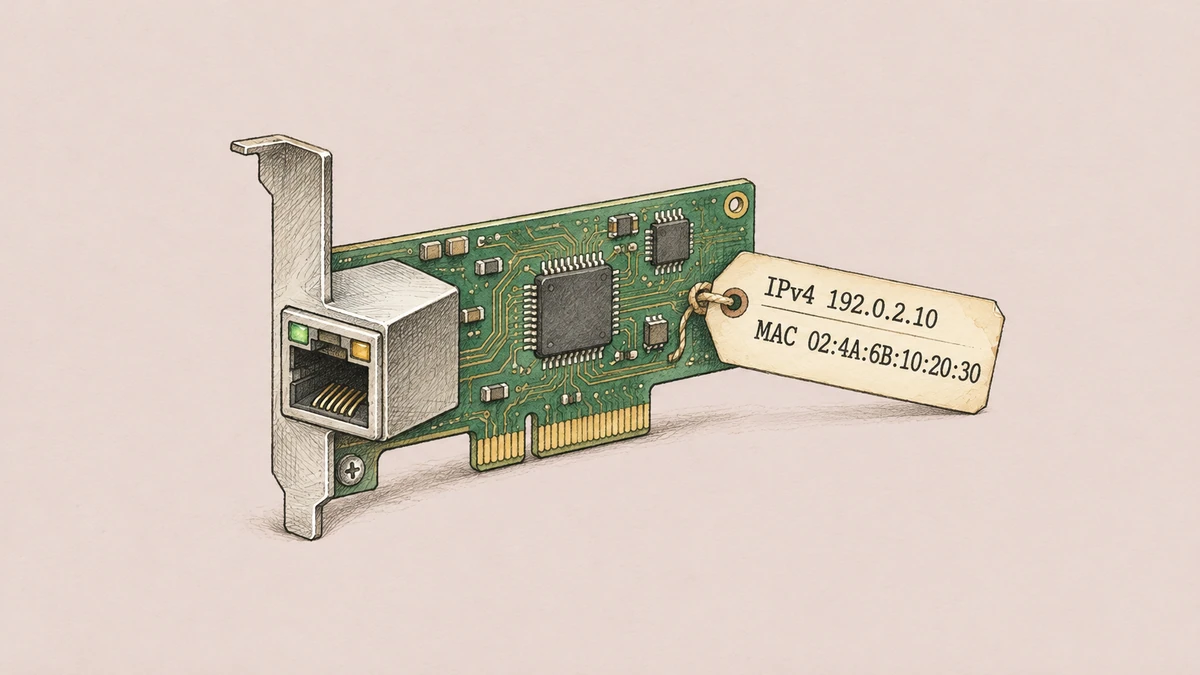
An Internet Protocol (IP) address guides routing across networks. Suppose our laptop uses IP version 4, or IPv4, and its routing information selects the local router as the next stop.
Address Resolution Protocol, or ARP, finds the Ethernet address associated with the router's local IP address. The laptop can store that mapping for reuse, as described in the ARP specification.
A packet is a small unit of network data. The laptop wraps it in an Ethernet frame, the unit carried on the local link. The frame goes to the router's interface; the website remains the IP destination. In ordinary routed internet traffic, the laptop's original MAC address does not travel all the way to the website as a device identifier.
Why a Hardware Address Can Change
Universally administered MAC addresses come from an assignment system intended to make them globally unique. Locally administered addresses are chosen for local use, where they must avoid conflicts. In its assignment guidance, the standards organization IEEE does not guarantee that duplicates never occur.
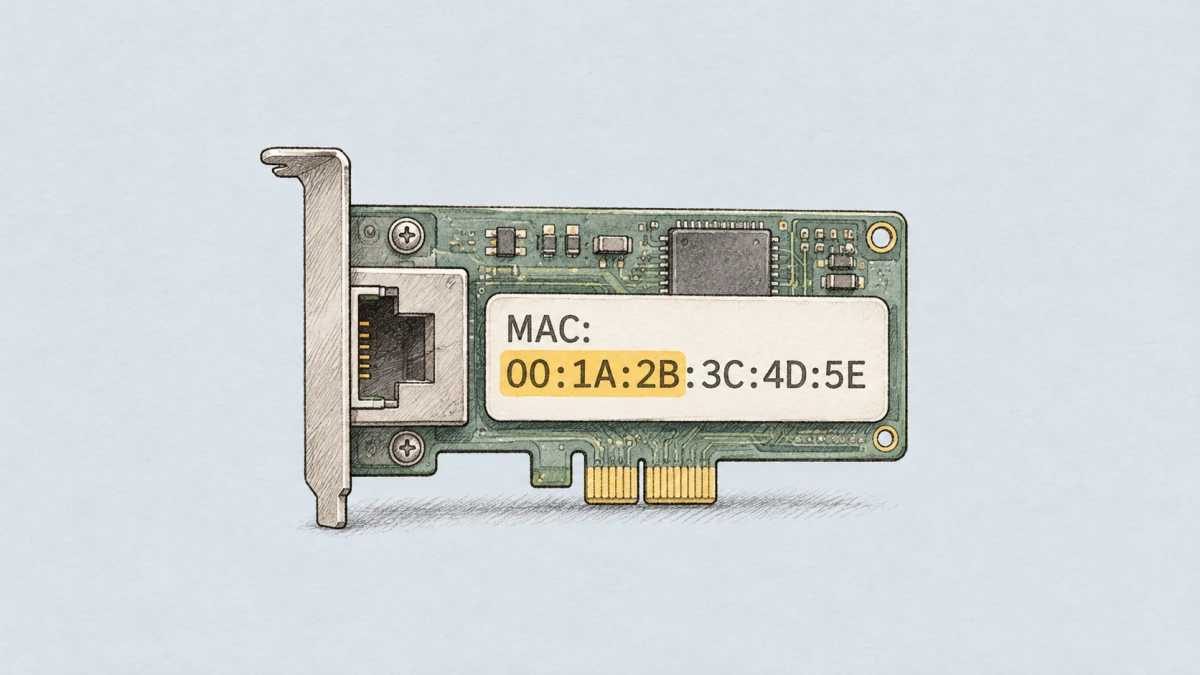
A prefix, the first part of a universally assigned address, can identify the organization holding that assignment. A locally chosen address may not use that organization's prefix, so a manufacturer lookup cannot reliably identify every active interface.
Private Wi-Fi addresses provide a familiar example of an address that can change. Apple devices can present a different address for each Wi-Fi network instead of exposing the hardware address everywhere. Apple's documentation describes Off, Fixed and Rotating options on supported systems. Fixed is still private; it simply does not rotate.
Using different addresses reduces tracking through one persistent address across networks. It does not make every online activity anonymous, and other devices need not follow Apple's settings or rotation schedule.
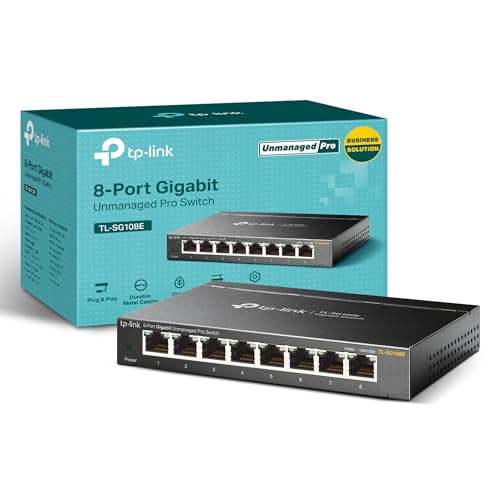
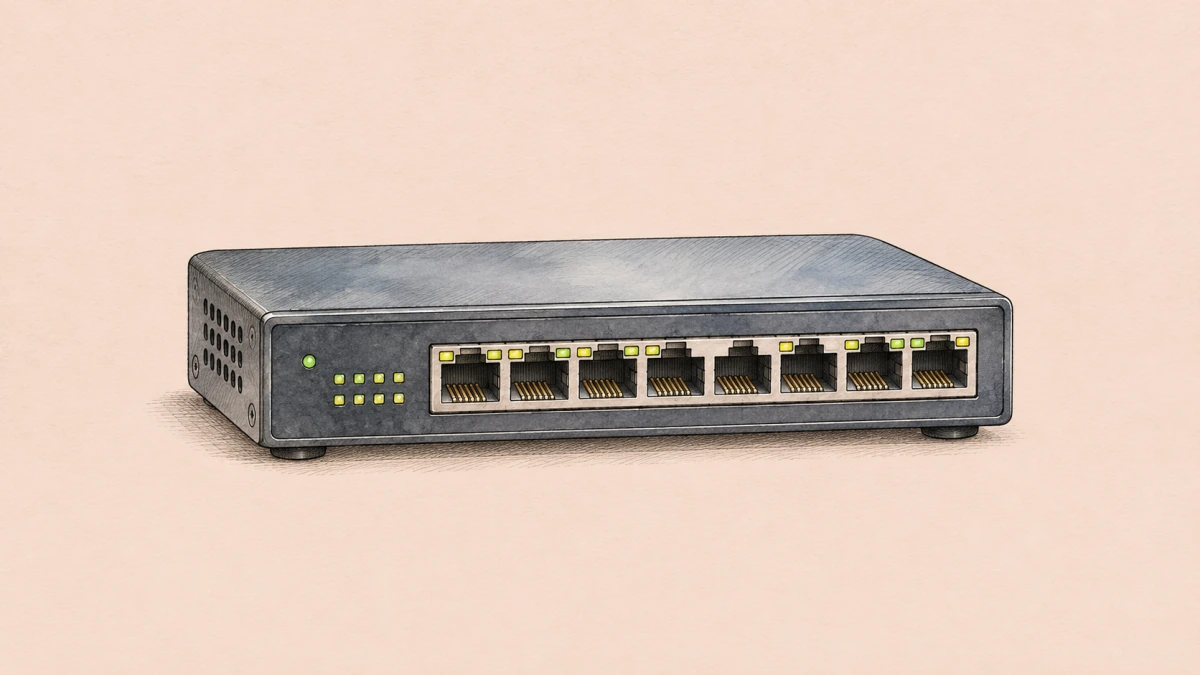
- Keep work, guest and smart-home gear apart with up to 32 VLANs on one small switch.
- Copy any port's traffic to your laptop with port mirroring and see what is on the wire.
- Set it up from a web page instead of learning a command line.
A Familiar Address Can Be Copied
A presented MAC address can be changed or copied. Apple therefore advises against relying on MAC filtering, which allows or blocks devices by address, to prevent unauthorized Wi-Fi access. Wi-Fi authentication checks credentials; encryption protects traffic. Recognizing an address alone does neither.
This also changes how to read a router's device list. A familiar address may have been copied. A new address may be the same phone using a legitimate privacy feature.
ARP Explained: Finding the Right Neighbor on Your Network
What Is an OUI? The Company Clue in a MAC Address
A Network Switch Learns Where to Send the Next Frame
QUOTE:
"Amateurs hack systems, professionals hack people."