FTP Can Ask for a Password Without Protecting It
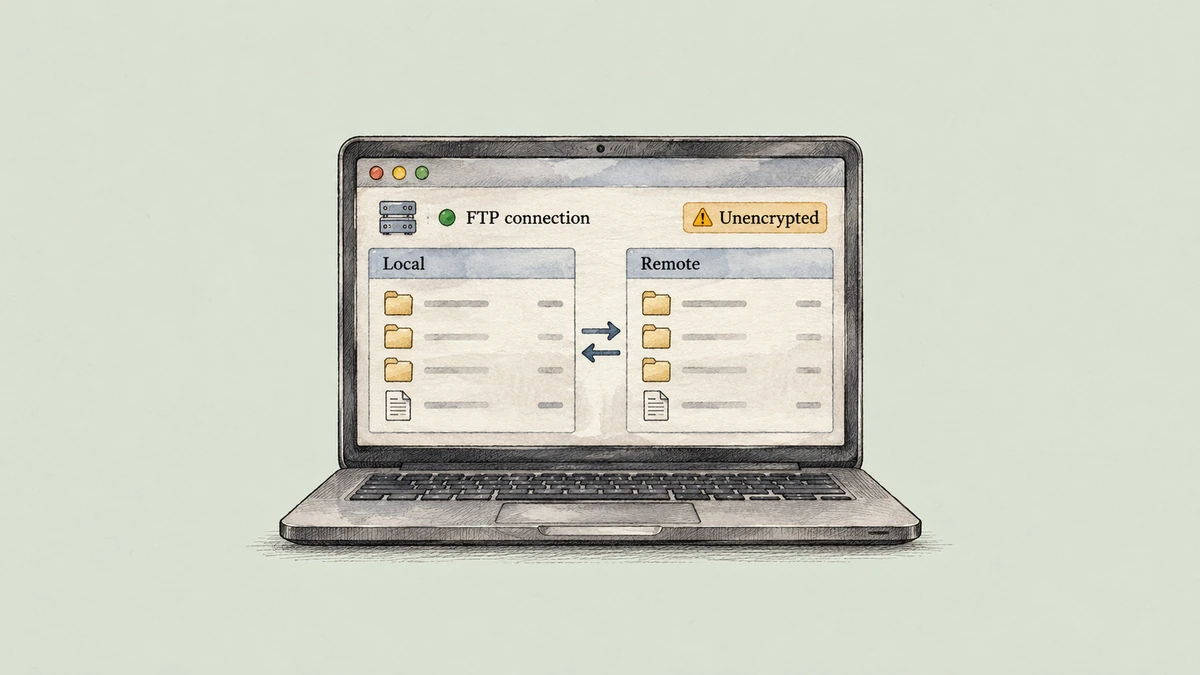
An FTP password prompt can look reassuring, but plain FTP sends the password across the network without encrypting it. Requiring a password and protecting that password in transit are separate jobs.
FTP, short for File Transfer Protocol, is a set of rules for transferring files between computers. A client is the program you use to connect; the server is the service that receives requests and provides or accepts files.
You might use file-transfer software to upload website files, retrieve documents or move a large archive. Whether other people can then see those files depends on the server's location, permissions and settings.
FTP, SFTP and TFTP: Three Ways to Move a File
Commands and files travel separately
FTP uses a control connection for commands and replies, such as signing in or asking to download a file. A separate data connection carries file contents and directory listings, which show the files available in a folder.
The FTP specification describes that separation. It explains a familiar puzzle: you can successfully sign in while a file transfer still fails because the second connection can't be established.
In passive mode, the client starts the data connection to an address and port provided by the server. A port is a numbered endpoint used to direct network traffic to a service.
In active mode, the server starts the data connection toward the client. Firewalls, which apply rules to network traffic, may allow one direction while blocking the other.
Plain FTP leaves the contents readable
The FTP security guidance states that standard FTP sends control information and data without encryption. Someone able to intercept that traffic may read credentials and file contents.
A stronger password doesn't fix that transport problem. Encryption scrambles information so that someone observing the connection can't read the protected contents without the required secret keys.
Some servers also allow anonymous FTP, providing access to public files without a personal account. That's an intentional access arrangement, but it still needs restrictions on which files visitors can read or change.

- Keep every photo and file on a box you own, and reach them from anywhere.
- Let backups run on their own so one dead laptop doesn't take your files with it.
- Add two drives and a failed disk no longer means lost files.
FTP, FTPS and SFTP aren't interchangeable
| Name | What it means | What needs attention |
|---|---|---|
| FTP | The original file-transfer protocol | Plain transfers have no built-in encryption. |
| FTPS | FTP protected with Transport Layer Security, or TLS | Protect both the command and data connections. |
| SFTP | SSH File Transfer Protocol, using Secure Shell | The server must support this separate protocol. |
TLS provides an encrypted connection and a way to check the server's identity. The FTP-over-TLS standard makes an important distinction: protecting the control connection doesn't automatically protect the data connection too.
SSH, or Secure Shell, is a protocol for secure communication with another computer. OpenSSH's SFTP manual describes file-transfer operations carried over that encrypted connection.
SFTP isn't plain FTP with one extra security option switched on. A program may support all three choices, but the client and server still have to agree on the protocol.
Before you send the files
Use the server operator's instructions to choose an encrypted service, confirm the destination and verify its identity. If the software warns that it can't verify the server's identity, check with the operator before continuing.
Also confirm where the files will land and who can access that folder. Encryption protects the journey, but it doesn't stop an authorized recipient from sharing the files or correct an overly broad permission setting at the destination.
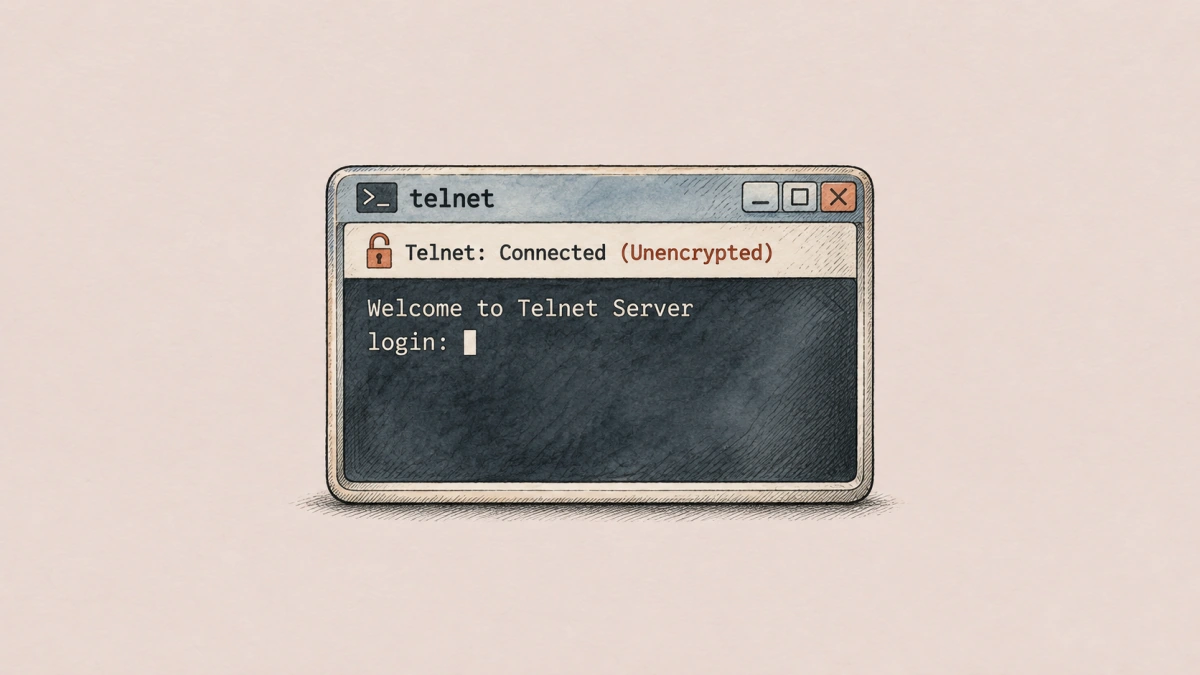
Telnet: Why Ordinary Sessions Expose What You Type
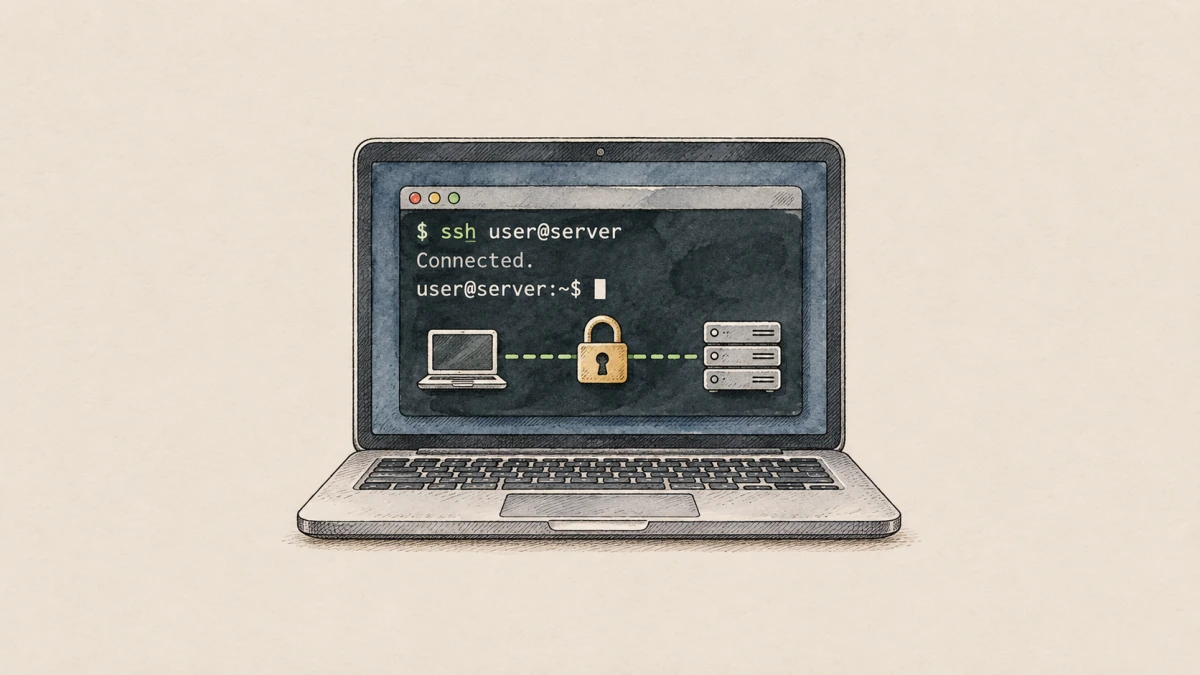
SSH Checks Both Ends of a Remote Login
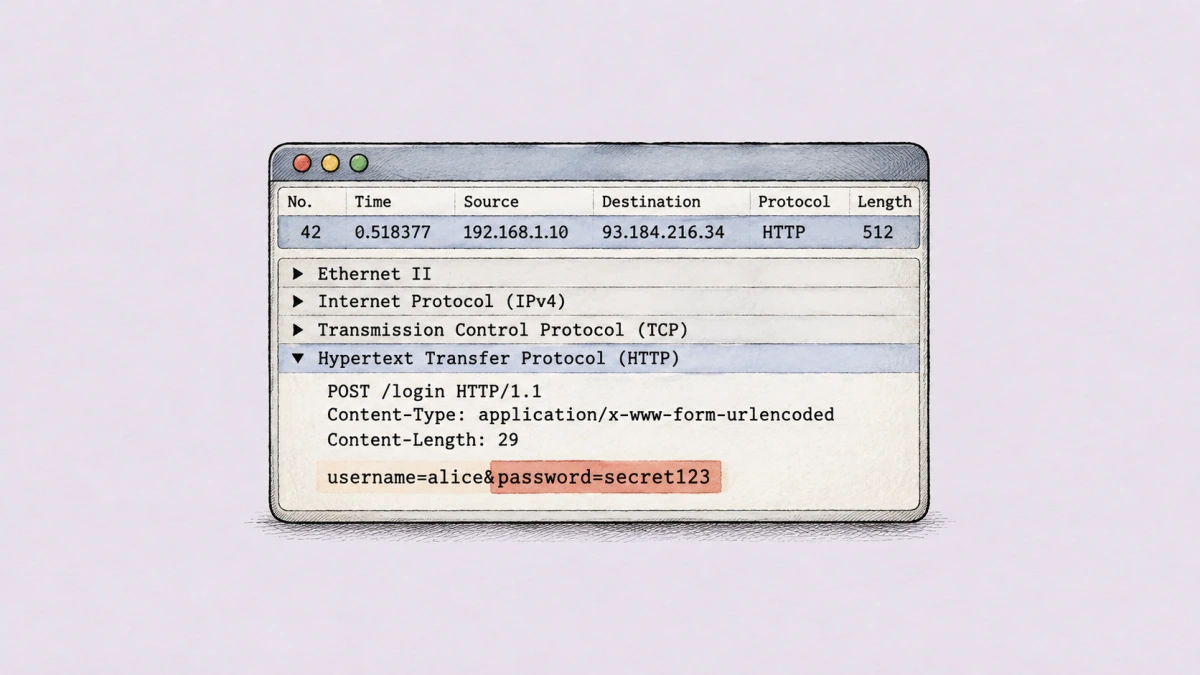
Password Sniffing: Who Can Read a Secret in Transit?
QUOTE:
"Amateurs hack systems, professionals hack people."