What Is CWE? Finding the Mistakes Behind Security Flaws
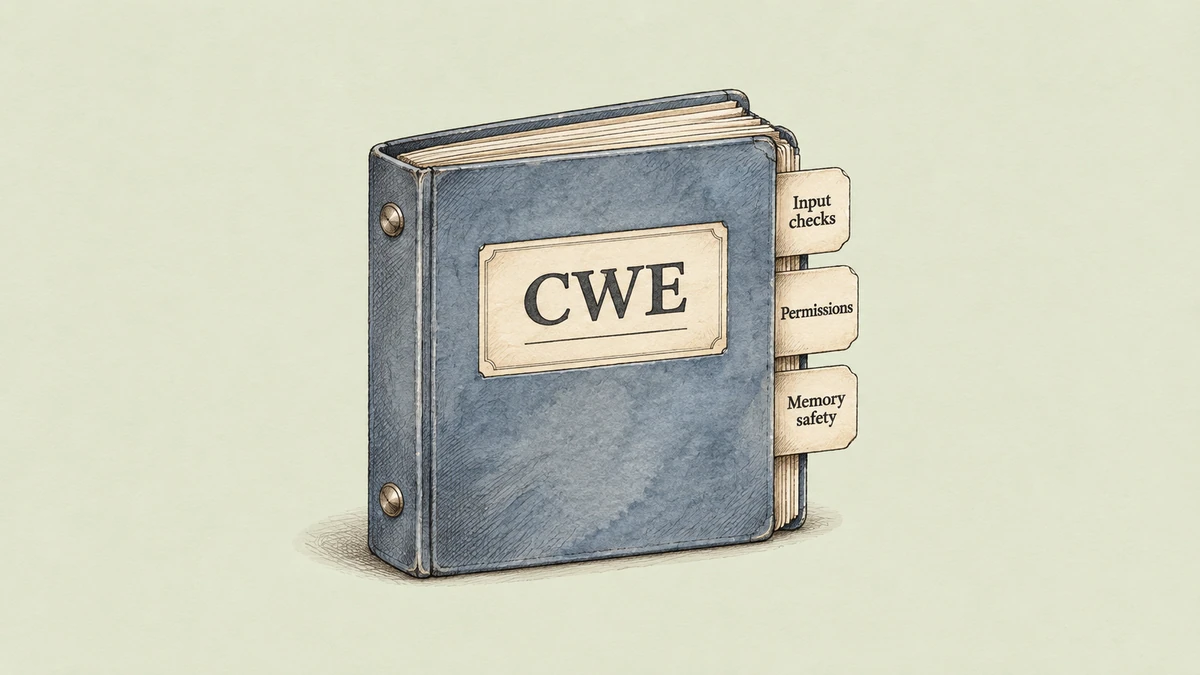
CWE helps explain why security flaws keep recurring in different products. Short for Common Weakness Enumeration, it's a shared list of software and hardware weaknesses that can create exploitable vulnerabilities.
A weakness is an underlying condition, such as failing to check whether someone is allowed to read a file. A vulnerability is a specific instance that an attacker can exploit, meaning use to defeat a security protection.
The CWE program's explanation makes this distinction central. Naming a recurring mistake helps developers recognize it elsewhere, rather than treating every affected product as an unrelated mystery.
How Do You Know Which Flaws to Patch First?
One weakness can produce many different vulnerabilities
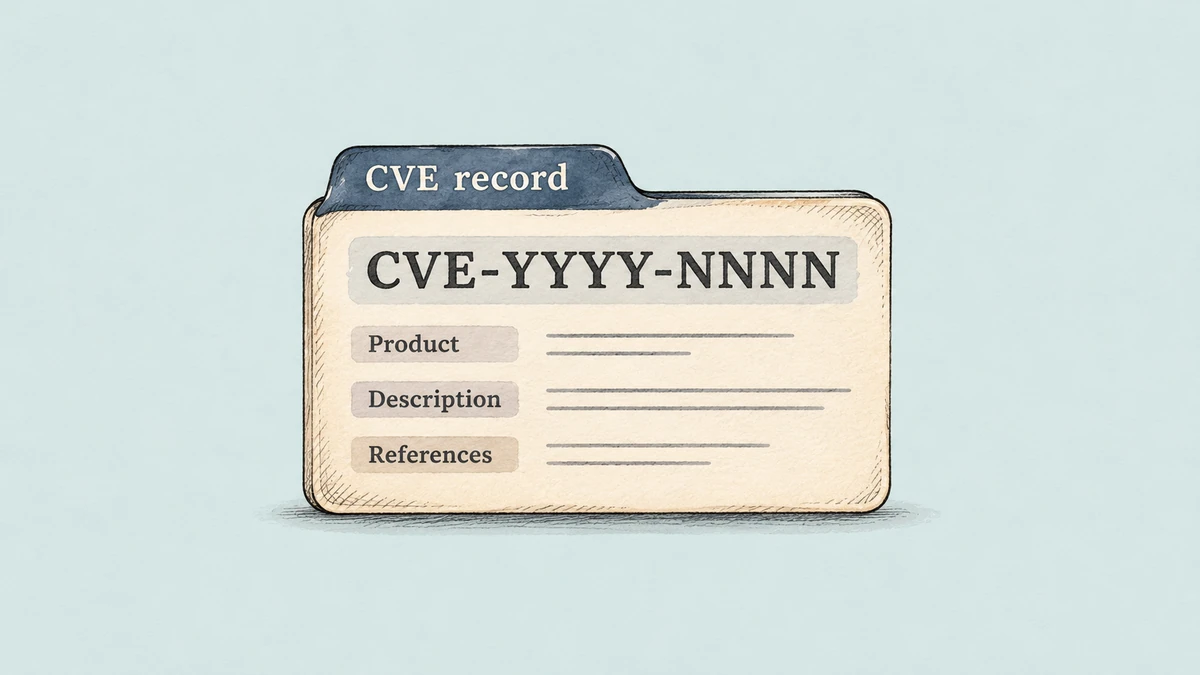
CVE, Common Vulnerabilities and Exposures, gives identifiers to particular vulnerabilities. CWE describes the underlying kinds of weakness, so many CVE records can point to the same CWE entry.
Suppose two unrelated shopping sites both build database instructions by joining together text supplied by visitors. If neither keeps those instructions separate from user data, both can develop the same class of security problem even though their code is different.
They don't become one shared vulnerability simply because the mistake is similar. The CVE identifier helps track a particular flaw; the CWE classification helps explain its cause.
What a CWE entry can teach you
Each weakness has a name and a number, such as CWE-89. That number is an identifier, not a score showing how dangerous the problem is.
CWE-89 concerns SQL injection: allowing untrusted input to alter a database command. SQL, short for Structured Query Language, is used to work with databases, which are organized collections of information.
In the shopping example, the problem arises when text meant to be a search value becomes part of the instructions the database follows. Depending on the application and its permissions, that can let someone read or change information they shouldn't.
The entry discusses ways to prevent the mistake, including parameterized queries. These keep the database instruction separate from the values supplied by users, instead of stitching both into a single command string.
Another entry, CWE-79, concerns cross-site scripting. That's a weakness that can let attacker-controlled content run as code in someone else's browser through a vulnerable website.
For example, a site might mishandle a visitor's comment when placing it on a page. Preventing that problem requires handling content correctly for where it appears; a database-query fix doesn't automatically solve it.

- Run a test server or a home lab without giving up desk space.
- Start right away with 16GB of memory and a 500GB SSD already inside.
- Drive two 4K screens when it doubles as an everyday desktop.
The consequence isn't always the cause
A report saying “an attacker can read private files” describes an outcome. It doesn't establish whether the cause was a missing permission check, a mistaken file path, or something else.
Connecting the actual cause to an appropriate CWE entry is called root cause mapping. The program's mapping guidance warns against confusing a vulnerability's effects with the weakness that produced them.
Some entries describe broad families, while others describe more specific problems. Choose a suitably specific entry supported by the evidence, using its description and mapping notes rather than matching a familiar word in the title.
The program's quick tips also recommend having someone with different skills check the classification. A label attached by a scanning tool still needs to fit the actual finding.
Use the pattern to improve the next piece of code
For a development team, repeated findings with the same cause can point to a shared design or coding practice that needs attention. Fixing that practice may prevent similar flaws in features that haven't yet produced a security report.
CWE supplies vocabulary, explanations, and prevention ideas; it doesn't install a repair or prove a product is safe. The useful result is a well-supported diagnosis followed by a change that removes the weakness.
What Is a CVE? How to Read a Security Flaw’s ID
Input Validation Attacks: When Software Accepts the Wrong Data
Software Assurance: What Supports the Claim That It’s Secure?
QUOTE:
"Amateurs hack systems, professionals hack people."