Ilya Sutskever: From AlexNet to Safe Superintelligence
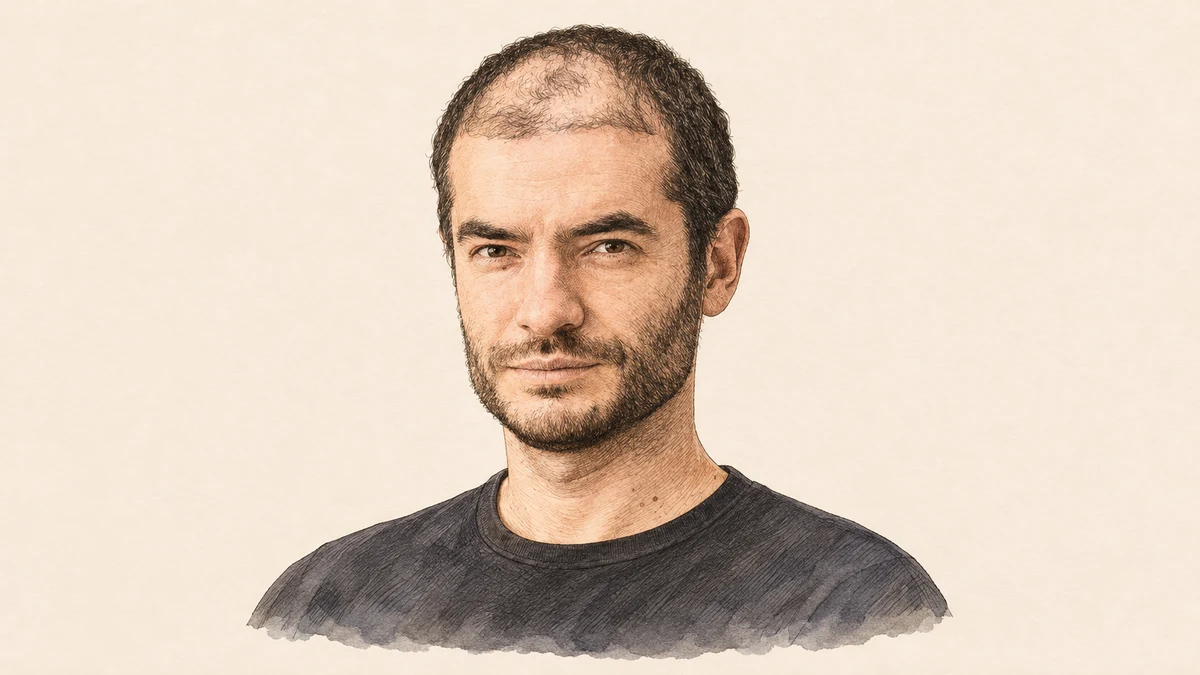
Ilya Sutskever is an AI researcher who co-founded OpenAI and served as its chief scientist. His work helped computers learn to recognize images, translate sentences and generate text. He now leads Safe Superintelligence, a company trying to develop AI that remains under reliable control even if it becomes more capable than its human supervisors.
In a 2014 experiment, he and two colleagues improved an English-to-French translation system by reversing the English words. The French output stayed in its normal order; the unusual change made it easier for the computer to learn.
That experiment followed years of work on learning systems, including his graduate research in Toronto.
Learning in Toronto
Sutskever was born in Russia, grew up in Israel and moved to Canada with his family as a teenager. At the University of Toronto, he earned a mathematics degree in 2005, then pursued graduate work in computer science.
His doctoral supervisor was Geoffrey Hinton, who had spent years investigating neural networks. These systems contain connected layers of calculations, with numerical settings called weights that change as the system trains.
To train a network to recognize pictures, researchers give it a labeled image, compare its guess with the label and adjust the weights. Repeating the process helps it learn which patterns lead to the right answer.
The challenge is to learn patterns that remain useful on new examples. Memorizing the training pictures wouldn't be enough if a different camera angle or an unfamiliar background caused the system to fail.
Toronto's account of Sutskever's research also describes his early interest in generating text. Years before conversational assistants became familiar, he was studying how a network could take a passage and continue it.
His doctoral research focused on recurrent neural networks, which process sequences while passing information from one step to the next. That made them useful candidates for tasks where order matters, such as reading a sentence.
Two Graphics Cards and a Clear Result
In 2012, Sutskever worked with Alex Krizhevsky and Hinton on an image-recognition system now known as AlexNet. Its job was to examine a picture and rank possible labels from a set of 1,000 categories.
The team trained the network on roughly 1.2 million labeled images. The examples came from ImageNet, whose creators and labelers had made a vast collection of pictures usable for machine-learning research.
AlexNet used a convolutional network, which learns detectors for local visual patterns and reuses them across an image. Later layers combine those patterns into information useful for identifying what the picture contains.
The main network took five to six days to train on two graphics cards. These chips, developed for graphics work, could perform many of the calculations needed for training at once.
The competition result reported in the paper was striking: the correct label was absent from the team's five highest-ranked guesses in 15.3 percent of cases. The runner-up's error rate on that measure was 26.2 percent.
The gap gave researchers a strong reason to try the team's combination of data, network design and computing.
Krizhevsky, Sutskever and Hinton formed DNNresearch in 2012. Google acquired the company the following year, taking their work from a university setting into a much larger research organization.
Getting a Sentence Through the Network
At Google, Sutskever worked with Oriol Vinyals and Quoc V. Le on a different problem: translating one sequence of words into another. An English sentence and its French translation needn't contain the same number of words or put ideas in the same order.
Their 2014 sequence-to-sequence paper used one recurrent network to turn the source sentence into a fixed-size numerical representation. A second network used that representation to produce the translated sentence.
One part compressed the input into numbers; the other learned to turn those numbers into a translation. The link between them had to preserve the information needed to get the meaning across.
The team found that reversing the order of the source words improved learning. It was a small-looking change to the input with a meaningful effect on how well the method worked.
The approach also created a bottleneck: information from a whole sentence had to pass through one fixed-size representation. In a separate 2014 project, Dzmitry Bahdanau, Kyunghyun Cho and Yoshua Bengio explored ways to consult relevant parts of the source directly.
Building OpenAI, Then Questioning Supervision
In December 2015, Sutskever co-founded OpenAI and became its research director. The founding announcement placed him alongside Greg Brockman, co-chairs Sam Altman and Elon Musk, and a wider group of researchers.
OpenAI's ambition extended beyond a system that performed one well-defined task. It aimed to develop AI whose abilities could apply more broadly, while making the benefits widely available.
Sutskever later served as chief scientist. As the company's systems became more capable, he also worked on the problem of how people could reliably guide them.
Human feedback can help a model learn what people prefer. But the method depends on evaluators being able to recognize a good answer or identify a dangerous action.
If a system becomes substantially better than its evaluators at a task, that assumption gets harder to sustain. A convincing explanation might be difficult for a person to check, especially when the work itself is unfamiliar or complex.
In July 2023, Sutskever and Jan Leike announced OpenAI's Superalignment team to investigate that problem. The proposed work included using AI to help with oversight, examining model behavior and testing systems under difficult conditions.
A Board Seat, a Departure and a New Company
Sutskever also served on OpenAI's board during its November 2023 removal of Sam Altman. When Altman's return was formally announced later that month, Sutskever was no longer a director.
OpenAI's summary of a review it commissioned described a breakdown of trust between Altman and the former board. It said the firing had not arisen from product safety or development speed.
OpenAI announced Sutskever's departure in May 2024. He went on to co-found Safe Superintelligence, or SSI, that year.
Superintelligence describes a hypothetical level of capability beyond humans across a broad range of work. It means considerably more than beating a person at one game or winning an image-recognition contest.
SSI says it is developing safety and capability together, with a structure intended to protect the work from short-term commercial pressure.
Sutskever formally became CEO in July 2025, with Daniel Levy as president. In July 2026, SSI and NVIDIA announced an investment and computing partnership, with Sutskever saying the research was ready to scale.
More computing power gives Sutskever's team room for larger experiments. The supervision problem remains at the center of its mission: finding ways to check a system's work when a person may no longer be able to judge every answer.
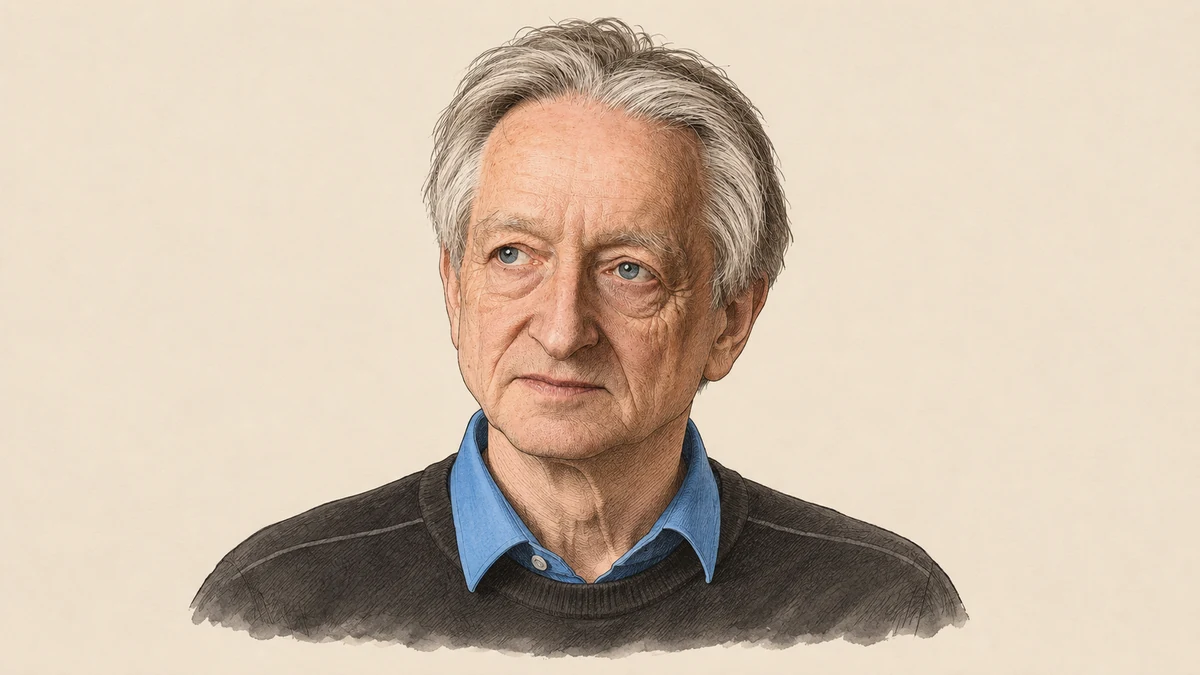
Geoffrey Hinton Helped Build Modern AI. Now He's Worried.
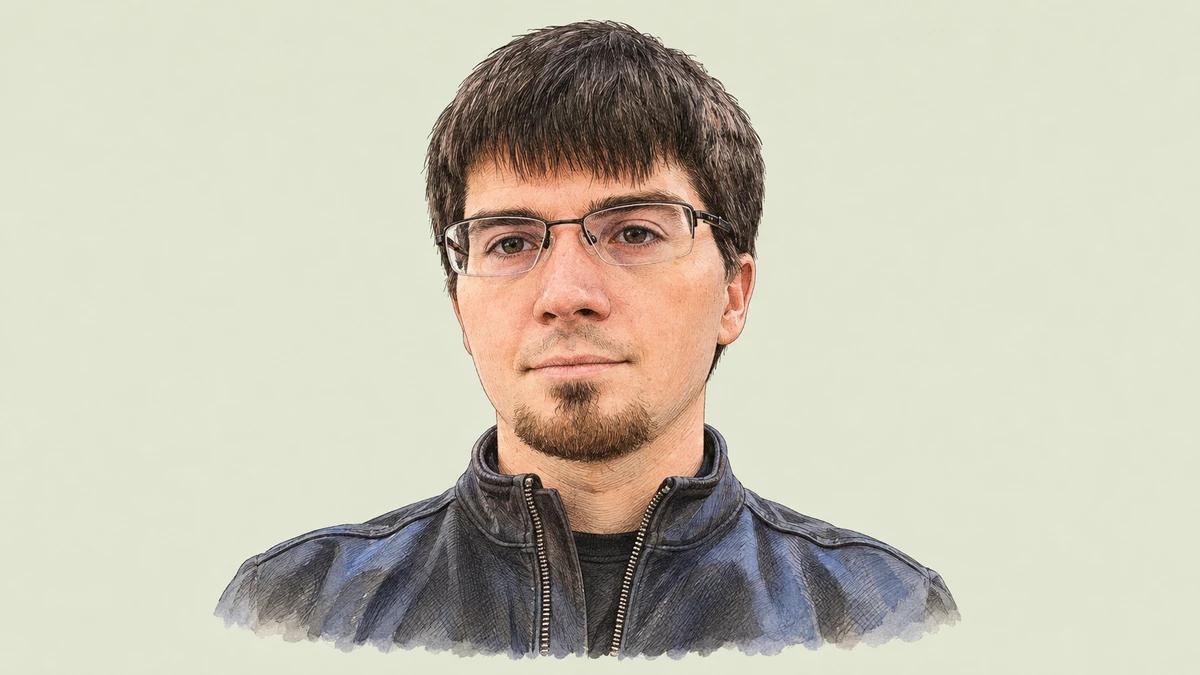
Ian Goodfellow: The AI Breakthrough Built on a Contest
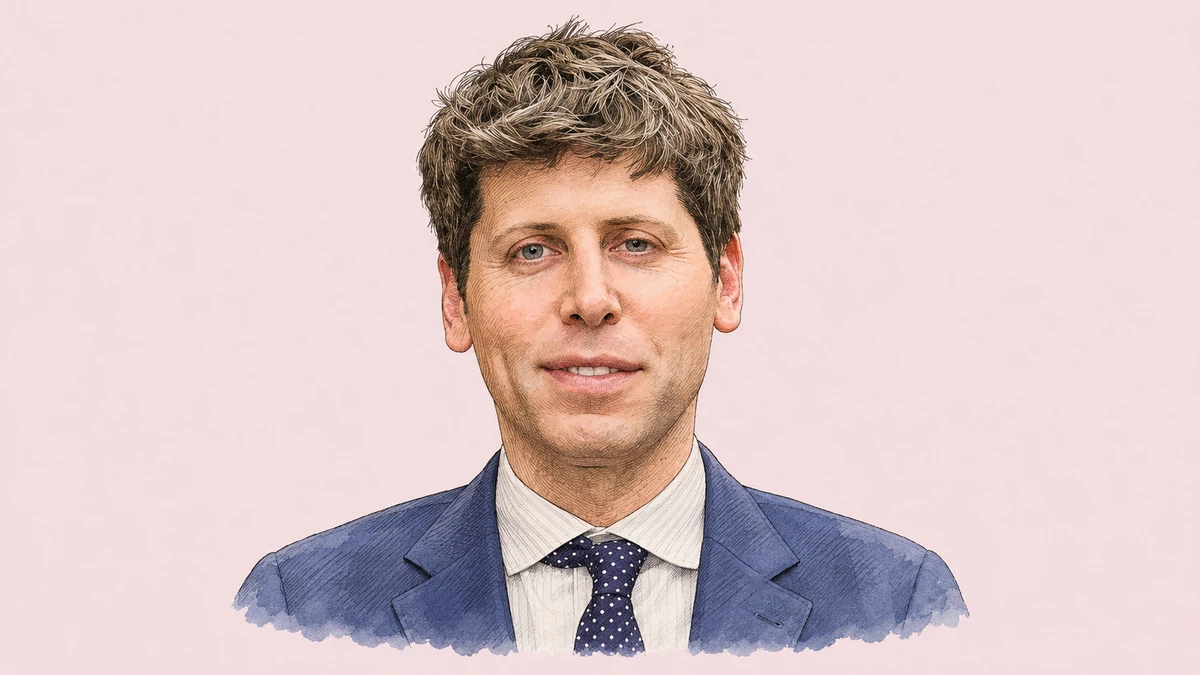
Sam Altman: Fired by OpenAI, Then Back in Charge
QUOTE:
"Amateurs hack systems, professionals hack people."