Geoffrey Hinton Helped Build Modern AI. Now He's Worried.
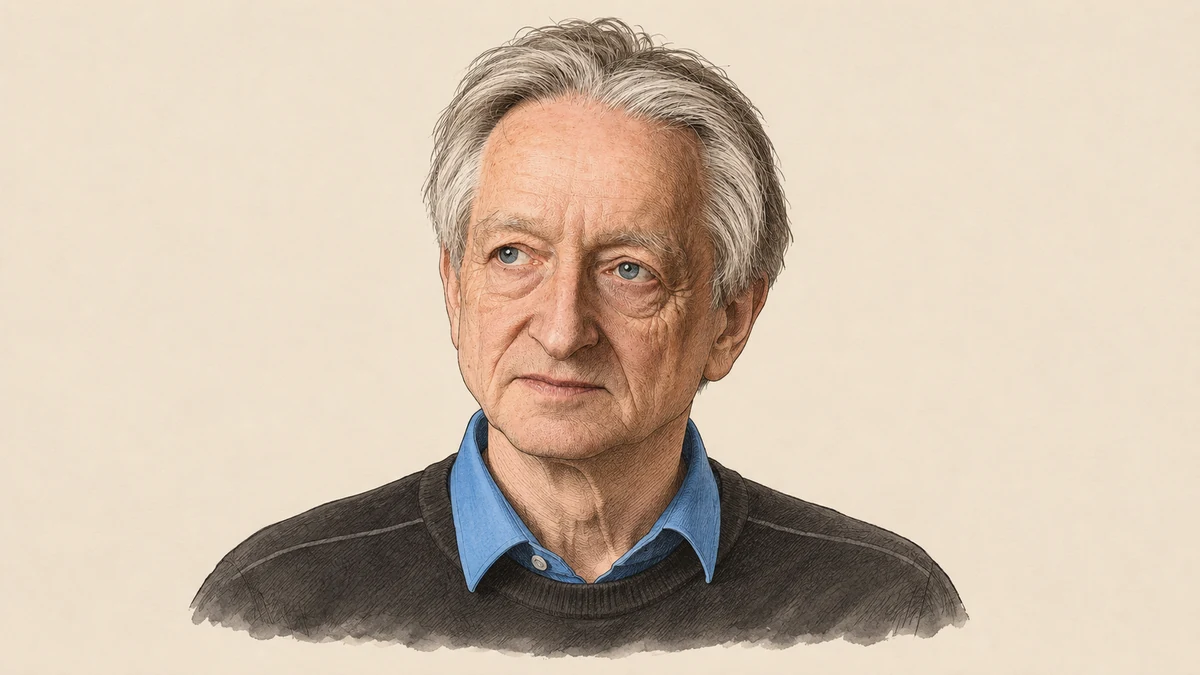
Geoffrey Hinton is a computer scientist whose research helped teach computers to learn from examples. He developed methods for training neural networks, systems of connected calculations that learn patterns from data. That work helped shape modern AI and earned him a share of the 2024 Nobel Prize in Physics.
Consider a handwritten 7. It can lean, wobble or lose its crossbar and still be a 7. Hinton spent much of his career investigating how a computer could learn that flexibility without someone writing a separate instruction for every variation.
The success of those methods has also made him concerned about where they lead. He warns that people could lose control of increasingly capable AI, a problem he wants researchers to take seriously.
Studying How Learning Works
Hinton studied experimental psychology at Cambridge, graduating in 1970, and earned his doctorate in artificial intelligence at Edinburgh in 1978. His interests connected the study of human learning with attempts to build useful learning procedures for computers.
After research posts at Sussex and the University of California, San Diego, he taught at Carnegie Mellon. He joined the University of Toronto in 1987, establishing a base for work that would continue across several generations of students and collaborators.
His university biography describes the two interests that have driven his work: understanding how the brain learns and finding learning methods that work in software.
A neural network is made of connected mathematical units. Each performs a calculation. Numbers called weights set the strength of the connections, helping determine how information passes through the system.
Training changes those weights using examples. In a network with several layers, the calculations can build on one another, allowing later layers to use patterns discovered earlier in the process.
For an image, those patterns might begin with simple local features and combine into information useful for recognizing a digit or object. The researchers needn't specify every useful feature in advance; learning helps find them.
What a Wrong Answer Can Teach
The difficult part is deciding how to change all those internal numbers. A wrong answer tells you that something went wrong, but it doesn't immediately identify which of many connections should be adjusted.
In a 1986 paper, David Rumelhart, Hinton and Ronald Williams helped demonstrate the power of backpropagation. The method calculates how changes in a network's weights would affect the difference between its answer and the desired output.
That information gives the training process a direction. By repeatedly updating weights, the network can reduce its errors and develop internal features that help it do the task.
The method had earlier foundations. Rumelhart, Hinton and Williams helped show how effectively it could teach a network to develop its own useful features.
Other learning approaches were developing alongside it. In 1985, Hinton, David Ackley and Terrence Sejnowski had published a learning method for Boltzmann machines, drawing on ideas from physics about the behavior of many interacting parts.
These networks used units that switched on or off according to probabilities. By adjusting the connections between them, a Boltzmann machine could learn patterns in its training data, including patterns that researchers hadn't labeled for it.
The method offered a way to discover patterns, but learning could be slow. Making it practical for large networks with many layers remained a problem.
Getting More Layers to Work
Hinton continued that work at Toronto and during a period leading the Gatsby Computational Neuroscience Unit at University College London from 1998 to 2001.
Adding layers to a network offered more opportunities to represent complex patterns. It also made training harder: a useful mathematical idea could become too slow or difficult to turn into a working system.
In a 2006 paper, Hinton, Simon Osindero and Yee-Whye Teh described a way to train deep belief networks one layer at a time. They then fine-tuned the network, demonstrating the approach with handwritten digits.
Rather than asking every layer to learn its job at once, the team gave the network a useful starting point before training it as a whole.
The phrase deep learning refers to these multiple layers of processing. Each layer learns patterns that the next can use.
Hinton explored the field with other researchers who were tackling related problems, including Yann LeCun in computer vision and Yoshua Bengio in language and learning. The field was growing through work on several different tasks.
When the Pictures Became Hard to Ignore
In 2012, Alex Krizhevsky, Ilya Sutskever and Hinton produced a striking result in image recognition. Their system, AlexNet, learned from roughly 1.2 million labeled pictures and won that year's major ImageNet classification competition by a substantial margin.
The task was to rank possible labels for each image. The network learned reusable visual patterns across layers, while two graphics cards provided the computing power needed for training.
The AlexNet paper brought several ingredients together: a suitable network, efficient computation, methods to limit memorization and a large supply of labeled examples. ImageNet's creators and contributors had made that last ingredient available.
The result gave researchers something concrete to measure and reproduce. Decades of work on learning had led to a system that could handle a difficult recognition problem markedly better than competing entries.
Google acquired DNNresearch, the company formed by the three researchers, in March 2013. Hinton then worked half-time at Google alongside his academic work, remaining with the company until 2023.
He also continued explaining the underlying ideas, including in a 2015 review of deep learning written with LeCun and Bengio.
From the Turing Award to a Physics Nobel
Hinton, LeCun and Bengio shared the 2018 A.M. Turing Award, announced in 2019. The computing award recognized their conceptual and engineering contributions to deep neural networks.
In 2024, Hinton shared the Nobel Prize in Physics with John Hopfield. That award highlighted earlier ideas connecting learning systems with methods from physics.
Hopfield had developed a network that could recover a stored pattern from incomplete information. Hinton's Boltzmann-machine work used statistical physics to help networks learn properties of data and generate patterns.
Statistical physics examines how the behavior of many interacting parts produces larger patterns. Applying related mathematical ideas to networks helped provide methods for learning, giving the physics prize a connection to software that now appears far removed from a physics laboratory.
Speaking Out After Google
By 2023, Hinton was speaking publicly about the risks of increasingly capable AI. After leaving Google, he said he could discuss those concerns more freely.
At a Toronto event that June, he discussed discrimination, false information, disruption to work and weapons. He also warned about a longer-term possibility: humans losing control of systems more intelligent than themselves.
His argument is that greater capability could make it harder for people to supervise what a system is doing. If it develops intermediate objectives while pursuing a task, those objectives might conflict with the intentions of the people who built it.
That is a warning about a possible outcome, with uncertain timing. Hinton wants more research devoted to understanding such failures and finding ways to preserve control as capabilities improve.
He remains an emeritus professor at Toronto and continues public work on the issue. The 2026 Hinton Lectures, hosted through the AI Safety Foundation he co-founded, brought researchers together to examine AI safety for a wider audience.
Hinton's concern is that learning how to make a system more capable could outpace learning how to control it. He wants the researchers building the next generation to give that second problem much more of their attention.
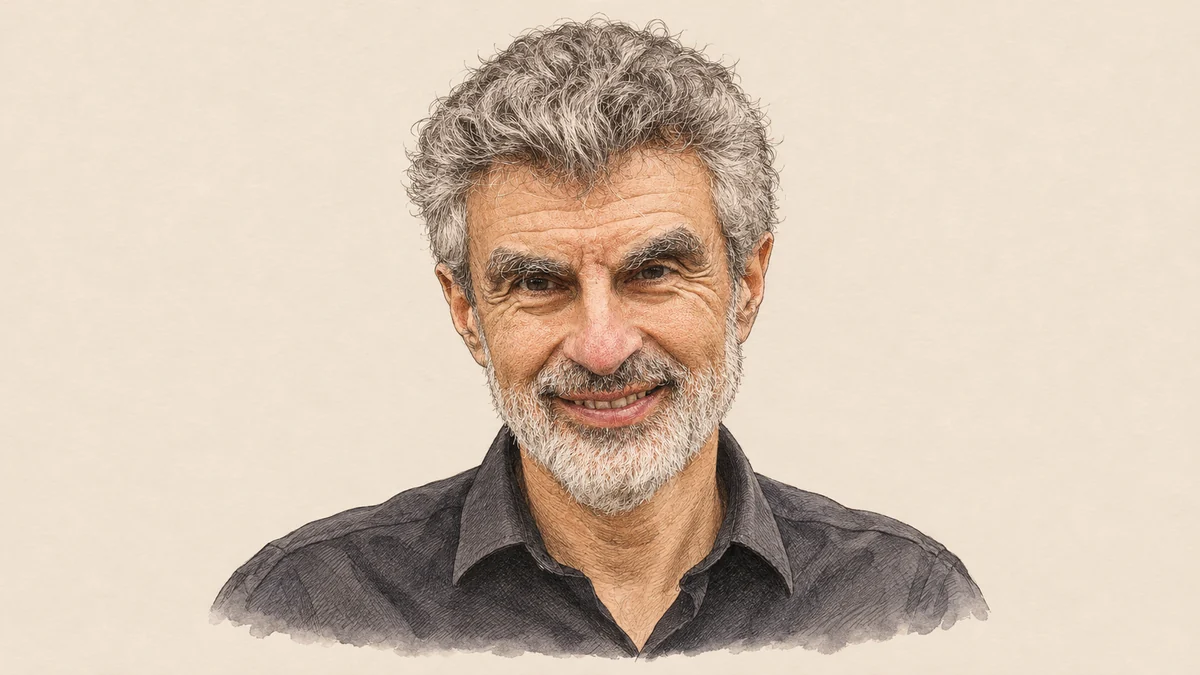
Yoshua Bengio's Search for AI We Can Keep Under Control
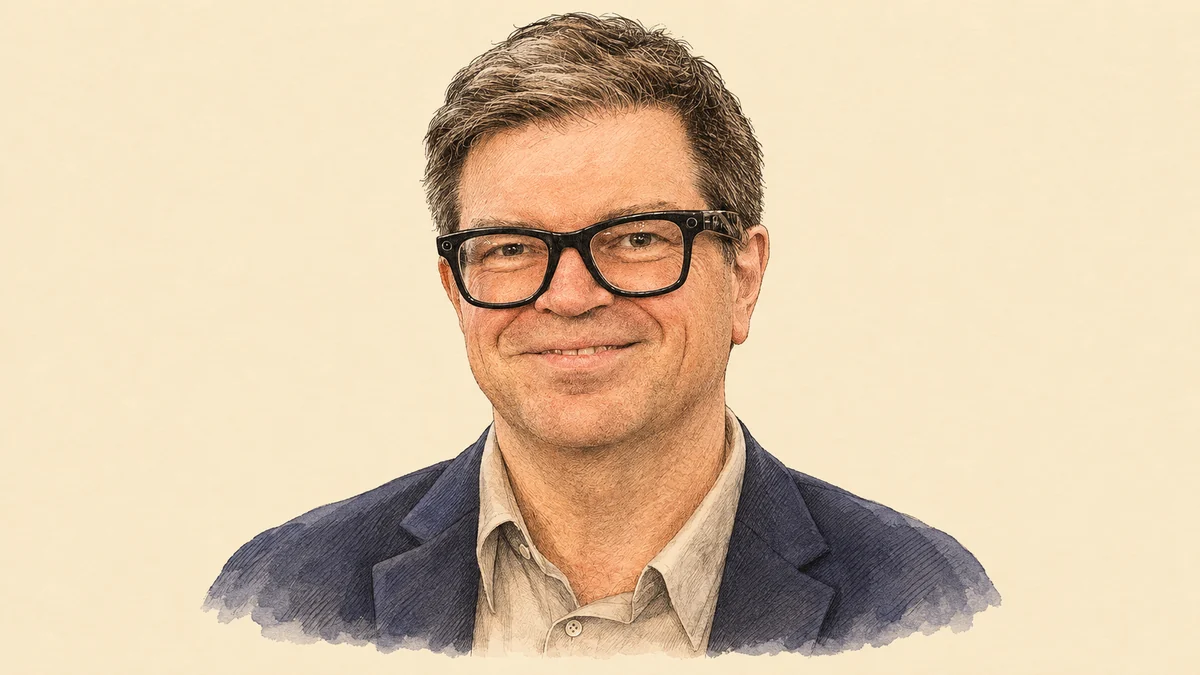
Yann LeCun: Teaching Computers to See, One Check at a Time
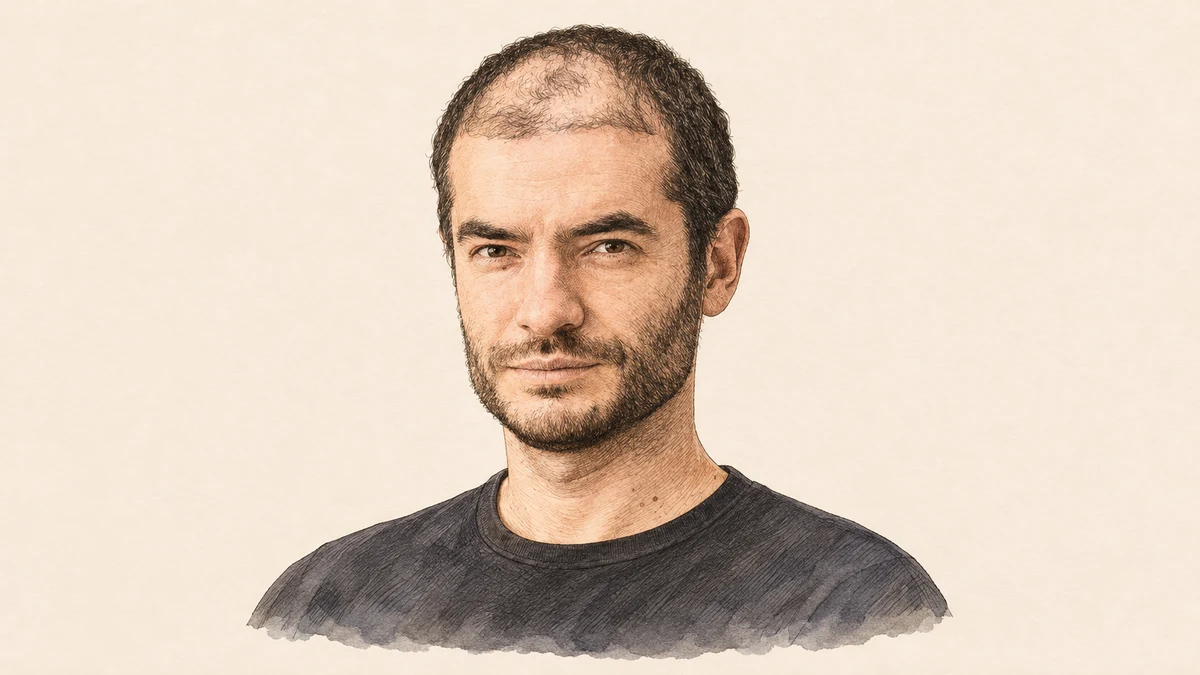
Ilya Sutskever: From AlexNet to Safe Superintelligence
QUOTE:
"Amateurs hack systems, professionals hack people."