AI Search Gives You an Answer. Where Did It Come From?
AI search combines information found online with a model-generated answer. It can save you from opening a dozen tabs, but the tidy paragraph it produces may hide disagreements, missing context or a source that doesn't support the claim beside it.
The links are therefore part of the answer, not decorations underneath it. Learning to follow them is one of the most useful habits you can bring to an AI search tool.
The Answer Takes a Detour
In a typical AI search workflow, the system turns your question into searches, retrieves material and gives some of it to a language model. The model uses that material, along with its training, to compose a response.
The term retrieval-augmented generation, or RAG, describes this combination of finding information and generating text. IBM's explanation of RAG notes that outside sources can improve relevance and accuracy without making the model error-proof.
Each step leaves room for a different mistake. The search may miss an important page, the system may retrieve only part of it, or the final answer may merge two sources that describe different situations.
For a fictional example, consider a question about a museum's weekend hours. A summary could combine the main building's hours with an older page about a special exhibition, producing a schedule that no visitor can actually follow.
How AI Uses Retrieved Sources to Build an Answer
Open the Link Behind the Important Sentence
You don't need to inspect every harmless detail with equal effort. Start with the claim that will change what you do: the date, eligibility rule, product limitation or safety instruction.
Open its cited page and find the supporting passage. Does the page actually say what the summary says, or does it merely discuss the same general subject?
A source saying a feature is being tested doesn't support a claim that everyone can use it. A study of one group doesn't necessarily establish the same result for another group.
Check whether a crucial qualifier disappeared. Words such as “may,” “in this trial” and “for eligible accounts” can carry more weight than the rest of a sentence.
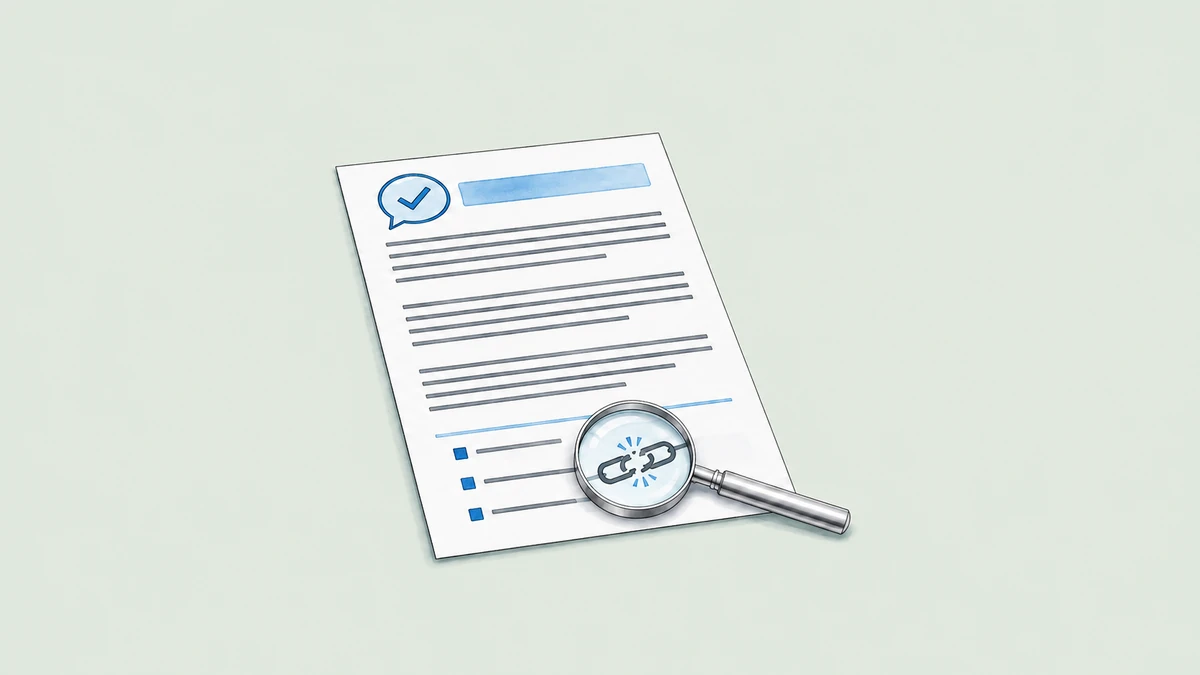
If the link is broken or the passage can't be found, ask the tool for the exact source and relevant section. Then verify it yourself; a second confident explanation isn't a substitute for the missing evidence.
A Citation Problem Has Been Measured
In a March 2025 study, Columbia's Tow Center tested whether eight AI search tools could identify news articles from excerpts. Researchers found incorrect attributions, fabricated links and answers that failed to acknowledge uncertainty.
That was a specific test of the versions available then, not a current error rate for every kind of AI search. It does show why the presence of a citation and the accuracy of that citation are separate things to check.
Find the Source Closest to the Claim
For a product feature, start with the maker's documentation. For a research finding, find the study and check what it measured; for a local closure, look for the organization responsible for the place.
Primary sources have limits, too. A company can describe what it sells accurately while presenting performance claims in the most flattering light, so independent reporting and testing can add needed context.
Several links don't automatically mean several sources. Three articles may all repeat one press release, leaving you with one underlying account rather than three independent confirmations.
Look at dates with equal care. The day a page was updated may differ from the day the reported event happened, and an old policy can remain searchable after it has been replaced.
Give the Search a Smaller Job
“Is this software private?” leaves a lot for an assistant to decide. “Find the maker's current policy on using personal-account chats for training, and distinguish it from business accounts” gives it a specific question to investigate.
Ask for the source behind each important claim and for any gaps in the evidence. If the answer compares two products, have it use the same criteria for both rather than summarizing whichever features each company emphasizes.
When sources disagree, ask the assistant to describe the disagreement. Don't ask it to make the uncertainty disappear by choosing whichever version sounds more decisive.

- Explore AI as a collaborator, teacher and coach.
- Learn how Ethan Mollick approaches the opportunities and limits of working with AI.
- A book about human judgment and AI use, rather than a guide to current app menus.
Sometimes a Direct Visit Is Quicker
For today's opening hours, an application deadline or a setting in your own account, going straight to the responsible website may take less effort than checking an AI summary. Search is useful when it helps you reach the evidence faster.
Be particularly careful with health, legal or financial decisions, where a missing exception can change the answer. An assistant can help identify questions and documents, but a summary alone may not capture what applies to your circumstances.
The museum example ends with a simple habit: open the museum's current visitor page before setting out. Use the generated answer to find your way through the information, and let the relevant source settle the detail that matters.
Why AI Makes Things Up—and Sounds So Sure About It
How to Ask AI Better Questions Without the Magic Words
Machine Learning and Evolution: When 98 Percent Is a Failure
QUOTE:
"Amateurs hack systems, professionals hack people."