How an Intrusion Prevention System Stops a Request
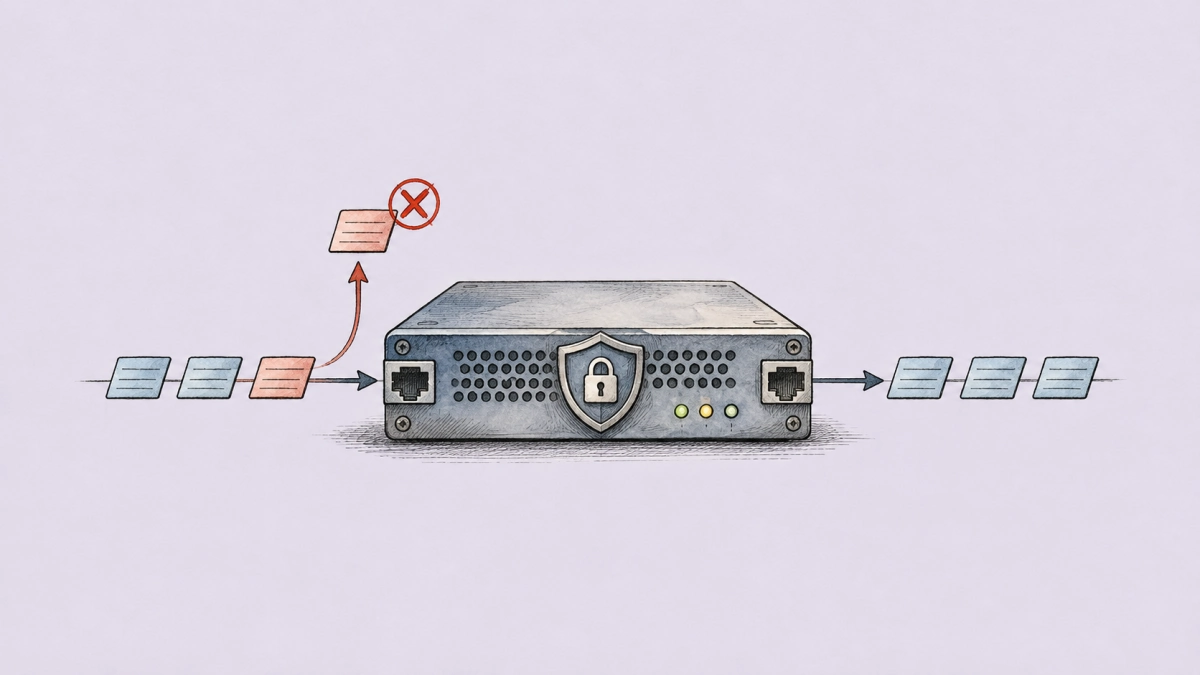
Suppose a request headed for a company's server contains a known attack pattern. A security tool in its path recognizes the pattern and discards the traffic. The request stops there, before the server has to handle it.
An intrusion prevention system, or IPS, is built to make that kind of intervention. It looks for signs of an attack and can take action to stop the suspicious activity.
For a network IPS, location helps make prevention possible. The system can sit inline, which means traffic passes through it on the way to its destination. It gets a chance to inspect the traffic and decide whether to let it continue.
That puts it in the path of legitimate work, too. The same power that stops an attack can interrupt someone who hasn't done anything wrong.
IDS or IPS: Watch the Traffic or Stop It?
From a suspicious message to a blocking decision
Network traffic travels in small units called packets. An IPS can examine information such as their source and destination addresses, the communication rules they use, and contents visible to the inspection system.
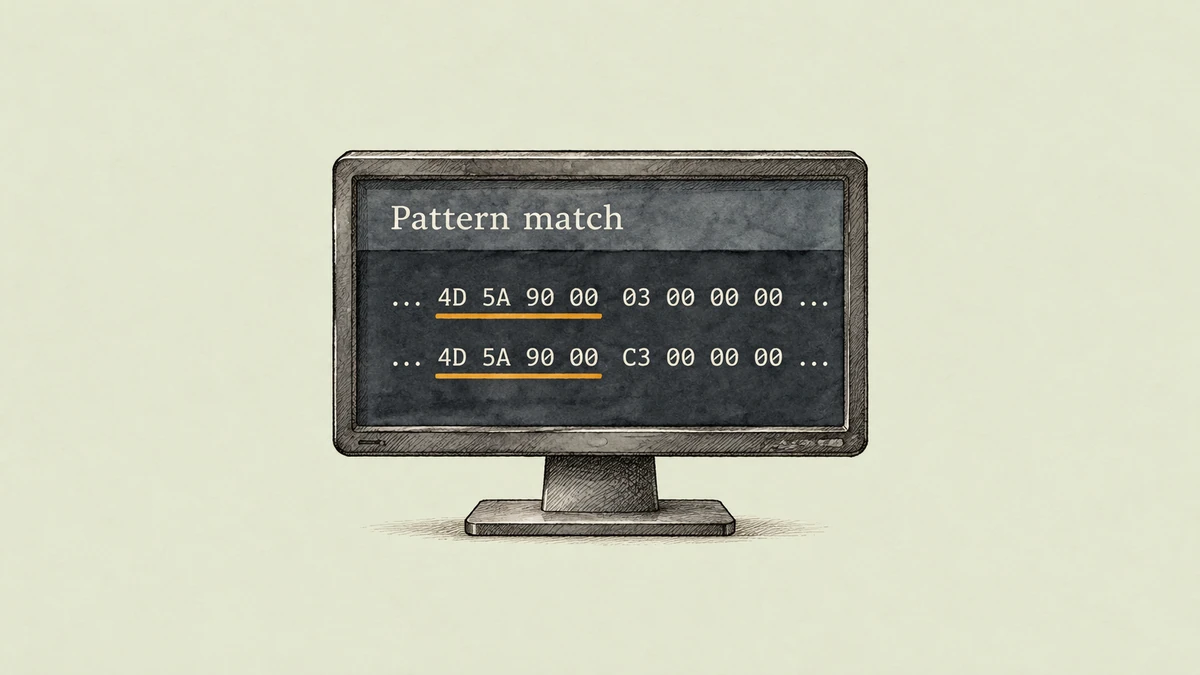
What counts as suspicious depends on the detection method. A signature is a pattern associated with a known threat. Matching that pattern gives the system a reason to act, as in our example of the request headed for a server.
Other methods look for activity that differs from expected use, or for an exchange that behaves oddly under its communication rules. Those rules are called a protocol. Checking how messages fit together can reveal problems that looking at an address alone would miss.

- See every packet on a link without slowing it down.
- Feed a monitoring tool real traffic instead of a sample.
- Power it from a USB port, with no extra adapter to carry.
The National Institute of Standards and Technology's foundational guide describes these approaches. Published in 2007, it explains the basic concepts rather than comparing today's products.
An intrusion detection system, or IDS, emphasizes finding and reporting suspicious activity. Prevention adds the ability to intervene. An IPS can still be configured to report a match without blocking it, so the product's name alone doesn't tell you what happened to a particular request.
The rule can say “report” or “stop”
Suricata, an open-source tool for intrusion detection and prevention, makes the choice visible in its rules. In its version 8.0.2 documentation, an alert action reports matching traffic. A drop action discards it and raises an alert. A reject action sends a refusal and, in IPS mode, also drops the traffic.
Mastering Snort: Bombal's Guide to Intrusion Detection
For the server request in our example, an alert could tell the security team that something deserves attention while the traffic continues. A drop rule could stop that traffic at the inspection point. The same detected pattern can therefore lead to different outcomes.
Now suppose a harmless request happens to match a blocking rule. An employee trying to reach a service may be stopped along with the traffic the rule was meant to catch. This is a false positive: harmless activity treated as suspicious.
The opposite error is a false negative, when harmful activity slips past detection. Adjusting rules can improve their fit to a network, but it can't make either mistake impossible. Testing rules against legitimate work helps identify harmless requests that would otherwise get blocked.
- Skip the install: pfSense Plus comes preloaded, so you can start writing rules right away.
- Get a firewall, router and VPN in one silent box that sips power.
- Keep receiving pfSense Plus updates for the life of the product.
The view has edges
An IPS can inspect only the traffic available to it. A system on one network path doesn't automatically cover communications taking another route.
Encryption creates another boundary. It turns readable data into a protected form, hiding the contents from a network sensor that cannot decrypt them. Inspecting those contents requires access before encryption or after decryption has made them readable again.
There is also a limit to the amount of traffic an IPS can process. A heavy load may reduce inspection or delay or drop traffic. Suricata's IPS documentation describes processing costs and cases in which inspection errors lead to dropped traffic. Those behaviors need to be understood before automatic blocking becomes part of a service's daily operation.
Finally, stopping a request that exploits a software flaw leaves the flaw itself in place. Applying the fix through patch management remains a separate job.
Intrusion Detection: How Suspicious Activity Becomes an Alert
Next-Generation Firewalls: A Closer Look at Allowed Traffic
Attack Signatures: What Security Software Recognizes
QUOTE:
"Amateurs hack systems, professionals hack people."