gethostbyaddr: Finding a Name Without Proving an Identity
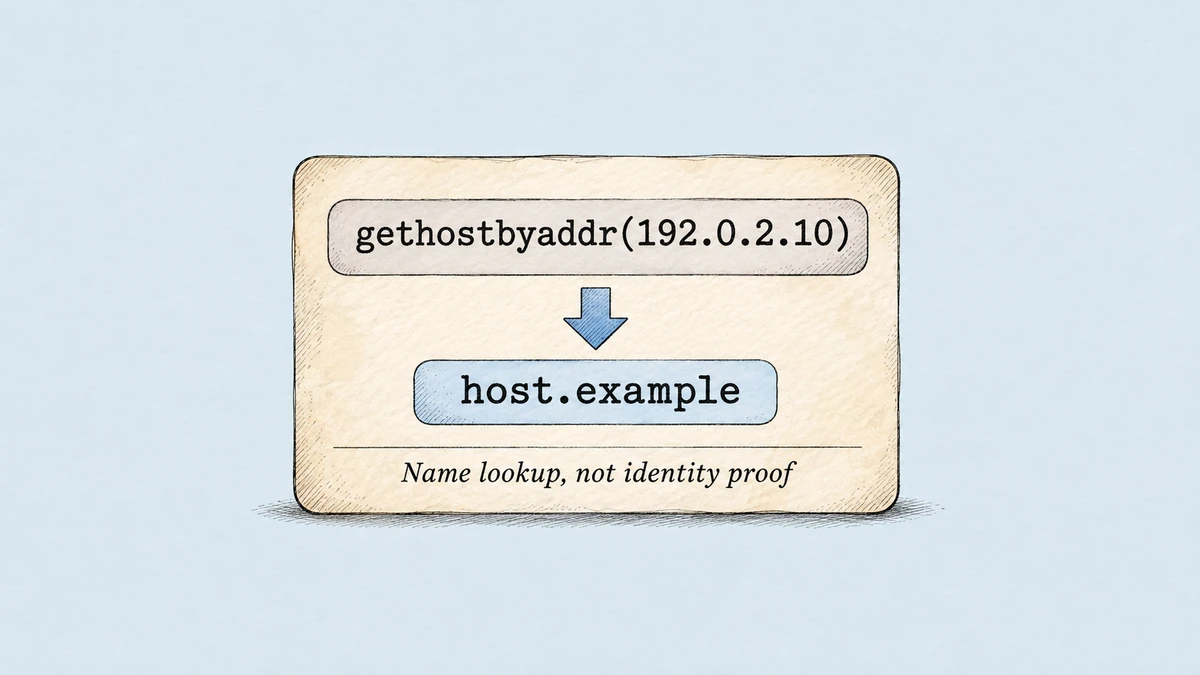
A name in a traffic log can be easier to recognize than a string of numbers. The gethostbyaddr function can look up that name from an IP address, but the result doesn't identify the person behind the connection.
A function is a named operation a program can call. gethostbyaddr() asks for hostname information associated with an IP address, the numerical network address used to direct traffic; a hostname is a readable network name.
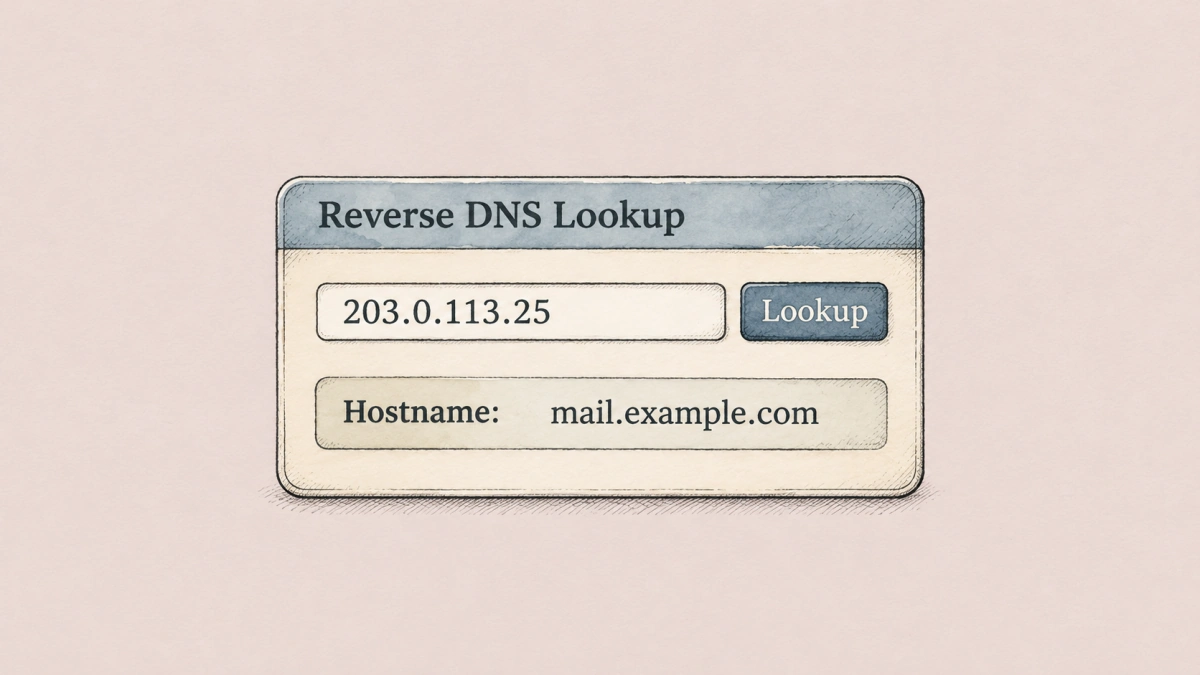
Looking up the address in the other direction
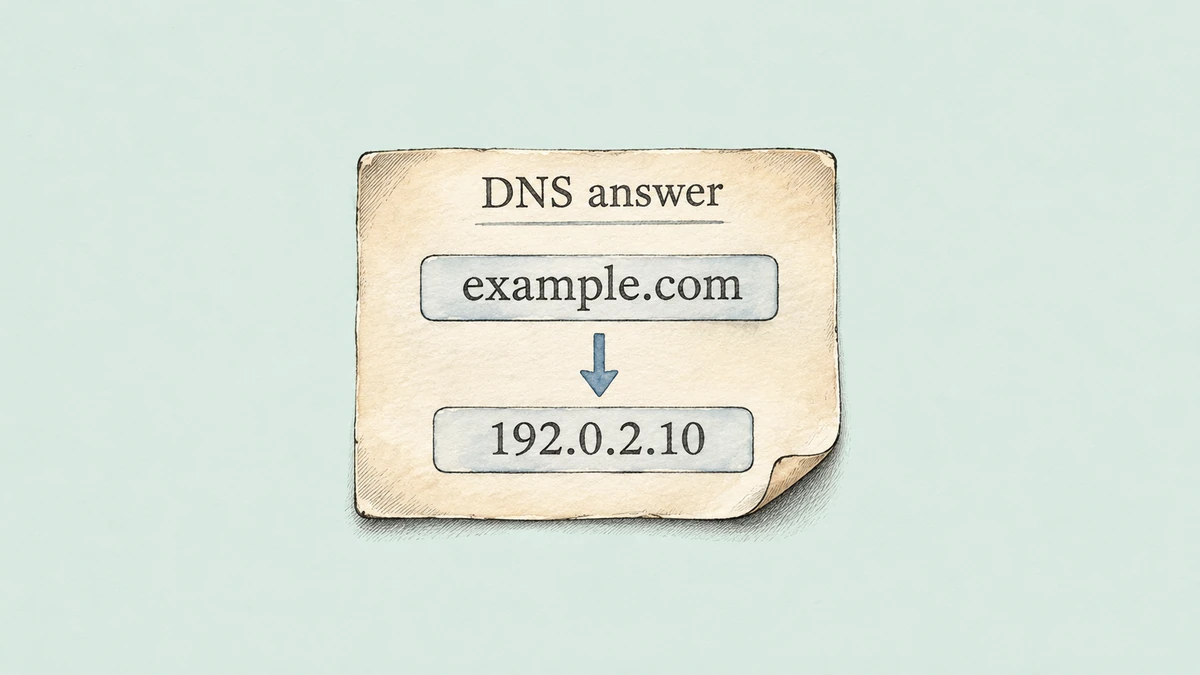
A forward lookup starts with a name and asks for an address. A reverse lookup starts with the address and asks for a name.
For an illustrative mapping, an administrator might associate the documentation address 192.0.2.25 with the name node.example. A reverse lookup could then help a logging tool display that name beside the address.
The lookup hasn't changed the address or redirected any traffic. It has added information about an address the program already had.
When the lookup uses DNS, the Domain Name System, it normally consults a PTR record, a pointer record connecting an address's reverse-DNS entry with a name. APNIC, an organization that manages internet addresses, explains how control of these entries follows address allocation.
What Happens When You Type a Web Address?
The organization responsible for an address range, or its delegated provider, controls that reverse-DNS information. Owning a similarly spelled website domain doesn't automatically give someone control of the address's reverse record.
DNS isn't the only possible source of an answer. On Linux, the name-lookup documentation says the function uses the system's configured information sources, which can include local records.
The same name doesn't mean the same interface
Several programming languages expose a function named gethostbyaddr, but their calling rules and results differ. Check the documentation for the language you're actually using.
In Python, socket.gethostbyaddr() accepts an address and returns a hostname, a list of aliases—alternative names—and a list of addresses. It supports both IPv4 and IPv6, the two IP addressing versions in common use.
The older C interface returns a structure, a group of related data fields, rather than Python's three-part result. Linux documentation marks that interface obsolete and directs new applications toward getnameinfo() for reverse address lookup.

- Stop fearing the terminal: start from your first command and build from there.
- Automate boring tasks with shell scripts you write yourself.
- Understand what each command does instead of copying it blindly.
What a returned name can—and can't—establish
A name may suggest a provider, a server's purpose or an organization's naming scheme. Those clues can help someone reading logs, but they aren't reliable proof of a visitor's identity, physical location or trustworthiness.
A forward-confirmed reverse lookup adds another check: look up the returned name and see whether its addresses include the original IP address. This checks consistency between the two directions.
Even that extra check isn't a substitute for authentication, the process of verifying an identity. Internet guidance on reverse-IP validation cautions against treating it as a security or authentication test.
Keep the number when the name is missing
An address may have no usable reverse entry, or a lookup may fail because the naming service isn't responding. Neither outcome, by itself, proves that the connection is malicious.
Lookups can also take time, especially when software must wait for a remote answer. An optional name shouldn't make every page request depend on a successful lookup.
For logs and troubleshooting, retain the original IP address and treat the returned name as an annotation. That preserves the observation you started with, even if the naming information later changes.
Reverse Lookup: Finding the Name Recorded for an IP Address
How DNS Finds an Answer Without One Giant Directory
Authenticity: How to Check the Source Behind a Digital Claim
QUOTE:
"Amateurs hack systems, professionals hack people."