Decipher: Does It Mean Decrypting or Cracking a Code?
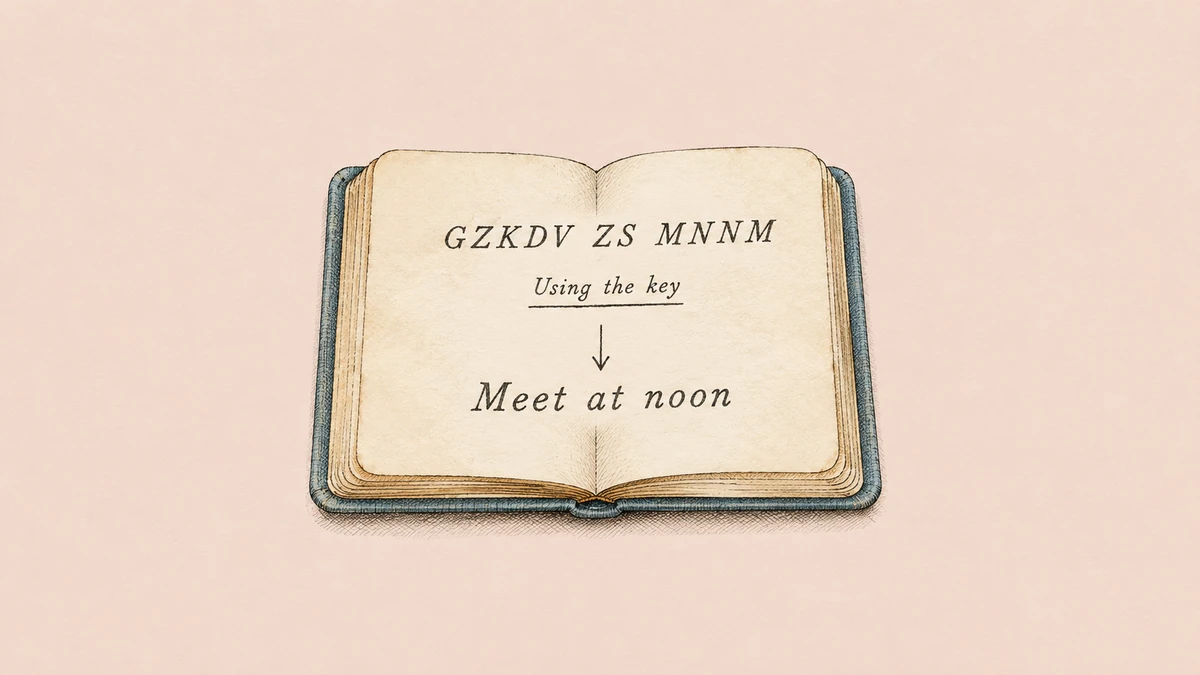
Saying someone “deciphered” a message doesn't tell you whether they broke a code or simply had the right key. In cryptography, the study of protecting information with mathematical methods, deciphering can be an ordinary part of reading an encrypted message.
The National Institute of Standards and Technology defines decipher as converting enciphered text back to plain text through a cryptographic system. In that technical sense, decipher and decrypt describe the same operation.

- Follow the contest between codemakers and codebreakers from ancient Egypt to quantum cryptography.
- Understand how Enigma was broken, told as a story and not a math lecture.
- Come away able to explain public-key encryption to anyone.
A small cipher you can reverse
A cipher is a method for encrypting and decrypting information. The original data is called plaintext, and its encrypted form is called ciphertext.
The Caesar cipher is a simple teaching example: move every letter the same number of places through the alphabet, wrapping around after Z. That number is the key.
With a shift of three, A becomes D, B becomes E, and C becomes F. To decipher the result, move each letter back three places.
Here's a message written that way:
PHHW DW QRRQ
P moves back to M, H to E, and W to T, turning the first word into MEET. Applying the same rule to the remaining letters gives:
MEET AT NOON
Harvard's CS50 Caesar exercise explains the same alphabet-shifting method. This example keeps spaces unchanged so you can follow the transformation.
It's a useful lesson, not a way to protect a real secret. With 26 letters, there are only 26 distinct shift settings, including zero, which changes nothing.
Having the key isn't the same as finding it
If someone tells you the shift is three, you've been given what you need to decipher the message. You don't have to defeat the system.
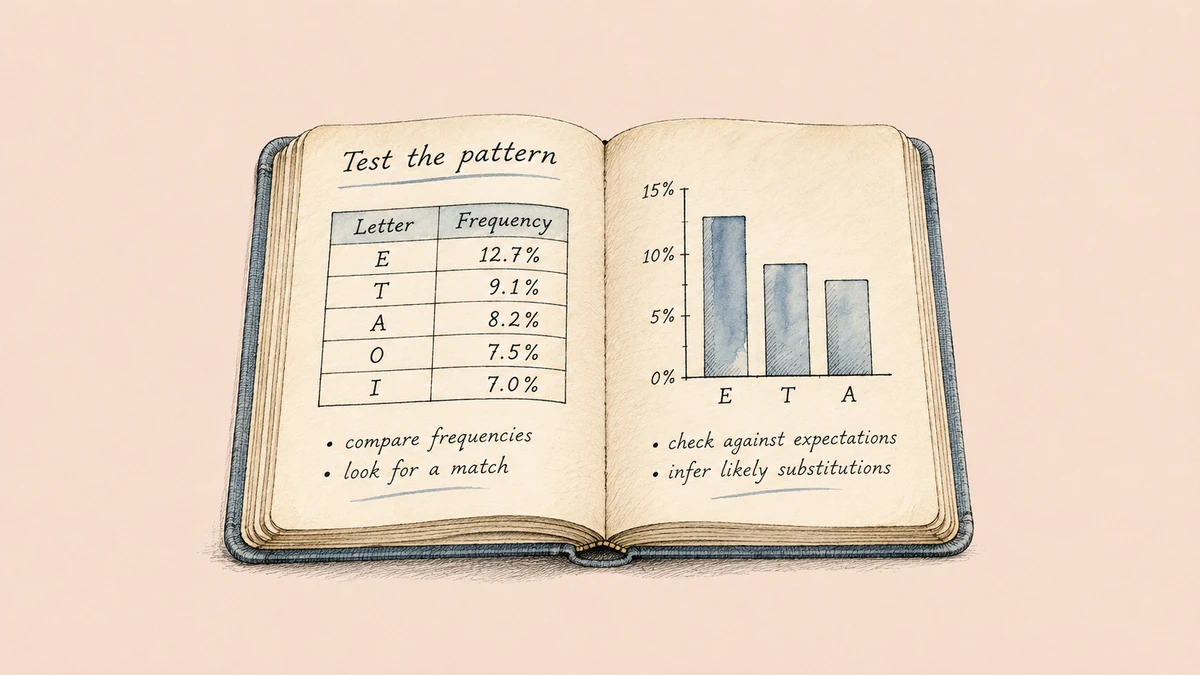
If nobody tells you, trying every shift and looking for a sensible result is a basic attempt to break it. More broadly, cryptanalysis studies ways to defeat cryptographic protection, including weaknesses in a method or its implementation.
That's the distinction in NIST's cryptanalysis definitions: understanding a protected message without starting with the secret key is a different task from using a key you already possess.
A report that investigators “deciphered” files might describe either situation. It might also mean they recovered the key rather than discovered a weakness in the cipher; the word alone doesn't establish what happened.
From Simple Ciphers to the Enigma Machine
Decoding can look similar without providing secrecy
Encoding changes how information is represented so another system can store or carry it. Decoding reverses that representation using its rules, which may be public and require no secret key.
Base64, for example, represents data with a limited set of text characters. Its technical standard explicitly warns that this visual disguise doesn't keep information confidential.
So a string that looks mysterious isn't necessarily encrypted, and turning it into readable text isn't necessarily codebreaking.
When “decipher” appears in a security claim, look for the method: was a known key used, a key recovered, a cipher attacked, or merely a public encoding reversed? That detail tells you much more about the achievement than the dramatic verb.
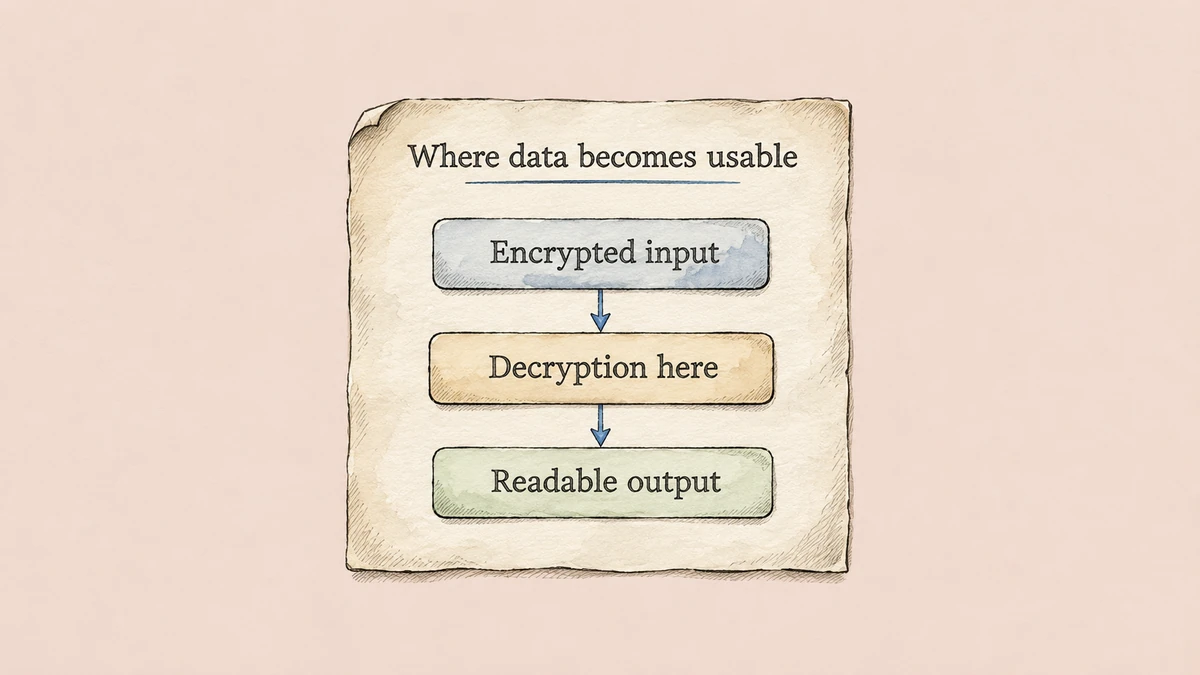
Decryption: Who Can Read Data Once It Becomes Usable?
Cryptanalysis: How Codebreakers Find the Weak Spots
Encryption Keys: The Small Secrets Your Files Depend On
QUOTE:
"Amateurs hack systems, professionals hack people."