AES Explained: The Secret Is in the Key
A stolen file can be perfectly readable to a computer and still look like nonsense to its thief. AES helps make that happen by turning useful information into encrypted data that needs the right secret key to become readable again.
AES stands for Advanced Encryption Standard. It's a published set of mathematical rules for encryption, the process of disguising information so someone without the key can't readily read it.
The rules aren't secret: anyone can study them. The secret is the key, a value that tells those rules how to transform your particular data.
One secret, two directions
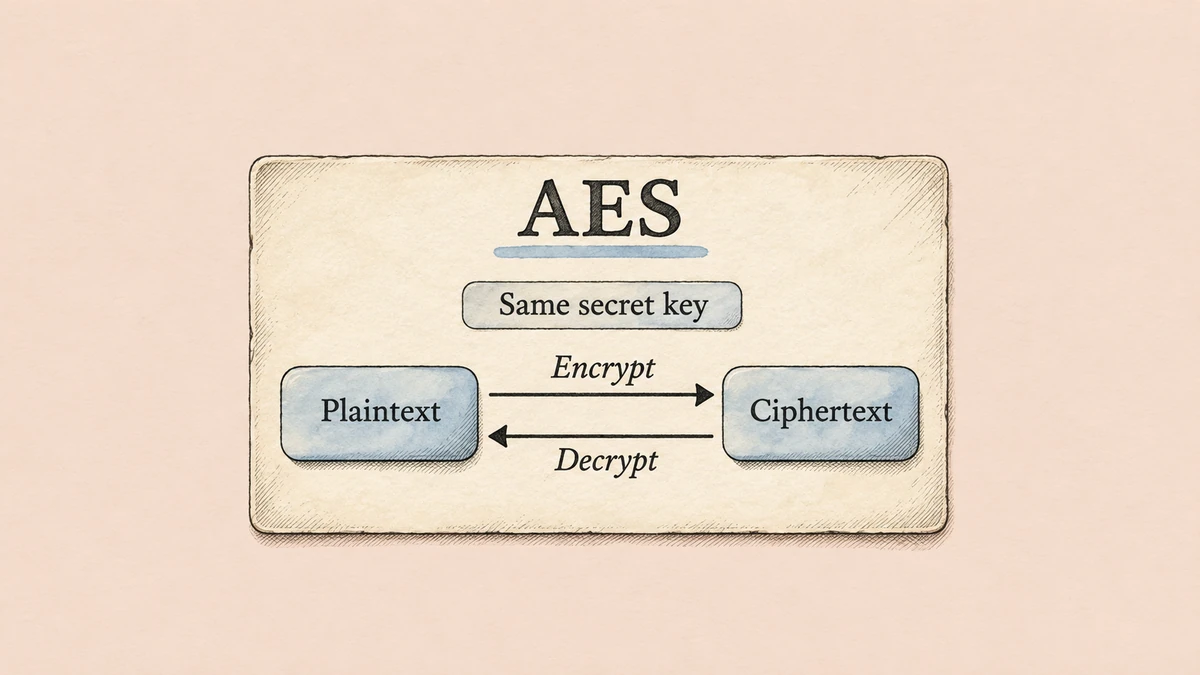
Before encryption, readable information is called plaintext; afterward, it's called ciphertext. Decryption reverses the process and recovers the plaintext.
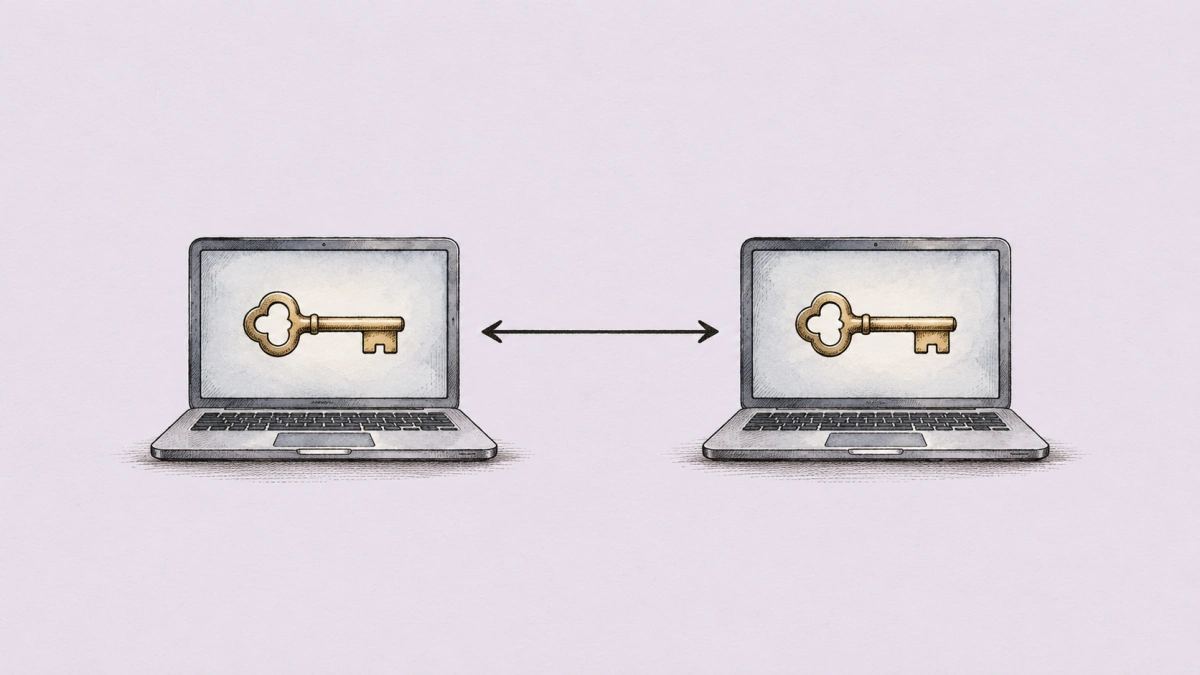
AES uses the same secret key for both directions, which makes it symmetric encryption. Think of a locked document case: people with a copy of its key can close it securely and open it again.
That creates a practical problem as well as a useful tool: the intended reader needs the key, while everyone else needs to be kept away from it. AES doesn't, by itself, provide a safe way to send that key to a stranger.

- Carry sensitive files on a drive that stays locked without your PIN.
- Unlock it on any computer, with no software to install.
- Lose it without losing sleep: the contents are encrypted in hardware.
Software can combine it with other methods to solve that problem. For example, a key agreement method can help two parties establish a shared secret over a network.
What the numbers actually count
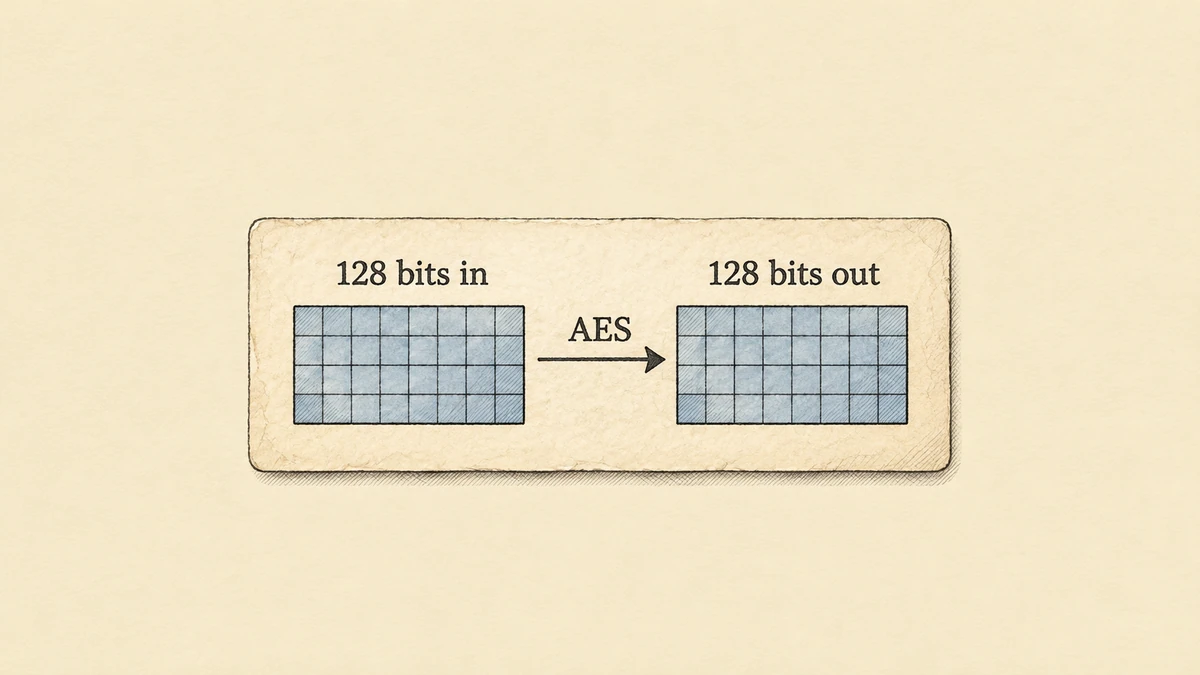
The National Institute of Standards and Technology, or NIST, published AES as a federal standard in 2001. Its AES specification defines three versions, named for their key lengths.
| Version | Secret key length | Amount processed in each block |
|---|---|---|
| AES-128 | 128 bits | 128 bits |
| AES-192 | 192 bits | 128 bits |
| AES-256 | 256 bits | 128 bits |
A bit is a single binary digit, either 0 or 1. Each extra key bit doubles the number of possible keys, while the block size describes how much data AES transforms at a time.
So AES-256 doesn't process twice as much information per block as AES-128. The larger number describes its key, not its file capacity or download speed.
How Hard Is It to Guess a 256-Bit Key?
A file needs more than the basic operation
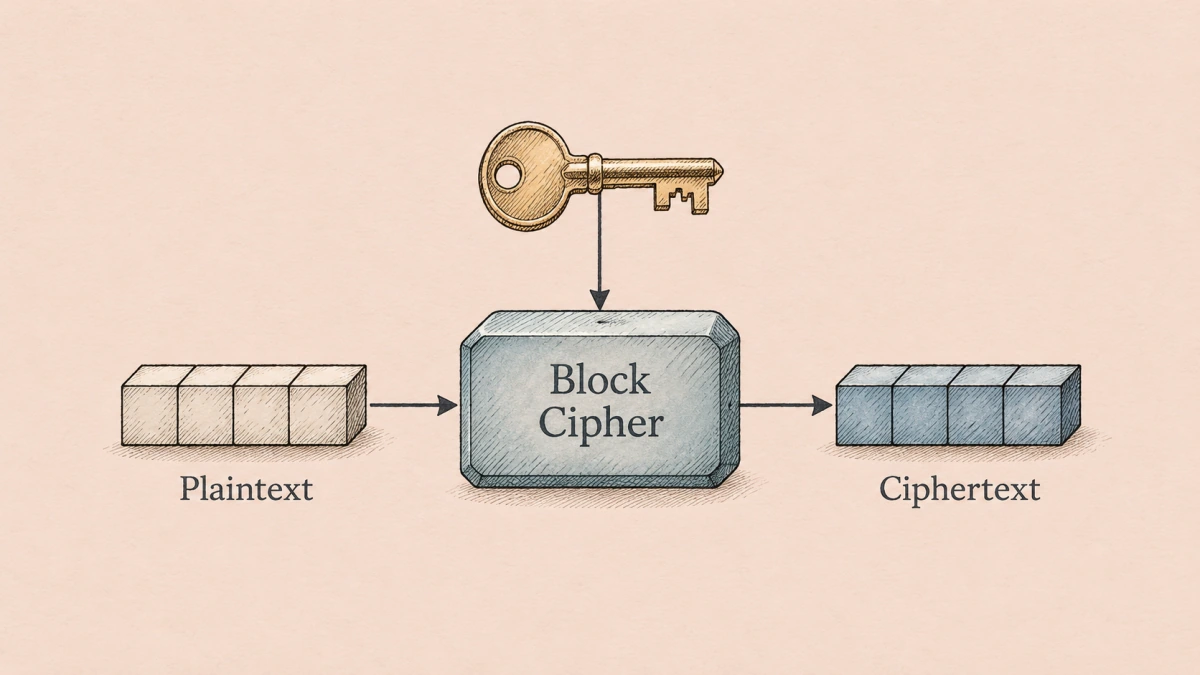
To encrypt a whole document, software needs rules for using AES across the data. Those rules are called a mode of operation, and their design matters.
One widely used mode, Galois/Counter Mode, or GCM, provides authenticated encryption. When implemented correctly, AES-GCM both hides the contents and lets the recipient detect unauthorized changes.
That second job matters because secrecy alone doesn't tell you whether someone has tampered with the message. Developers should use maintained encryption libraries, which are ready-made software components, and follow their requirements rather than assemble a homegrown scheme.
The key can still be the weak spot
Your password isn't automatically an AES key. Some applications use password-based key derivation, a process that turns a password into a key used to protect data or another encryption key, as described in NIST's storage guidance.
That conversion doesn't make a guessable password unpredictable. An attacker may try likely passwords instead of trying every possible AES key.
Key storage matters, too: a thief who obtains both the encrypted file and its usable key can read the file. The OWASP cryptographic storage guide treats key protection and the surrounding application design as essential parts of the job.
When a service advertises AES, ask where it encrypts the information and who controls the keys. The name describes a strong building block; those answers explain what the finished system protects.
Block Ciphers: Why Strong Encryption Needs More Than AES
A Symmetric Key Has a Life Beyond the Encrypted File
Symmetric Encryption Algorithms: The Method Behind the Secret
QUOTE:
"Amateurs hack systems, professionals hack people."