AI, Quantum Computers and the Future of Encryption
AI can help a criminal persuade someone to send a private document, leaving its encryption intact. The concern about quantum computers starts somewhere else, with the mathematics that keeps the document secret in transit.
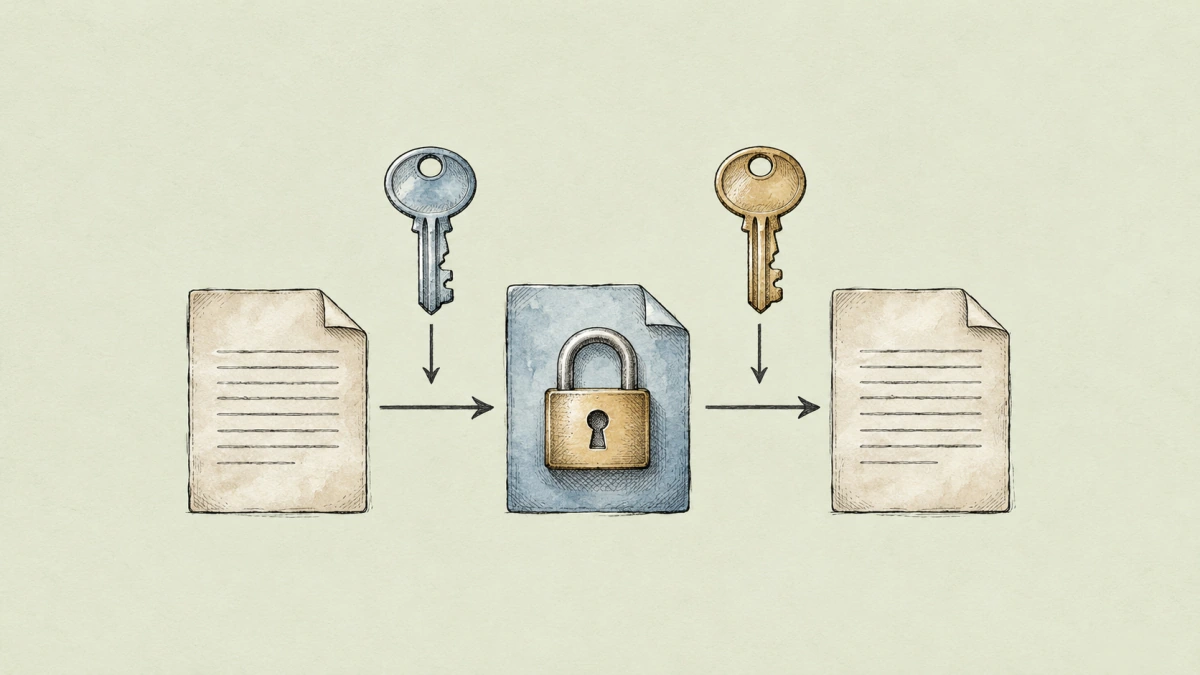
Encryption turns readable information into a form that requires a key to recover. Some of the most important systems on the internet use a public key you can share and a private key you keep to yourself.
What changes when the email gets better?
A convincing email can get a person to sign in on the wrong site or send a file to the wrong recipient. Encryption may then deliver that file securely all the way to the impostor.
The UK’s National Cyber Security Centre describes how AI can help criminals make their messages more persuasive and carry out familiar tasks more efficiently. Its annual review discusses AI’s role in cyber threats.
Better phishing emails tell us little about whether a machine can work out the private key from the public one. They do give us a reason to call the person who supposedly sent the message.
Two Keys: One You Share, One You Guard
Why quantum computing gives cryptographers a different problem
A quantum computer uses a different kind of computation. At sufficient scale and reliability, known quantum algorithms could solve the mathematical problems behind widely used public-key systems such as RSA and elliptic-curve cryptography.
A stranger could store encrypted traffic now and hold it for years. A medical record may still be worth reading by the time a powerful enough machine arrives.
That’s one reason the U.S. National Institute of Standards and Technology, or NIST, is working on post-quantum cryptography. The name means ways to protect secrets even from a powerful quantum computer.
Other systems use one secret key on both sides. One example is the Advanced Encryption Standard, or AES.
It relies on different math, so a claim about the threat to RSA doesn’t tell you what will happen to a file protected by AES.

- Follow the contest between codemakers and codebreakers from ancient Egypt to quantum cryptography.
- Understand how Enigma was broken, told as a story and not a math lecture.
- Come away able to explain public-key encryption to anyone.
New mathematics for computers we already have
In 2024 NIST finalized three post-quantum standards. Each has a particular job.
| Standard | What it helps computers do |
|---|---|
| ML-KEM | Agree on a shared secret they can use to protect a connection. |
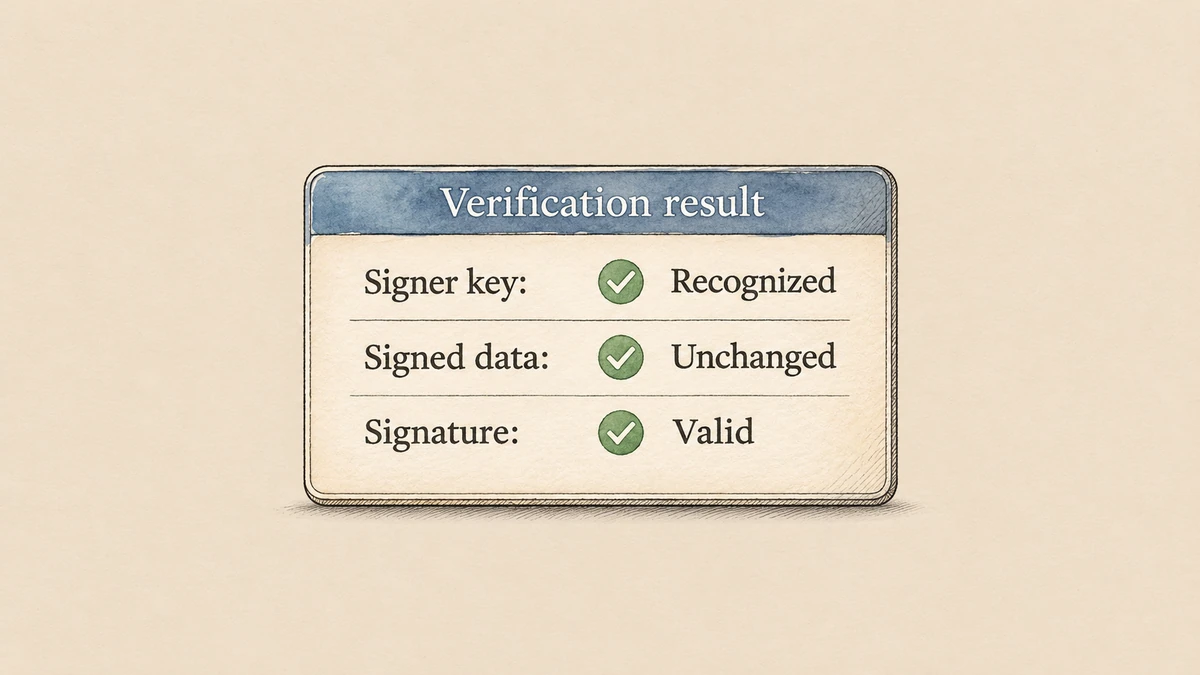
| ML-DSA and SLH-DSA | Create and check digital signatures, which help verify who signed data and whether anyone changed it. |
The new methods run on ordinary computers. Organizations can find out which systems still depend on older public-key methods and ask suppliers how to replace them.
For someone receiving an unusual document request, a useful safeguard is still a phone call to a number they already have. New cryptography can help keep a conversation private, but it can’t tell you whether the person who asked for the file is your accountant.
Public-Key Encryption: A File for the Intended Reader
Digital Signatures: What a Verified File Actually Tells You
How AI Is Changing Cybercrime—and What Still Works Against It
QUOTE:
"Amateurs hack systems, professionals hack people."