John McCarthy Gave Artificial Intelligence Its Name

John McCarthy was a computer scientist who coined the term artificial intelligence and created Lisp, a programming language used in AI research. He also helped establish AI research groups at MIT and Stanford.
In 1955, he and three colleagues used the phrase in a proposal to bring ten people to Dartmouth for two months the following summer. They would investigate whether learning and intelligence could be described precisely enough for a machine to simulate them.
McCarthy hoped for a significant advance. The lasting result was a field of research, and he would spend much of the next half-century trying to give computers something people usually take for granted: common sense.
The Summer That Gave AI a Name
Born in Boston in 1927, McCarthy studied mathematics at Caltech, graduating in 1948. He later recalled that a symposium there on the brain and behavior helped spark his interest in machine intelligence.
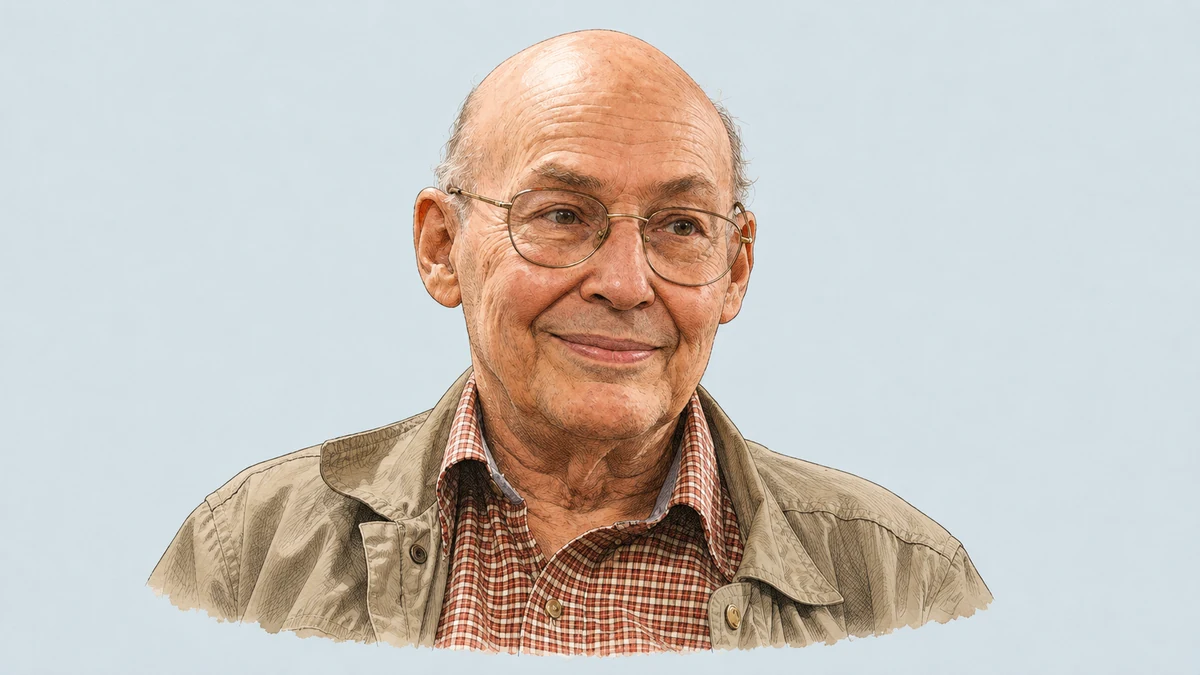
His Princeton doctorate, completed in 1951, concerned differential equations. But he kept pursuing the machine question. In 1952, Claude Shannon supported McCarthy and Marvin Minsky for a summer at Bell Labs, giving them time to work on ideas that crossed the boundaries between mathematics, brains and computers.
By 1955, McCarthy was at Dartmouth. He, Minsky, Shannon and IBM researcher Nathaniel Rochester wrote the proposal for the following summer's project.
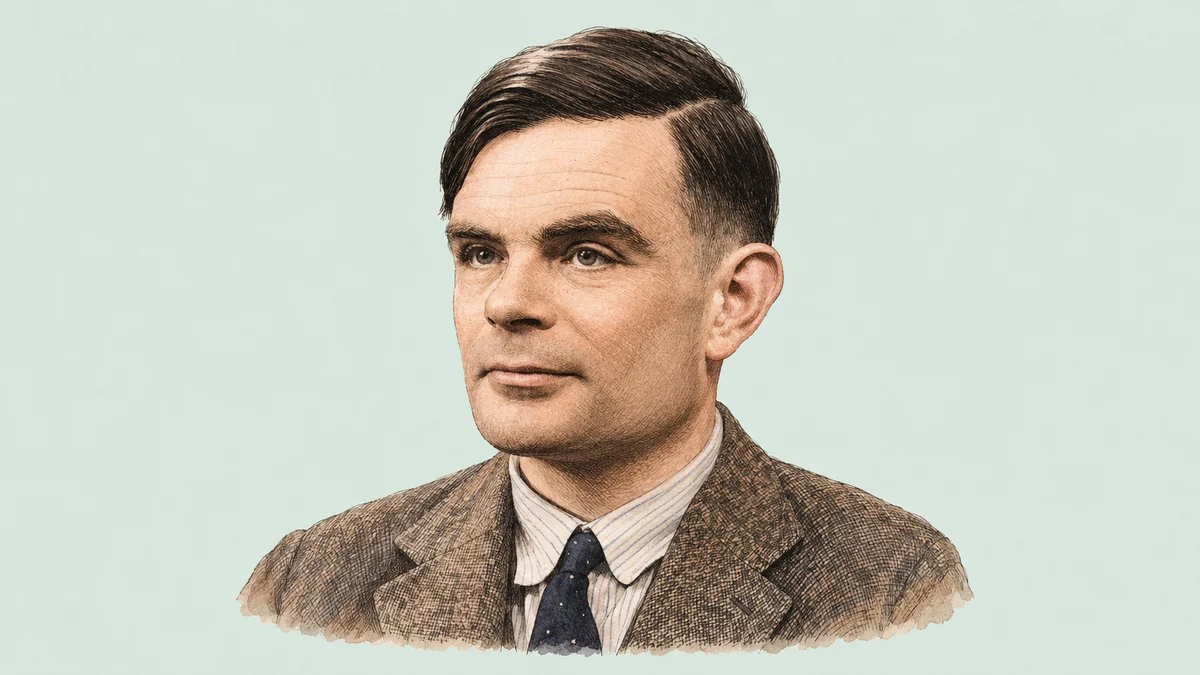
The document called its central premise a conjecture: an idea to investigate, rather than an established fact. There was plenty of earlier work to build on, including Alan Turing's investigations of computation and machine intelligence. The organizers wanted a concentrated effort around the questions they gathered under the new name.
The 1956 meeting was less tidy than a single group following one research plan. In McCarthy's later account, participants came for different periods and pursued different interests. Allen Newell and Herbert Simon presented their Logic Theory Machine, which tackled mathematical proofs.
Looking back in 2006, McCarthy acknowledged that the breakthrough he'd hoped for hadn't happened. Establishing AI as a research field had been the meeting's main achievement.
Lisp Gives the Ideas Somewhere to Go
At MIT in 1958, McCarthy and Minsky began an AI research project. They needed ways to express and test their ideas on the computers available to them.
McCarthy was interested in a proposed system called the Advice Taker. It would receive statements about the world, reason about them and use the consequences to decide what to do. Supporting that kind of work meant handling more than columns of numbers.
His answer was Lisp, short for LISt Processor. It let programs manipulate symbols arranged in lists, including lists nested inside other lists. Those structures could represent relationships and instructions as well as numerical data.
McCarthy's 1960 paper laid out the language's mathematical basis and practical design. It drew on earlier list-processing work by Newell, J. C. Shaw and Simon.
One useful technique was recursion: solving a problem by applying the same procedure to a smaller part of it. A program dealing with a nested structure could process one section using the same rules it used for the whole.
Steve Russell saw a practical use for McCarthy's mathematical description of evaluating expressions. He turned it into an interpreter: a program that reads and carries out Lisp instructions. The working language took shape as programmers began using it.
Lisp also included garbage collection, which reclaimed memory a program could no longer use. That relieved programmers of some of the bookkeeping involved in managing a scarce resource.
Lisp gave researchers a flexible way to build and change programs while they were still working out what those programs should know.
Getting a Turn at the Computer
Programming ideas were only part of the problem. Computers were expensive, and getting a result could mean submitting a batch of work and waiting.
McCarthy advocated a more interactive arrangement at MIT. Several people could use the same machine, each getting frequent turns at its processing time. To a person at a terminal, the computer could feel available for an ongoing session.
That approach, called time-sharing, changed the pace of work. A programmer could try something, examine the response and make another change without treating each step as a separate batch submission.
McCarthy's account of time-sharing's development describes a wider effort involving researchers such as Fernando Corbató, Herbert Teager and Christopher Strachey. Turning the idea into reliable systems required decisions about scheduling, memory and how people would interact with the machine.
A Laboratory With Room for Other People's Ideas
McCarthy returned to Stanford in 1962 and later became part of its new Computer Science Department. With Lester Earnest, he built and led the Stanford Artificial Intelligence Laboratory, usually called SAIL.
Although McCarthy's own work centered on logic, the laboratory's interests were much broader. Its researchers investigated vision, robotics, speech and computer music, among other subjects. Students and colleagues could pursue different approaches alongside his own.
Some experiments also reached outside the lab. In 1966, Stanford played a series of computer chess games against a Soviet team, communicating moves by telegraph. Stanford lost two games and drew two.
McCarthy received the Turing Award in 1971. He directed SAIL until 1980 and retired from Stanford in 2001, though he continued writing and thinking about AI into later life. He died in October 2011 at 84.
Why a Rowboat Needs Common Sense
One of McCarthy's examples shows the kind of problem that occupied him for decades. Imagine asking a program to plan a river crossing in a rowboat. It might know that rowing can get a person across. But does it need to check that the boat has oars? That the oars aren't broken? That they fit the rowlocks?
McCarthy used that sort of problem to expose a difficulty in formal reasoning. The qualifications can keep multiplying, while people often proceed with ordinary assumptions and revise them when something goes wrong.
His Advice Taker proposal, presented in 1958, had aimed to let new statements change a program's behavior without requiring every action to be rewritten. The challenge was expressing enough knowledge to handle a situation beyond a narrow, prepared example.
His later work on circumscription tried to give precise rules to reasoning with assumptions. A program could proceed on the basis that no relevant obstacle was known, while allowing new information to overturn its conclusion.
Knowing that an oar is broken should change the plan. Having no report of a broken oar may justify trying it, while leaving room to revise the decision. McCarthy wanted a program to reason with that kind of incomplete knowledge instead of needing a separate instruction for every possible mishap.
Alan Turing: The Codebreaker Who Asked Whether Machines Could Think
Marvin Minsky and the Idea of a Mind Made of Many Parts
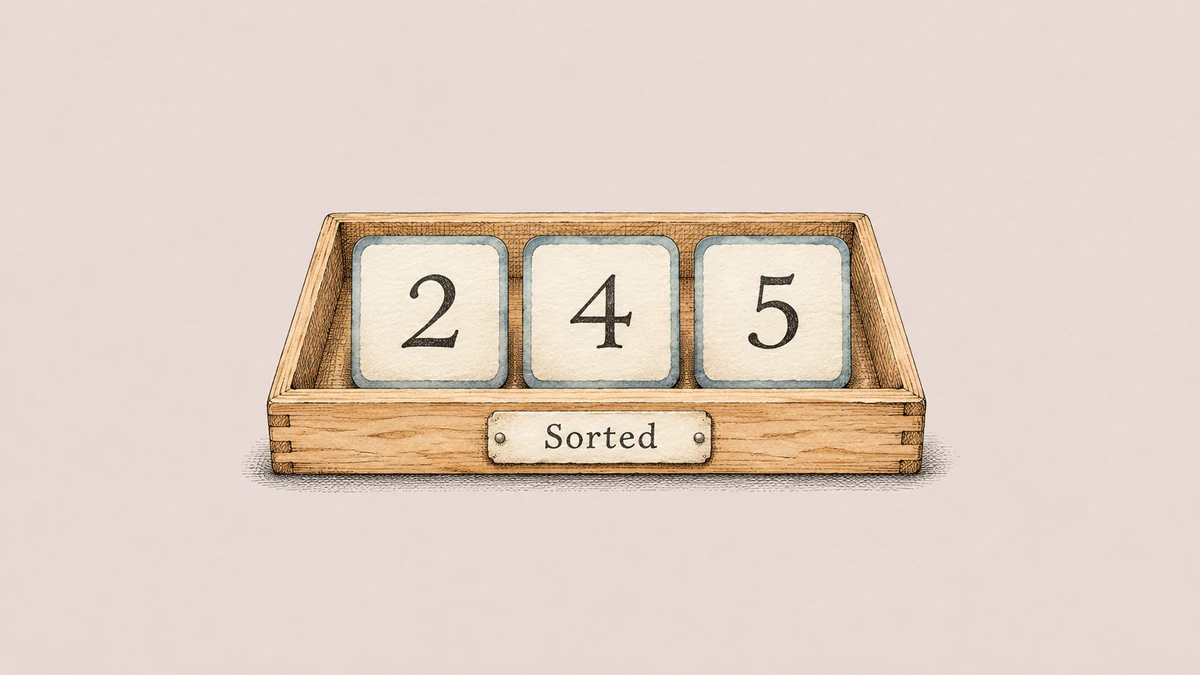
What's an Algorithm? Start With Three Numbered Cards
QUOTE:
"Amateurs hack systems, professionals hack people."