Alan Turing: The Codebreaker Who Asked Whether Machines Could Think
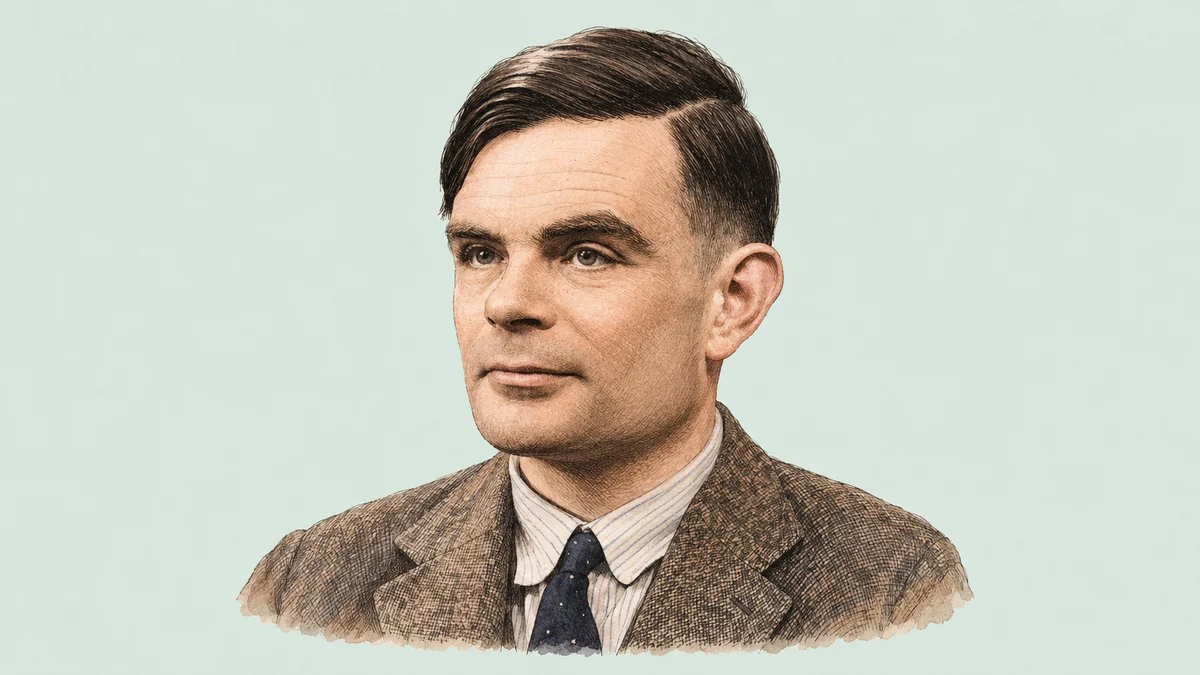
Alan Turing was a British mathematician and World War II codebreaker whose ideas helped lay the foundations of modern computing. He also proposed the conversational challenge now called the Turing test, asking how a machine's answers might compare with a person's.
One of his most important machines existed only on paper. It read symbols, wrote symbols and moved along a tape, following a small set of rules. The simple device let Turing investigate a much larger question: what can a machine accomplish by following instructions?
A Computer Made of Rules
Born in 1912, Turing studied mathematics at King's College, Cambridge, and later earned his doctorate at Princeton in 1938. Before finishing that doctorate, he'd already produced the work that gave computing one of its foundations.
His 1936 paper on computable numbers described the device now called a Turing machine. Its tape was divided into squares. Depending on the symbol under its reading head and its current state, the machine could write a symbol, move and continue under another rule.
Every step had to follow the instructions, letting Turing reason precisely about a calculation.
He also described a universal machine: one that could read an encoded description of another machine and carry out its work. The same general mechanism could perform different computations when given different instructions.
The paper also set a limit. For the problem Turing studied in mathematical logic, no automatic procedure could always decide whether a statement was provable. Alonzo Church reached an equivalent result independently, which Turing acknowledged in his paper.
Inside Hut 8
Turing joined Britain's Government Code and Cypher School in 1939. At Bletchley Park, he led Hut 8's work against German naval Enigma, an important part of the effort to read encrypted wartime communications.
Polish cryptanalysts Marian Rejewski, Henryk Zygalski and Jerzy Różycki had already broken earlier Enigma systems and developed methods and equipment for attacking them. Their work provided essential foundations for what followed.
Enigma settings and procedures changed, so codebreakers had to keep adapting.
Turing helped develop the British Bombe, a machine that could eliminate possible Enigma settings. It worked from relationships suggested by a crib: a plausible piece of the original message, such as wording expected in a weather report, matched against intercepted ciphertext.
People found useful cribs, prepared the problem and checked the machine's results.
The first British Bombe began operating in March 1940. Mathematician Gordon Welchman then contributed a device called the diagonal board, which allowed it to work with shorter cribs. An improved machine began work that August.
Joan Clarke and other Hut 8 colleagues also played important roles in naval Enigma. The wider operation depended on many people's mathematical judgment, engineering and daily labor.
The Bombe attacked Enigma. A separate project led by engineer Tommy Flowers produced Colossus, which helped break messages encrypted with the German Lorenz system.
Putting Programs to Work
In 1945, Turing joined the National Physical Laboratory. The following year he produced plans for the Automatic Computing Engine, or ACE.
The problem had changed. His abstract model had shown how one mechanism could follow different instructions. An electronic computer needed a workable design, memory and programs that people could actually use.
Turing left NPL in 1948, before the smaller Pilot ACE ran. He joined Manchester's computing effort that year and worked on software for the Manchester Mark 1.
With programmer Cicely Popplewell, he developed a system for organizing programs. He also wrote the first programming manual for the Ferranti Mark 1. As Manchester's history of his work records, he helped other programmers put the machine to use even as his own interests moved toward biology.
A Game Instead of a Definition
In 1950, Turing returned to a question that invited much less precise answers: could machines think?
His paper Computing Machinery and Intelligence proposed an imitation game. Written exchanges would conceal the participants' physical appearance, leaving an interrogator to judge their answers.
The paper began with a game involving a man and a woman before asking what would happen if a machine took a participant's place. That discussion became the basis of what is now called the Turing test.
The move gave people something observable to debate. Instead of agreeing first on a definition of thought, they could ask what a machine could do in an exchange of questions and answers.
The game tested performance in conversation, not whether a machine was conscious. Turing discussed consciousness as an unresolved problem.
He also proposed a different route to intelligent behavior: begin with something like a child's program and educate it, rather than write every detail of an adult mind. He discussed feedback and experimentation, while recognizing limits to reward and punishment alone.
Patterns in Living Things
Turing's questions eventually reached into biology. How could an organism develop an orderly pattern from material that initially looked fairly uniform?
In his 1952 paper The Chemical Basis of Morphogenesis, he proposed a mathematical mechanism involving chemicals that react with one another and spread through space. Under the right conditions, those interactions could produce patterns.
His examples included a ring of cells, and he suggested possible connections to the arrangement of leaves and the tentacles of a Hydra. Computing had given him a way to explore how patterns might form in living things.
A Conviction and a Late Pardon
That same year, the British state prosecuted Turing over a consensual same-sex relationship. He underwent court-imposed hormone treatment rather than imprisonment and lost his security clearance.
Turing died in June 1954, aged 41. The inquest returned a verdict of suicide.
The government granted him a royal pardon in 2013, decades after punishing him for being gay. The pardon came nearly sixty years after his death.
John McCarthy Gave Artificial Intelligence Its Name

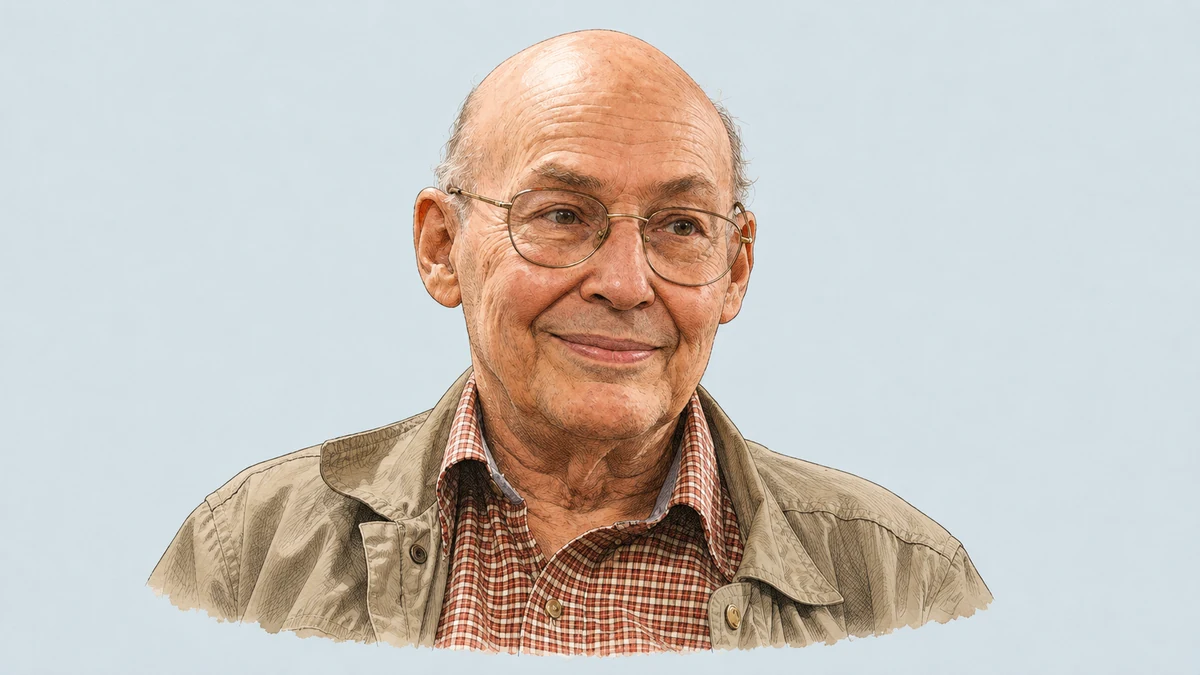
Marvin Minsky and the Idea of a Mind Made of Many Parts
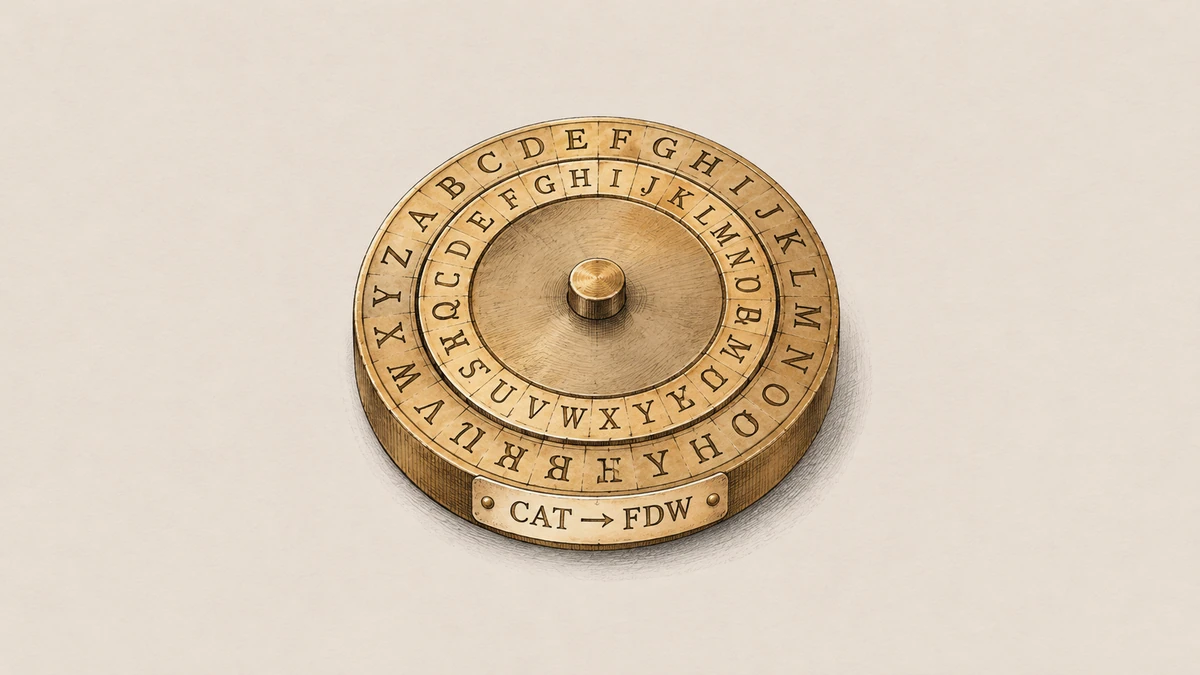
What Is a Cipher? From Letter Puzzles to Modern Encryption
QUOTE:
"Amateurs hack systems, professionals hack people."