How Do Cyber Threat Groups Get Their Names?
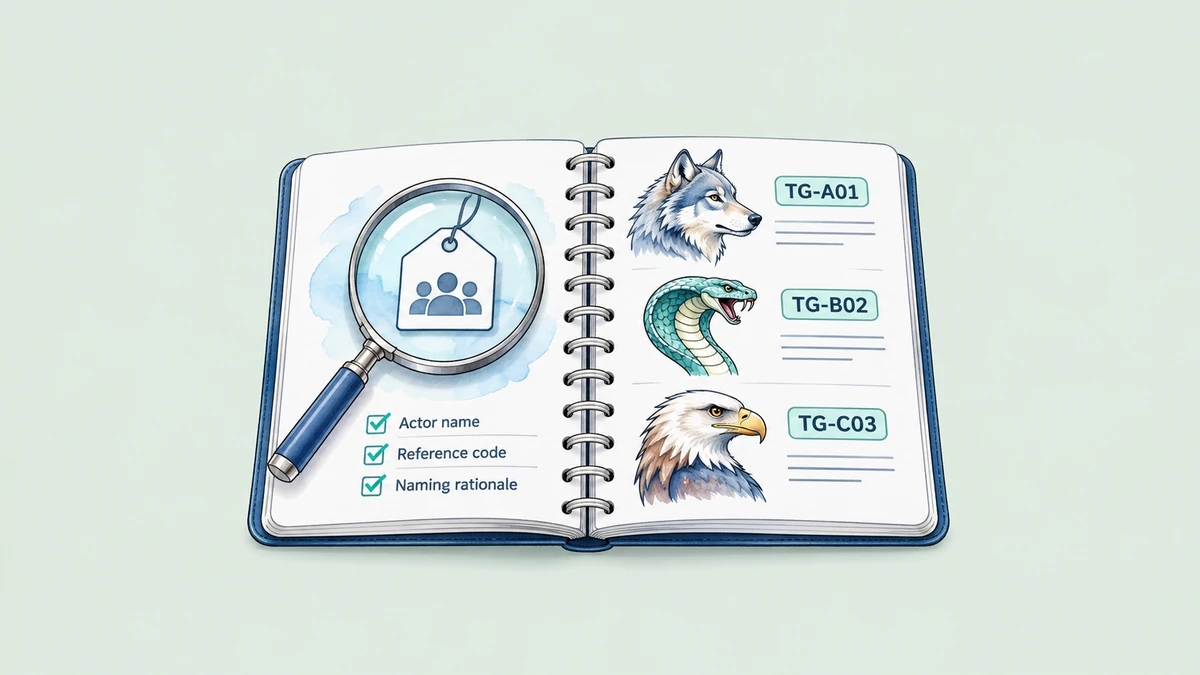
A cyber threat group is a set of attackers researchers believe are connected, based on shared activity such as data theft or spying. Researchers name these groups to track them, with results ranging from APT28 to the rather more memorable Fancy Bear.
Those two names refer to the same Russian group in many reports. The hackers haven't necessarily rebranded; different research teams have given them different labels.
A name helps investigators connect today's break-in with yesterday's clues. It doesn't mean they've identified everyone at the keyboard.
Why So Many Bears?
Fancy Bear and Cozy Bear belong to a naming system developed by the security company CrowdStrike. In that system, Bear points to Russia, Panda to China and Spider to criminals motivated by money.
The researcher or team tracking the group gets to choose the first part of its name, often drawing on a tool or technique the attackers use. CrowdStrike explains its naming rules as a way to make groups easier to recognize.
Microsoft's reports have more of a weather forecast. Its naming system uses Blizzard for groups linked to Russia, Typhoon for those linked to China and Tempest for financially motivated groups.
That's how Fancy Bear becomes Forest Blizzard in a Microsoft report. The animal and the weather tell you something about the researchers' assessment, but neither is the attackers' mailing address.
Other names tell you less at a glance. Lazarus Group is linked to North Korea, though researchers differ on how much of the country's hacking activity falls under that label.
How a $1.5 Billion Crypto Heist Was Cashed Out
Sometimes the Code Supplies the Name
Kaspersky researchers chose Equation Group because of its elaborate use of encryption and methods for hiding how its software worked. Encryption scrambles data so it can't be read without the right key.
The company's original Equation report explains the choice. It also makes a useful distinction: EquationDrug and GrayFish are malicious software used by the group, not extra names for the people behind it.

- Understand how hacking really works through five true stories.
- Learn why the internet is so easy to break, without wading through jargon.
- Come away able to explain famous attacks to anyone.
What APT28 and FIN7 Actually Mean
Other names sound more like case numbers. APT stands for advanced persistent threat: an attacker with the resources and determination to keep pursuing a target over time.
Mandiant, another security company, uses APT labels for groups it links to government-backed operations and FIN for financially motivated groups. The number distinguishes the group; it isn't a danger score.
FIN7, for example, doesn't mean “the seventh group attacking banks.” Its name points to a money motive, and Mandiant has documented its attacks on restaurants, hotels and other businesses.
Who gets attacked is still an important clue. Repeated attempts to steal card details suggest a different goal from repeated attempts to steal military plans, though a group's goals can change or overlap.
Mandiant's Clues Come Before the Name
Founded by Kevin Mandia in 2004, Mandiant investigates computer break-ins. Its 2013 APT1 report laid out evidence linking years of corporate spying to a unit of China's military.
FireEye announced its purchase of Mandiant in 2014, which is why that company name appears in older reports. Mandiant joined Google Cloud in 2022.
Investigators look for patterns in how intruders get in, move around and steal information. Security reports call these tactics, techniques and procedures, or TTPs: the things attackers do and how they do them.

Suppose two break-ins involve matching malicious code and the same computer receiving stolen files. Those clues may justify investigating them together, even before anyone knows who's responsible.
Mandiant calls a set of related activity a cluster. Its explanation of how it connects attacks describes the evidence needed to combine clusters or recognize a distinct group.
| Label | What it means |
|---|---|
| UNC, such as UNC2452 | “Uncategorized”: related activity that hasn't been classified as a named APT or FIN group. |
| TEMP., such as TEMP.Warlock | A temporary name that may bring related clusters together while research continues. |
| APT or FIN, such as APT1 or FIN7 | A defined group whose activity and connection to a government-backed or criminal operation are sufficiently understood. |
This isn't a three-step promotion ladder. As Mandiant's guide to UNC groups explains, clusters can merge, split or eventually become named groups as new evidence arrives.
Researchers can know enough to warn about an attack while they're still working out who did it. An unfinished name doesn't make the threat harmless.

- Make a stolen password useless without the key in your hand.
- Sign in with a tap instead of typing a code.
- Protect Google, Microsoft, Apple and more than 1,000 other accounts.
One Group Can Fill a Whole List of Suspects
You'll see threat actor, hacking group and cyber espionage group in reports, too. A threat actor can be a person or organization; espionage describes spying, while financially motivated crime describes a goal of making money.
Then come the aliases. The following names appear together in MITRE ATT&CK's group directory, a reference that connects reported attackers with the methods they use.
Treat these as research connections, not a perfect translation chart. MITRE warns that different organizations' definitions can overlap without matching exactly.
| Name in a report | Other names associated with that activity |
|---|---|
| APT28 | Fancy Bear, Forest Blizzard, Sofacy, Pawn Storm |
| APT29 | Cozy Bear, Midnight Blizzard, The Dukes |
| Lazarus Group | HIDDEN COBRA, Diamond Sleet, Guardians of Peace |
| Turla | Venomous Bear, Secret Blizzard, Waterbug |
| APT33 | Elfin, Peach Sandstorm, HOLMIUM |
| APT34 / OilRig | Helix Kitten, Hazel Sandstorm, Cobalt Gypsy |
| APT37 | Reaper, ScarCruft, Group123 |
| Sandworm Team | APT44, Voodoo Bear, Seashell Blizzard |
| Carbanak | Anunak |
Why Can't Everyone Agree on One Name?
Different researchers see different evidence. A company investigating stolen email may see one part of an operation, while another examining an infected laptop sees a different part.
Even matching software doesn't settle it. Mandiant cautions that not every use of the malicious software Carbanak belongs to FIN7, and MITRE tracks Carbanak and FIN7 separately.
It's a little like finding the same brand of crowbar at two burglaries. The tool is a clue, but it doesn't prove the same person held it.
Teams can also disagree about where one group ends and another begins. Calling everything by one name could hide those differences instead of resolving them.
There has been progress: in June 2025, Microsoft and CrowdStrike announced a shared mapping of their threat names. The aim was to help readers connect their findings, while keeping the separate naming systems.
When you meet an unfamiliar name, check who assigned it, what activity they observed and which other names they connect it with. Fancy Bear is easier to remember than a string of technical clues, but those clues are what make the name useful.
What Are Threat Actors? (Video)
6 Types of Cyber Threat Actors

APT1: Cyber Espionage’s Most Wanted
Kevin Mandia: Building Mandiant, Uncovering SolarWinds

QUOTE:
"Amateurs hack systems, professionals hack people."